

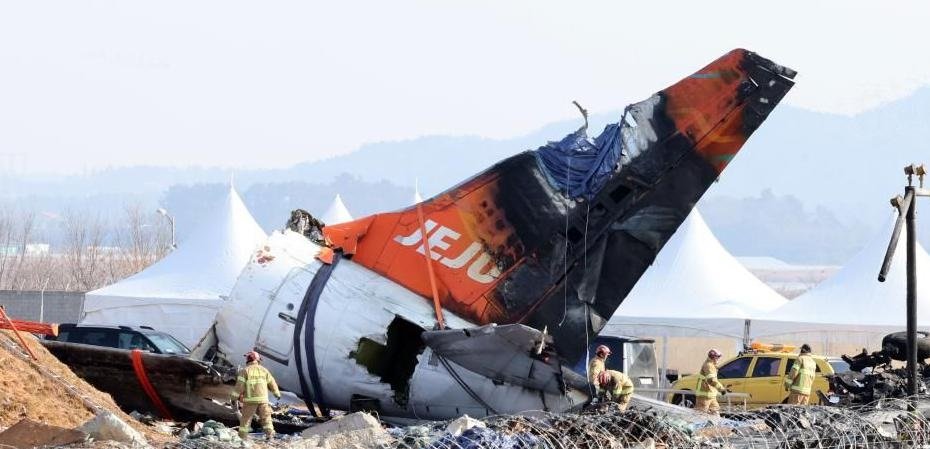

Another post-crash report holds the Jeju Air pilot responsible for the passengers’ plane crash. South Korean investigators probing the Jeju Air 089590.KS crash in December has found “clear evidence” that the aircraft’s pilots mistakenly shut down the less-damaged engine following a bird strike.
The source said cockpit voice recordings, flight data, and a physical engine switch recovered from the wreckage confirm that the left engine—which sustained less damage—was turned off instead of the right engine, which took the brunt of the bird strike.
“The investigation team has solid evidence and supporting data, so the conclusion is unlikely to change,” the source stated.
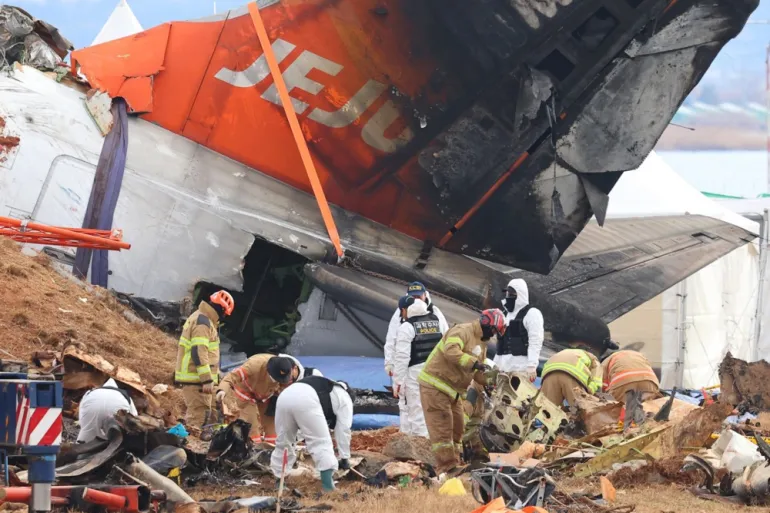
A government official also confirmed that preliminary examinations revealed no pre-existing defects in either engine before the crash.
The December 29 crash of a Boeing 737-800 at Muan Airport killed 179 of the 181 people on board, making it the deadliest aviation disaster on South Korean soil to date.
At a briefing over the weekend, investigators told victims’ families that the right engine had sustained more severe bird strike damage, but it was the left engine that was shut off during the emergency response. This was later reported by several South Korean media outlets, including MBN and Yonhap.
The Aviation and Railway Accident Investigation Board (ARAIB), which is leading the investigation, has not publicly commented on the reports. Boeing referred questions to the ARAIB, while CFM International—the engine manufacturer—did not respond to requests for comment.
Jeju Air stated it is fully cooperating with investigators and awaiting the official findings.
An initial report in January noted that duck remains were found in both engines, but did not clarify the extent of damage to each.
Pushback from Families and Pilots
Plans to publicly release an interim update on Saturday were scrapped after families of the victims objected, accusing investigators of prematurely placing blame on the pilots without considering all possible contributing factors.
Lawyers representing the families criticized the language in the draft release, saying it suggested a final conclusion had been drawn before the full scope of the incident was understood.
The Jeju Air pilots’ union also voiced strong objections, accusing the ARAIB of “misleading the public” by implying the left engine was fully functional, despite bird remains being found in both engines.
The union argued that the agency had not presented scientific or technical evidence proving the aircraft could have safely landed with only the left engine operational. It warned that investigators were unfairly making scapegoats of the pilots, without addressing broader issues such as organizational failures.
Both the families and the union have called for a deeper examination into the airport embankment, which the plane struck during its emergency belly landing. Experts suggest the structure may have exacerbated the destruction and fatalities.
Under international protocols, a final investigation report is expected within one year of the crash. Investigators are expected to evaluate all contributing factors, including pilot decisions, aircraft systems, air traffic control, and airport infrastructure.
