

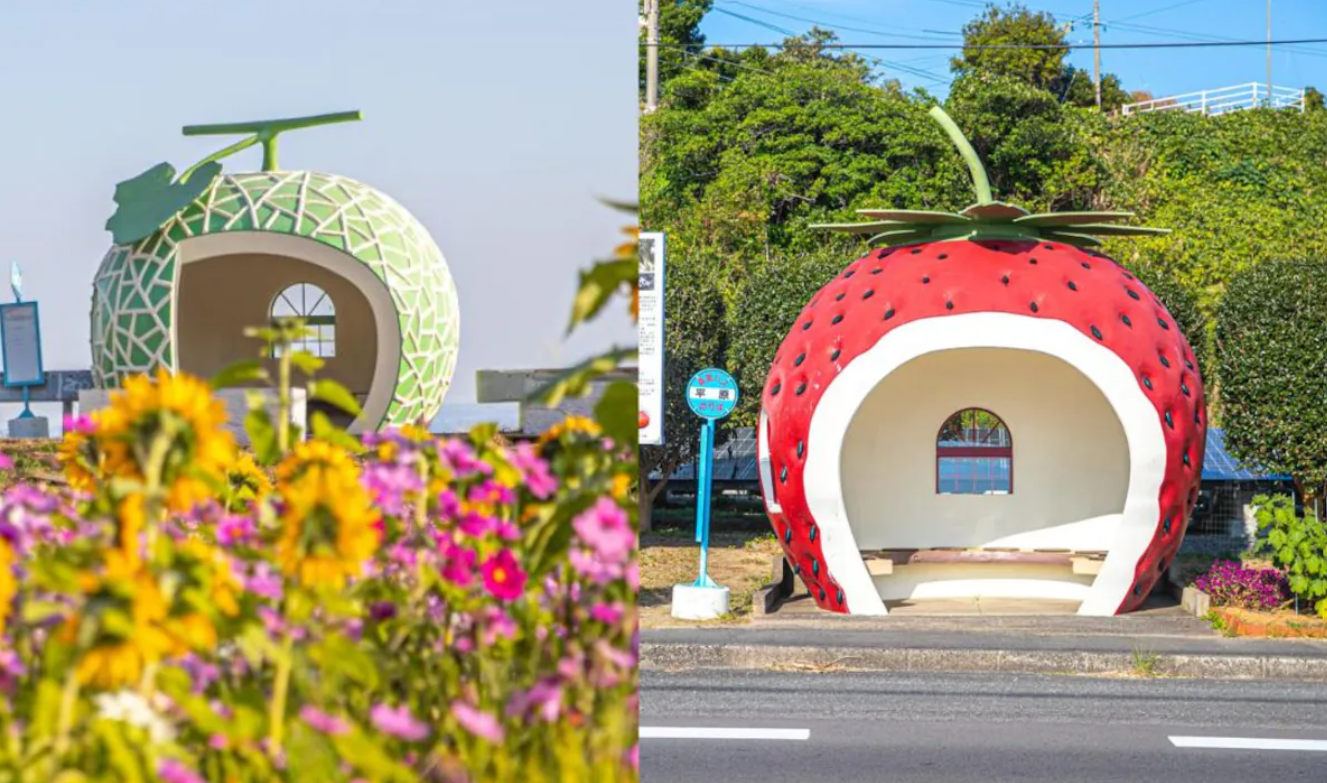

In Japan’s Nagasaki region, a series of bright, fruit-shaped bus stops have long fascinated visitors. Located in the small town of Konagai, these unusual structures stand along the scenic coastline and take the shapes of strawberries, melons, tomatoes, watermelons, and oranges. They offer a whimsical visual contrast to the area’s historical past.
Inspiration and Creation of the Fruit Stops
The Konagai fruit-shaped bus stops were inspired by the pumpkin-shaped carriage from the classic Cinderella cartoon. Local authorities first showcased them during an exhibition held in August 1990, commemorating the history of the Japanese port. The exhibition ran from August 9 to 15 and introduced these playful bus stops to the public.
Purpose Behind the Design
The bus stops were designed to provide travelers with a sense of calm and relaxation while highlighting Nagasaki Prefecture’s local fruit produce. The creative structures combine practical function with cultural representation, reflecting Konagai’s agricultural identity and playful artistic vision.
Historical Context: Nagasaki and the Atomic Blast
Nagasaki’s history is marked by the devastating atomic bombing on August 9, 1945, during the final stages of the Second World War. The bomb caused widespread destruction and loss of life, shaping the city’s post-war identity. While the fruit-shaped bus stops were constructed decades later, they serve as symbols of resilience, creativity, and local pride.
Legacy and Tourist Attraction
Today, the 16 fruit-shaped bus stops in Konagai attract tourists from around the world. They stand as a reminder of the town’s vibrant culture and innovation, drawing photographers and travelers eager to capture their bright, unusual forms. Despite being built in the shadow of historical tragedy, these bus stops showcase how local communities use design and art to celebrate life and regional heritage.
Preserving a Unique Heritage
Local authorities continue to maintain these structures, ensuring that the whimsical stops remain both functional and visually striking. They have become an iconic part of Nagasaki’s tourism circuit, emphasizing that small, creative urban designs can transform everyday spaces into cultural landmarks.
