

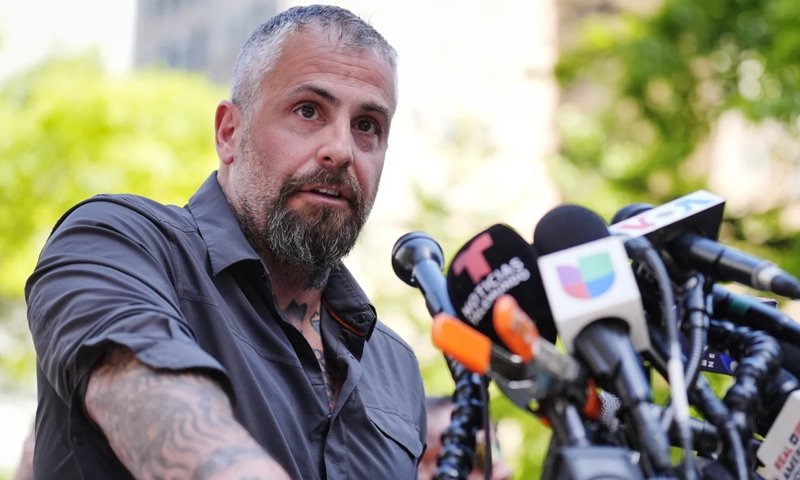

Tensions flared during a House Judiciary Committee hearing Thursday when former Washington, D.C., police officer Michael Fanone, who was brutally assaulted during the January 6, 2021 Capitol riot, interrupted Republican Rep. Troy Nehls of Texas as he attempted to shift blame away from former President Donald Trump.
The exchange occurred during testimony from Jack Smith, the former special counsel who led two unsuccessful federal prosecutions against Trump related to efforts to overturn the 2020 election.
Addressing law enforcement officers in attendance who responded to the riot, Nehls said, “I can tell you gentlemen, that the fault does not lie with Donald Trump,” arguing instead that responsibility rested with U.S. Capitol Police leadership.
“We know they had the intelligence,” Nehls said, moments before Fanone interrupted the proceedings after a loud cough, shouting, “F* yourself.”**
Fanone, who was dragged into a crowd and severely beaten by rioters during one of the most violent confrontations that day, sat in the audience alongside fellow former officers Aquilino Gonell, Harry Dunn, and Daniel Hodges. All four have since become outspoken critics of Trump following the insurrection.
Nehls continued after the interruption, stating that “there was going to be a high propensity for violence that day.”
Jack Smith Warns of Ongoing Threats
In his first public appearance before lawmakers, Smith told the committee he was “shocked” when he watched the attack on the Capitol unfold. He warned that the failure to hold Trump accountable for what Smith described as criminal efforts to overturn the election poses continuing dangers to U.S. democracy.
“If we don’t hold people to account when they commit crimes, it sends a message that those crimes are okay,” Smith said. “That can endanger our election process, election workers, and ultimately our democracy.”
The hearing highlighted deep political divisions that remain more than four years after the Capitol attack, as lawmakers and witnesses continue to clash over responsibility for one of the most violent moments in modern U.S. political history.
