

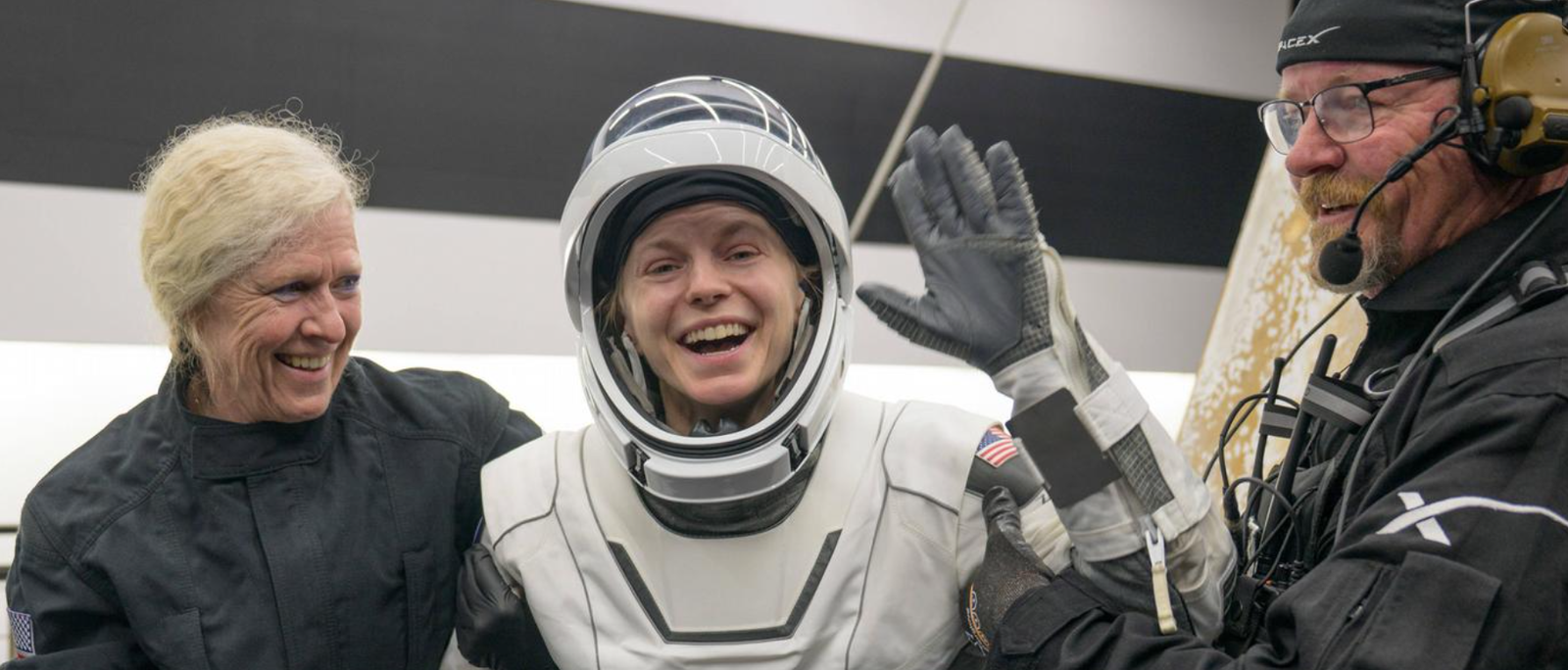

Four astronauts from the International Space Station have returned to Earth earlier than planned. The return followed a serious medical condition affecting one crew member.
Nasa confirmed the landing occurred in the Pacific Ocean near San Diego. The spacecraft touched down safely during the early morning hours. All four astronauts emerged from the capsule shortly after recovery.
The agency said the affected astronaut is in stable condition. For privacy reasons, Nasa did not identify the individual. This marks the first time Nasa has shortened an ISS mission due to a medical issue.
International Crew Lands Safely in Pacific Ocean
The returning crew included American astronauts Zena Cardman and Mike Fincke. Japanese astronaut Kimiya Yui and Russian cosmonaut Oleg Platonov also returned.
Recovery teams secured the SpaceX Dragon capsule soon after splashdown. Crews transported the astronauts onto a recovery ship. Medical teams then prepared to move them for routine health checks.
Nasa plans to take all four astronauts to a nearby hospital. Doctors will conduct standard post-flight medical evaluations.
Mission Ended Earlier Than Expected
The astronauts began their mission last August. They spent 167 days aboard the orbiting laboratory. Their return came about one month earlier than scheduled.
Nasa announced the early return decision on January 8. Officials said the medical condition required treatment on Earth. The issue did not result from operational injury.
Although emergency returns can occur within hours, Nasa delayed departure slightly. The crew used the time to train remaining astronauts on station operations.
Nasa Emphasizes Preparedness and Crew Safety
Nasa leadership said the agency was fully prepared for such a scenario. Officials stressed that extensive training allowed a safe and calm response.
They described the mission outcome as a demonstration of readiness. Spaceflight, they said, always carries uncertainty. Preparation ensures crews can respond decisively.
Crew members described strong teamwork during the unexpected departure. They highlighted cooperation and mutual support throughout the situation.
Crew Dragon Completes Smooth Reentry
The Crew Dragon capsule, named Endeavour, completed a descent lasting more than ten hours. Parachutes guided the spacecraft into calm Pacific waters.
After splashdown, astronauts confirmed their safe return. Recovery operations proceeded without complication. The spacecraft was lifted onto the ship deck shortly afterward.
Following an overnight hospital stay, the crew will travel to Houston. There, they will reunite with family and begin standard rehabilitation.
Station Operations Adjusted After Crew Reduction
Three astronauts remain aboard the ISS. They include one American astronaut and two Russian cosmonauts. They arrived at the station in November aboard a Soyuz spacecraft.
Due to reduced crew numbers, Nasa has paused routine spacewalks. Emergency spacewalks are also unlikely unless absolutely necessary. Spacewalks require extensive internal crew support.
A planned spacewalk scheduled for last week was canceled. Officials said the task was not time-critical and will occur during a future mission.
A Rare Event in Spaceflight History
Medical evacuation from the ISS has long remained theoretical. Models suggest such an event may be needed every few years. However, this is the first in Nasa’s spaceflight history.
Past evacuations occurred in other space programs. One notable case involved a Soviet cosmonaut in 1985. Nasa has now joined that short list.
The mission underscores the importance of medical readiness. As exploration expands, health risks will remain a central concern.
Cooperation Continues Aboard the ISS
The International Space Station remains a joint project. Nasa and Russia’s space agency continue cooperation despite broader tensions.
Crew transport responsibilities alternate between partners. The ISS remains one of the few areas of sustained international collaboration.
The successful return highlights the strength of that partnership under pressure.
