

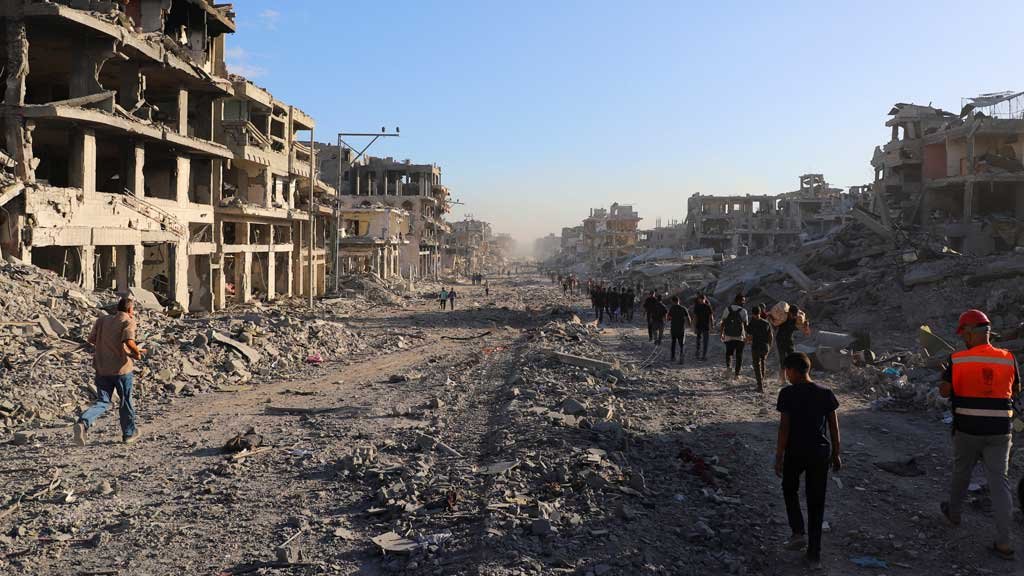

Israeli forces began withdrawing from parts of Gaza on Friday under a ceasefire agreement with Hamas, marking the first tangible step toward ending two years of devastating conflict. Residents cautiously returned to their shattered neighbourhoods amid uncertainty about when the ceasefire would fully take effect.
“Thank God my house is still standing,” said Ismail Zayda, a resident of Sheikh Radwan in Gaza City. “But the place is destroyed, my neighbours’ houses are destroyed, entire districts have gone. Is it really over?”
The Israeli government ratified the ceasefire with Hamas in the early hours of Friday, paving the way to suspend hostilities within 24 hours and to begin releasing Israeli hostages within 72 hours.
The deal, part of U.S. President Donald Trump’s broader peace initiative, involves a phased withdrawal of Israeli troops and a reciprocal release of prisoners.
Israeli troops have reportedly pulled out from several key positions in central and southern Gaza, including Khan Younis and the Nusseirat camp.
However, sporadic gunfire and shelling continued, adding to confusion among civilians. In Gaza City, troops withdrew from the coastal road, allowing rescue teams to recover bodies and deliver long-delayed aid.
According to Hamas leader Khalil Al-Hayya, guarantees from the United States and other mediators confirm that the war is officially over. The two-year conflict has left more than 67,000 Palestinians dead and thousands displaced, drawing global condemnation and deepening Israel’s diplomatic isolation.
As part of the agreement, humanitarian aid convoys are expected to enter Gaza soon, delivering food, water, and medical supplies to those living in makeshift camps.
Despite cautious optimism, both sides remain wary, and questions linger over the full implementation of the ceasefire and the recovery of Israeli hostages still believed to be held in Gaza.
