
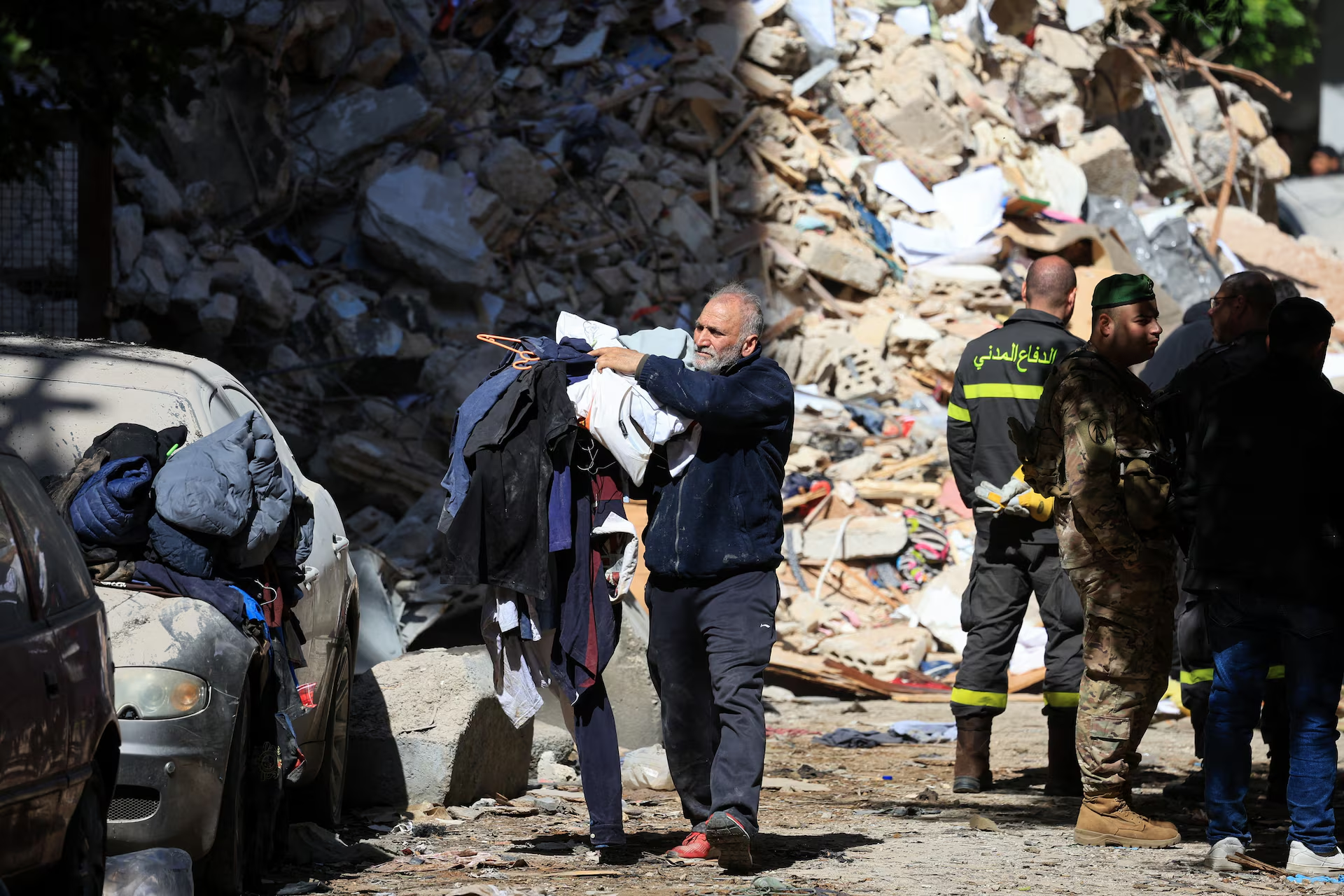

Israeli forces carried out fresh airstrikes across Lebanon on Thursday, intensifying tensions and placing a newly announced ceasefire at risk. The attacks followed Israel’s largest offensive of the conflict, which killed more than 250 people and caused widespread destruction.
Meanwhile, Iran-linked developments added further uncertainty. Iranian negotiators prepared to travel to Pakistan for upcoming peace talks with a U.S. delegation led by JD Vance, scheduled for Saturday. However, Iran maintained its blockade of the Strait of Hormuz, signaling that no agreement would emerge while Israeli strikes continue.
Escalation Widens Conflict and Civilian Toll
At the same time, Israeli strikes targeted Beirut’s southern suburbs and multiple towns across southern Lebanon. The military said it eliminated a relative of a senior Hezbollah leader and hit strategic crossings used by the group.
In response, Hezbollah resumed attacks, firing rockets toward Israeli positions after initially observing the ceasefire. Consequently, violence resumed along the border, undermining diplomatic efforts.
Furthermore, rescue teams worked overnight to locate survivors trapped under rubble. Residents described widespread devastation as strikes hit densely populated areas without prior warnings. International allies, including Britain and France, criticized the escalation and urged that the ceasefire extend to Lebanon.
Oil Markets Surge as Regional Uncertainty Deepens
In parallel, global markets reacted sharply to the crisis. Disruptions in Gulf oil flows pushed physical crude prices close to $150 per barrel, while supply shortages strained refineries across Europe and Asia.
Although U.S. President Donald Trump announced a truce earlier this week, core disputes remain unresolved. Iran continues to assert control over key shipping routes and retains significant military capabilities.
Therefore, ongoing strikes, economic pressures, and diplomatic disagreements continue to shape a volatile and uncertain regional landscape.

