


Iran’s Supreme Leader
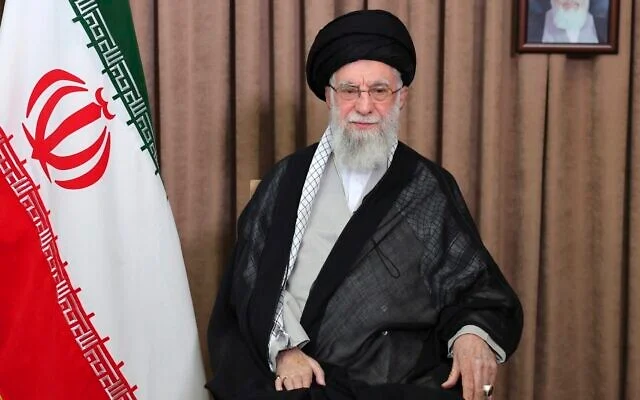
Israeli Defence Minister Israel Katz has made a startling admission, revealing that Israel had planned to assassinate Iran’s Supreme Leader, Ayatollah Ali Khamenei, during the recent 12-day conflict between the two countries.
Speaking to Channel 13, Katz stated that the Israeli leadership had identified Khamenei as a high-value target and intended to eliminate him during the military campaign. However, he said the plan could not be executed due to the Iranian leader’s strategic decision to go into hiding.
According to Katz, Ayatollah Khamenei “went underground to very great depths,” which disrupted his direct communication with senior commanders of the Islamic Revolutionary Guard Corps (IRGC). Katz claimed that this move deprived Israel of an “operational opportunity” to strike.
While Iran has consistently asserted that its Supreme Leader remained fully engaged throughout the conflict, Katz’s remarks suggest Israel believed it had succeeded in limiting his tactical influence during the peak of hostilities.
Katz also denied reports suggesting that the United States had prevented Israel from executing the assassination. “We didn’t need permission,” he said, emphasizing Israel’s autonomy in making critical military decisions.
These revelations highlight the intensity of Israel’s military planning and its willingness to escalate the conflict to unprecedented levels. Targeting a sitting supreme leader—particularly one who holds immense religious, political, and symbolic authority in the Shia Muslim world—would have marked a dramatic turning point in the region’s history, potentially sparking a much broader war.
The minister’s comments come amid ongoing debates about the effectiveness of joint U.S.-Israeli airstrikes on Iran’s nuclear facilities in Fordow, Natanz, and Isfahan. While Israeli and American sources have claimed significant setbacks to Iran’s uranium enrichment capabilities, Tehran has dismissed such claims.
Ayatollah Khamenei himself downplayed the strikes, accusing the U.S. of exaggerating the extent of damage and reaffirming Iran’s commitment to “resistance.”
Adding to the controversy, Katz asserted that Israel has received a “green light” from U.S. President Donald Trump to launch further military operations if Iran’s nuclear ambitions continue.
He claimed Iran’s nuclear infrastructure would not be restored following the recent attacks, suggesting Israel remains committed to preventing Tehran from rebuilding its capabilities.
Iran’s Atomic Energy Organisation has yet to issue an official statement, while the International Atomic Energy Agency (IAEA) is reportedly increasing its monitoring activities in the region, signalling growing international concern over the situation.
In a related development, Israeli Prime Minister Benjamin Netanyahu declared victory over Iran, framing the outcome of the conflict as a strategic triumph. In a video message, Netanyahu said the war had created a “window of opportunity” to deepen Israel’s diplomatic engagement with Arab states.
He referenced the Abraham Accords, which normalized relations with the UAE, Bahrain, and other nations, and said the recent conflict could pave the way for further regional partnerships.
The 12-day war, characterized by intense aerial bombardments, missile exchanges, and retaliatory attacks, ended following a ceasefire mediated by the United States.
The truce came after Iran launched ballistic missiles at the U.S.-operated Al Udeid Air Base in Qatar in response to American strikes. Behind-the-scenes diplomacy played a key role in halting further escalation and stabilizing the volatile region—at least for the time being.
