

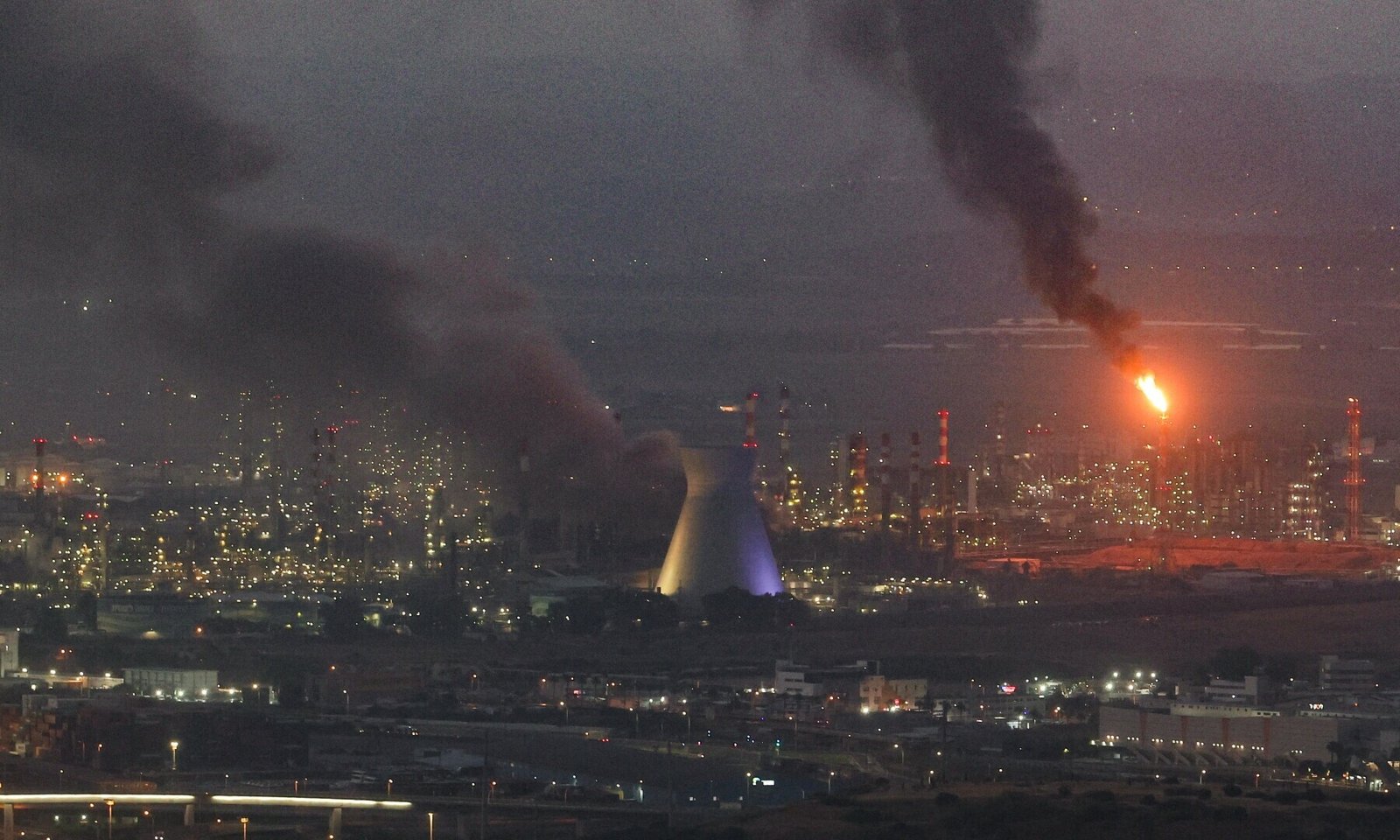

The Israeli military on Monday issued a warning of a fresh wave of missiles launched from Iran, urging citizens to seek shelter immediately as air defenses engaged incoming threats. The announcement came amid reports of loud explosions in Jerusalem and fires near the coastal city of Haifa, with rising fears of further escalation between the two arch-rivals.
“A short while ago, the IDF identified missiles launched from Iran toward the territory of the State of Israel,” the Israeli army said in a statement on Telegram. “Air defense systems are intercepting the threat. Citizens are advised to enter protected spaces and remain there until further notice.”
Explosions Rock Jerusalem, Fires Near Haifa
AFP journalists reported hearing loud blasts in Jerusalem in the early hours of Monday, with video footage showing Israeli air defense systems in action. Fires were also seen outside Haifa following the missile barrage. British maritime security firm Ambrey confirmed fire at a power plant near the port city, and reported that two hypersonic missiles had struck after interception attempts.
Israeli public broadcaster Kan reported that four areas in central Israel were hit in the latest wave of attacks. According to Al Jazeera, 29 people were injured—three moderately and 26 with minor wounds—based on data from Israeli emergency services.
U.S. Intervention and Assassination Plot
A senior U.S. official told President Donald Trump had intervened to prevent Israel from assassinating Iran’s Supreme Leader Ayatollah Ali Khamenei.
“We found out the Israelis had plans to hit Iran’s supreme leader. President Trump was against it, and we told the Israelis not to,” the official said.
Trump publicly denied U.S. involvement in Israel’s military campaign but warned that any attack on American interests by Iran would trigger a forceful response. He also urged both sides to “make a deal,” though he acknowledged that “sometimes they have to fight it out first.” In a separate interview, he suggested Russian President Vladimir Putin could serve as a mediator.
Mounting Death Tolls on Both Sides
Iran reported at least 224 deaths, including 70 women and children, from Israeli airstrikes over the weekend. Among those killed were the IRGC’s intelligence chief and two senior generals. Israeli strikes hit targets as far as Mashhad, over 2,300 km from Israel. In Tehran, residents reported sleepless nights and heavy smoke over the capital after Israeli aircraft struck two fuel depots and a police headquarters.
“I haven’t slept since Friday,” said Farzaneh, a resident in central Tehran. “Today, a missile hit a house in our alley. We’re heading north to escape.”
Others remained defiant. “War brings fear, but I won’t leave my city,” said 31-year-old Shokouh Razzazi.
Israel’s death toll from Iranian missile attacks rose to 13, with at least 10 killed in a single salvo on Sunday. Prime Minister Benjamin Netanyahu visited the coastal city of Bat Yam, where a residential building was struck.
“Iran will pay a very heavy price for the premeditated murder of civilians, women, and children,” Netanyahu declared.
Iran Threatens “Devastating Response”
Colonel Reza Sayyad, spokesperson for Iran’s armed forces, issued a dire warning:
“Leave the occupied territories—because they will certainly no longer be habitable in the future. Shelters will not guarantee your safety.”
Iranian missiles have reportedly hit several civilian areas in Israel, while a likely Iranian drone attack in Syria killed a woman in Tartus, according to the UK-based Syrian Observatory for Human Rights.
Military Operations Expand
The Israeli military confirmed strikes on surface-to-surface missile sites in central Iran, asserting its operations are active “in our skies and in Iranian skies.” AFP footage showed smoke rising in Haifa, while emergency services raced to several impacted locations.
Intelligence Clash and Diplomacy Breakdown
Amid the ongoing conflict, both nations have arrested individuals allegedly linked to each other’s intelligence networks. Iran detained two suspects accused of collaborating with Israel’s Mossad, while Israel said it had captured two individuals working for Iranian intelligence.
Diplomatic tensions also deepened as Iran canceled planned nuclear negotiations with the United States, calling talks “meaningless under fire.” Iranian Foreign Minister Abbas Araghchi claimed to have “solid proof” of U.S. involvement in supporting Israeli strikes.
“If the aggression stops, naturally our responses will also stop,” Araghchi told foreign diplomats in Tehran.
As the conflict continues to escalate, the region remains on the brink of a broader war—with both civilian populations and international actors bracing for what may come next.
