
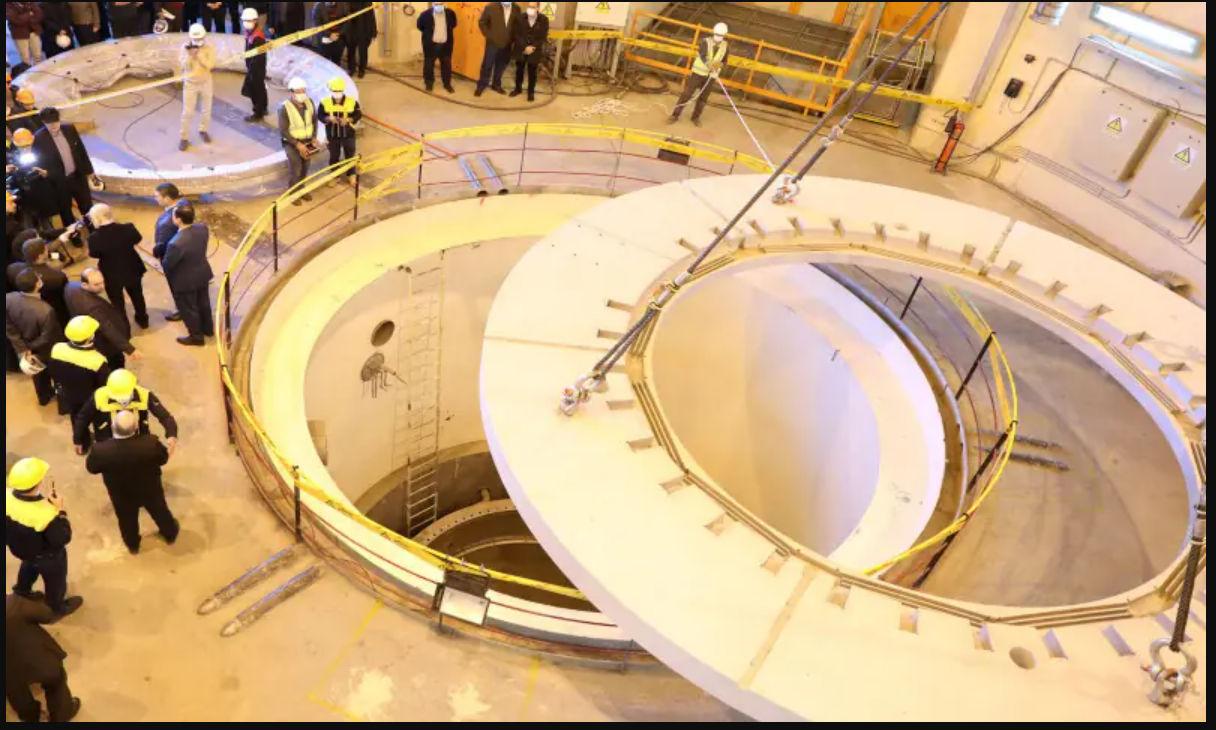

Israel’s military confirmed carrying out airstrikes on several Iranian nuclear-linked locations, marking a significant escalation in regional tensions. The operation targeted strategic facilities connected to Iran’s nuclear and industrial infrastructure.
According to official statements, Israeli air force units struck a heavy water facility in Arak, located in central Iran. The site was described as an important component linked to plutonium production capabilities.
Iranian authorities reported that the Khondab Heavy Water Complex near Arak was hit in two separate stages. Despite the scale of the attack, officials stated that no casualties occurred. They also confirmed that no radiation leak was detected following the strikes.
Uranium Processing Site Also Hit
In addition to the Arak facility, Iranian officials said a uranium processing plant in Ardakan, located in Yazd province, was targeted. The Atomic Energy Organisation reported damage to the facility but emphasized that radioactive materials were not released.
Authorities described the incident as part of a broader coordinated attack on multiple strategic locations. However, safety monitoring systems reportedly remained intact, preventing environmental contamination.
The absence of radiation leakage helped reduce immediate public safety concerns. Nevertheless, the strikes heightened fears of further escalation across the region.
Industrial Sector Targeted in Parallel Attacks
Reports also indicated that major industrial facilities were struck during the same wave of attacks. Two large steel production plants were among the affected sites.
One strike reportedly hit Khuzestan Steel in southwestern Iran, damaging a warehouse structure. Another attack targeted the Mobarakeh Steel complex in Isfahan province.
Officials said an electrical substation and an alloy steel production line sustained damage at the Mobarakeh facility. Emergency and rescue teams quickly arrived at both locations to assess the situation and secure affected areas.
Strategic Importance of Steel Production
Steel production plays a central role in Iran’s industrial economy. The sector supports infrastructure development as well as manufacturing capabilities linked to defense industries.
Industrial materials produced at these facilities contribute to sectors such as construction, transportation, and heavy engineering. Analysts also note that steel output supports production related to military equipment, including missiles, drones, and naval systems.
Because of this dual-use significance, strikes on industrial sites carry economic and strategic implications beyond immediate physical damage.
Escalation Raises Regional Concerns
The coordinated targeting of nuclear-linked and industrial facilities signals a notable increase in operational intensity. Multiple locations across central and southwestern Iran were affected within a short timeframe.
Such developments are likely to deepen geopolitical tensions and increase uncertainty across the broader Middle East. Observers warn that continued escalation could influence regional security dynamics and global energy markets.
At the same time, officials on both sides continue monitoring the situation closely. Emergency response teams remain active at impacted sites, while assessments of structural damage are ongoing.
A Turning Point in Regional Dynamics
The strikes underline how sensitive nuclear infrastructure and industrial capacity remain central to regional security calculations. Even without casualties or radiation leaks, attacks on strategic facilities carry symbolic and political weight.
As developments unfold, attention remains focused on whether diplomatic channels can prevent further escalation. The situation continues to evolve, with regional stability closely tied to future responses and negotiations.

