

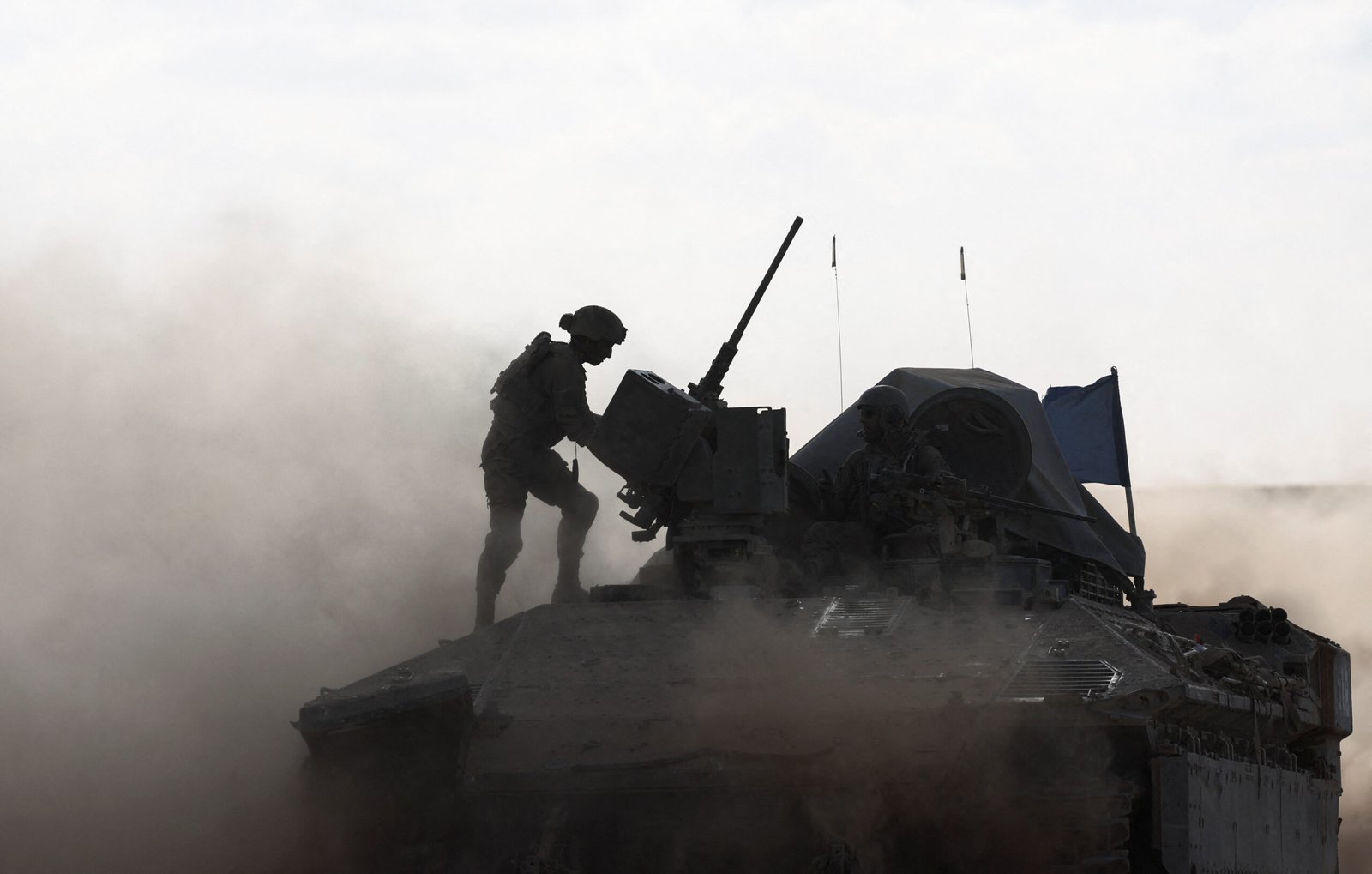

Gaza-Egypt Border
Israeli forces have taken control of a buffer zone along the border between the Gaza Strip and Egypt, as confirmed by the country’s military on Wednesday. This strategic move grants Israel effective authority over the entire land border of the Palestinian territory.
Despite an order from the International Court of Justice to cease attacks, Israel has continued its raids on Rafah in southern Gaza. Rafah has been a critical refuge for half of Gaza’s 2.3 million residents.
Chief military spokesperson Daniel Hagari, in a televised briefing, stated that Israeli forces had achieved “operational” control over the “Philadelphi Corridor,” a 14 km-long corridor along Gaza’s border with Egypt. This area has been a significant route for Hamas to smuggle weapons into Gaza.
While Hagari did not clarify what “operational” control entailed, an Israeli military official mentioned earlier that Israeli troops were present along parts of the corridor. This corridor was Gaza’s only land border not directly controlled by Israel until now.
Earlier in the day, Israeli tanks conducted raids in Rafah, pushing into the heart of the city for the first time despite the United Nations’ top court ordering an immediate halt to the assault. The World Court criticized Israel for not ensuring the safety and provision of food, water, and medicine for evacuees from Rafah. The ruling also called on Hamas to release hostages taken from Israel on October 7.
Residents of Rafah reported that Israeli tanks advanced into Tel Al-Sultan in the west, Yibna, and near Shaboura in the center before retreating to the buffer zone on the Egyptian border. Haitham al Hams, deputy director of ambulance and emergency services in Rafah, highlighted distress calls from residents in Tel Al-Sultan, where drones targeted displaced citizens.
Palestinian health officials reported 19 civilian deaths from Israeli airstrikes and shelling across Gaza. Israel accuses Hamas of using civilians as shields, a claim denied by Hamas.
Health Minister Majed Abu Raman urged the U.S. to pressure Israel to open the Rafah crossing for aid, citing a critical lack of medical treatment for patients in Gaza. Israel’s National Security Adviser Tzachi Hanegbi indicated that the fighting in Gaza would continue throughout 2024, emphasizing Israel’s goal to end Hamas rule in Gaza and prevent future attacks.
U.S. Secretary of State Antony Blinken warned Israel to devise a post-war plan for Gaza to avoid chaos and a potential Hamas resurgence. The U.S. reiterated its opposition to a major ground offensive in Rafah, although it did not believe such an operation was currently underway.
The conflict has resulted in over 36,000 Palestinian deaths, according to Gaza’s health ministry. The war began after Hamas-led militants attacked southern Israeli communities on October 7, killing around 1,200 people and taking more than 250 hostages.
Ceasefire negotiations remain stalled, with Hamas stating that talks are futile unless Israel halts its offensive in Rafah. Hamas and its ally Islamic Jihad claimed to have repelled Israeli forces in Rafah using anti-tank rockets, mortar bombs, and explosive devices. The Israeli military confirmed the deaths of three soldiers and injuries to three others due to an explosive device in a Rafah building.
Several Palestinians were wounded by Israeli fire, and aid stores were set ablaze in eastern Rafah. Israeli bombardment destroyed numerous homes, leading the Palestine Red Crescent Society to evacuate its medical teams from a field hospital in Al-Mawasi due to ongoing bombings. Two PRCS staff members were killed when an ambulance was struck.
In other incidents, Israeli airstrikes killed five Palestinians in Gaza City and three people in Khan Younis, including a former senior Hamas police officer. Northern Gaza faced heavy shelling and destruction of residential areas.
Malnutrition has surged in Gaza as humanitarian aid has significantly decreased since the onset of Israel’s assault on Rafah. The U.N. reported that aid deliveries to Gaza have dropped by two-thirds, warning of an impending famine.
