

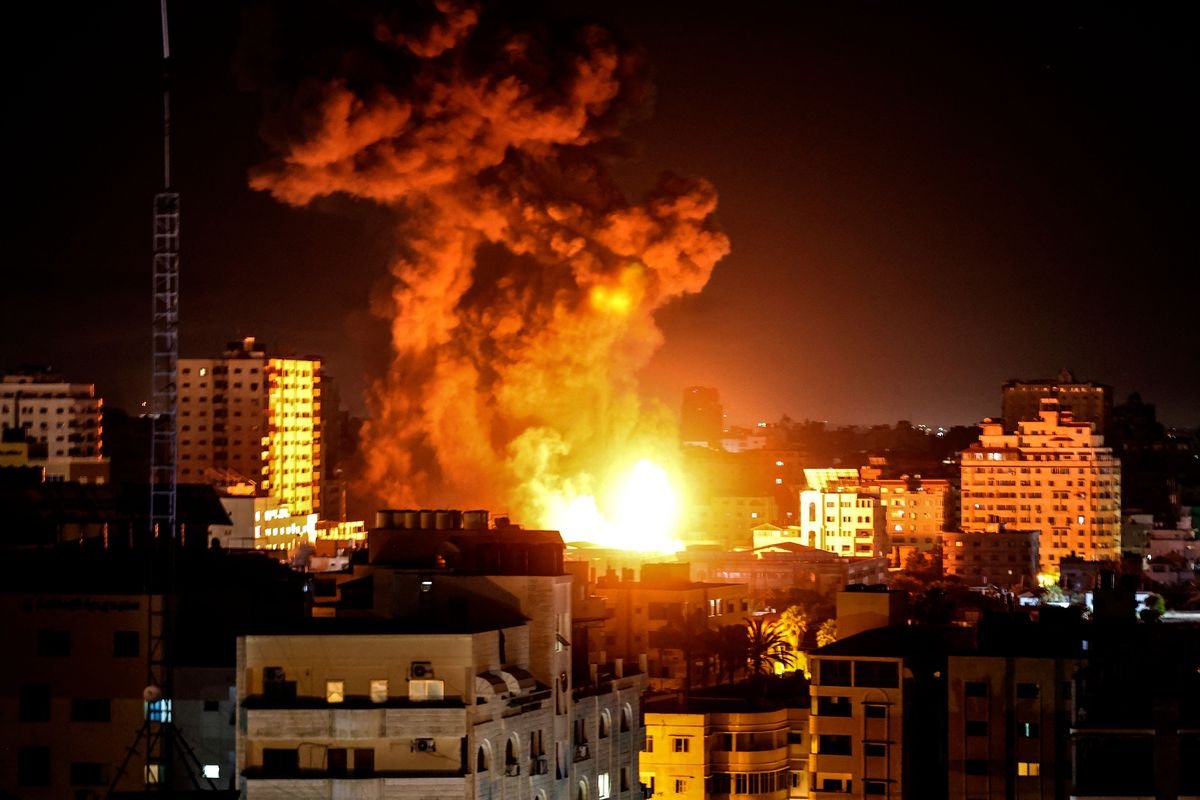

ISLAMABAD: The death toll in the ongoing conflict between Israel and Hamas has reached 1,800, with approximately 1,000 Israelis killed and 830 Palestinians martyred.
The death toll from the conflict has considerably increased.
On Tuesday, Hussein Al-Sheikh, the secretary general of the executive committee of the Palestine Liberation Organization (PLO), revealed that Israel had denied a request to permit the delivery of food and medical supplies into the Gaza Strip.aa

He urged international humanitarian organizations and the global community to take immediate action to halt the aggression, facilitate the entry of relief supplies, and restore electricity and water services, as the Gaza Strip grapples with a severe humanitarian crisis.
In addition, approximately 200,000 Palestinians have been forced to leave their homes due to the airstrikes in the Gaza Strip. The situation continues to worsen, with both sides involved in hostilities, further aggravating the humanitarian crisis in the region.
Joe Biden says Hamas attacks on Israel were ‘sheer evil’
In a televised speech on Tuesday, US President Joe Biden condemned Hamas’ attack on Israel as “sheer evil.” He characterized it as an act of pure and unadulterated evil.
Israeli military spokesperson Daniel Hagari confirmed that no Hamas fighters had breached the fence in the past 24 hours, but the possibility of some remaining in Israeli-controlled areas was not ruled out. Mines were being planted in breached barrier areas to prevent further infiltrations.
The situation worsened due to Hamas’ unprecedented ground, air, and sea assault, which Israel likened to the September 11, 2001 attacks on the US. This conflict has inflicted significant casualties and infrastructure damage in Israel.
Esclating Crisis: Conflict and Blockades
Hamas launched rockets into Israel’s city of Ashkelon from Gaza, warning residents to evacuate their homes. Simultaneously, rockets fired from southern Lebanon into Israel provoked retaliatory fire.The situation on the Israeli-Lebanese border has escalated, raising concerns of further violence.
Israeli authorities reported discovering around 1,500 bodies of Hamas fighters in Israel near the Gaza Strip, as Israeli airstrikes continued. Security forces claim to have “more or less restored control over the border” and are working on building infrastructure for future operations.
Iran’s Supreme Leader, Ayatollah Ali Khamenei, denied Iranian involvement in the Hamas attack on Israel, despite supporting the Palestinian group. The conflict has heightened Middle East tensions, and Hamas has called on resistance fighters in various regions to join their efforts.
Gaza’s hospitals are facing a dire situation due to a lack of aid following the attacks in Israel and the Israeli army’s response. Humanitarian organizations are calling for a humanitarian corridor to ensure the entry of urgent medical aid into Gaza’s hospitals. Israel’s declaration of a “total blockade” on Gaza, including the prohibition of food and fuel supplies, has raised concerns about potential war crimes.
The ongoing conflict has had global repercussions, including a surge in oil prices and countries and organizations reviewing their aid and support to the Palestinians. Diplomatic efforts to end the conflict face challenges given the unprecedented nature of the Hamas assault.
The United Nations’ human rights commissioner emphasized that Israel’s total siege of the Gaza Strip, which deprives civilians of essential goods, violates international law. This siege further exacerbates the dire humanitarian situation in Gaza.
Threats and Humanitarian Crisis
Hamas threatened to execute an Israeli captive for every Israeli bombing of a civilian house without warning. The death toll from the clashes surpassed 1,500. The Israeli military claimed to have regained control of the Gaza fence, with the possibility of gunmen still within Israeli-controlled areas.
Israeli TV channels reported the death toll from the Hamas attack at 900 Israelis, with many injured and dozens taken captive. Among the Israeli casualties were young people at a desert music festival where some hostages were abducted. Israeli Prime Minister Benjamin Netanyahu vowed revenge.
Gaza’s Health Ministry reported at least 830 Palestinians martyred and over 3,726 wounded in Israeli airstrikes, with infrastructure, including apartment blocks, a mosque, and hospitals, targeted. Israel also bombed the Palestinian Telecommunication Co’s headquarters, affecting telecommunications.
Hamas threatened to execute Israeli captives held after their attack, raising tensions. Palestinians received warnings from Israeli security officers to leave certain areas, while sirens alerted Israeli communities to incoming rocket fire.
Israel’s activation of 300,000 reservists fueled speculation of a ground assault on Gaza. The US pledged additional security assistance to Israel.
Foreign governments reported casualties from the Hamas attacks, and President Biden announced that the conflict had claimed the lives of at least 11 Americans. He expressed a commitment to work with Israeli counterparts on hostage recovery efforts.
The Israeli Defense Minister’s announcement of a tightened blockade to prevent food and fuel from reaching Gaza drew international condemnation, with rights groups labeling it a war crime.
137,000 people taking shelter with UNRWA
UN Secretary-General Antonio Guterres reported 137,000 people sheltering with UNRWA. Several governments expressed support for the legitimate aspirations of both Palestinians and Israelis and called for an end to violence.
Egyptian and Turkish leaders called for an immediate end to the violence. Qatar mediated negotiations for the release of hostages on both sides.
The fear of the conflict spreading led to increased market volatility, with rising oil prices and service disruptions for international air carriers.
