

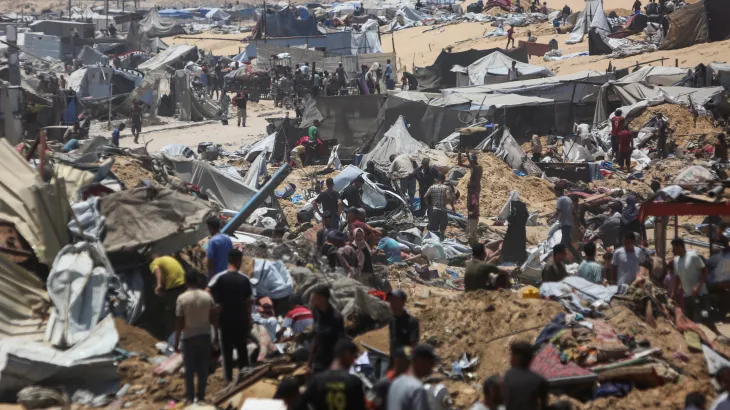

Israel is facing mounting domestic and international criticism following its security cabinet’s approval of a new plan to seize control of Gaza City — a move that marks a significant escalation in the nearly two-year-old conflict with Hamas in the Palestinian enclave.
The decision, announced early Friday by Prime Minister Benjamin Netanyahu’s office, comes as the Israeli military expands operations within Gaza. Gaza City, often referred to as the “heart” of the territory, is considered a symbolic and strategic stronghold of Hamas. According to retired Israeli Brigadier General Amir Avivi, taking Gaza City would effectively give Israel control of approximately 85% of the Gaza Strip, making it a major turning point in the conflict.
However, the announcement has sparked an outcry at home and abroad. Opposition leader Yair Lapid labelled the plan a “disaster,” accusing far-right ministers Itamar Ben Gvir and Bezalel Smotrich of pressuring Netanyahu into a prolonged and dangerous campaign that risks the lives of Israeli hostages and soldiers. There are currently around 50 hostages still held in Gaza, with Israeli officials estimating that 20 may still be alive.
International Condemnation and Growing Diplomatic Strain
Internationally, the backlash has been swift. Germany, a long-time ally of Israel, announced it would halt the export of military equipment that could be used in Gaza. The UK also urged Israel to reconsider its military escalation, while Saudi Arabia condemned any attempt to occupy Gaza, reiterating that normalization of ties with Israel would be impossible without the establishment of a Palestinian state.
European Commission President Ursula von der Leyen joined other global leaders in calling for restraint, amid growing concern over the humanitarian crisis in Gaza, where approximately 900,000 people — many of them displaced — now live in Gaza City.
US Ambassador Mike Huckabee, however, defended Israel’s actions, arguing that criticism should be directed at Hamas. He stated that former President Trump remains frustrated by Hamas’ unwillingness to agree to a ceasefire or disarmament, asserting that the group must be removed from power for lasting peace to be achieved.
Mounting Pressure on Netanyahu from Within
Back home, Netanyahu’s coalition faces growing dissent, especially from the families of hostages. The Hostages Families Forum denounced the Gaza City plan as “a march of recklessness,” claiming the government is prioritizing military objectives over the safe return of captives.
Public opinion is also shifting. Recent polls show a majority of Israelis support a diplomatic resolution that prioritizes the release of hostages. Many view the decision to fully reoccupy Gaza as a reversal of Israel’s 2005 disengagement, which saw the withdrawal of settlers and troops, though Israel maintained control over borders and infrastructure.
As the war approaches its second year, the decision to expand military control in Gaza is shaping up to be a defining and divisive moment in Israel’s political and military strategy — one that could have long-lasting regional and global repercussions.
