

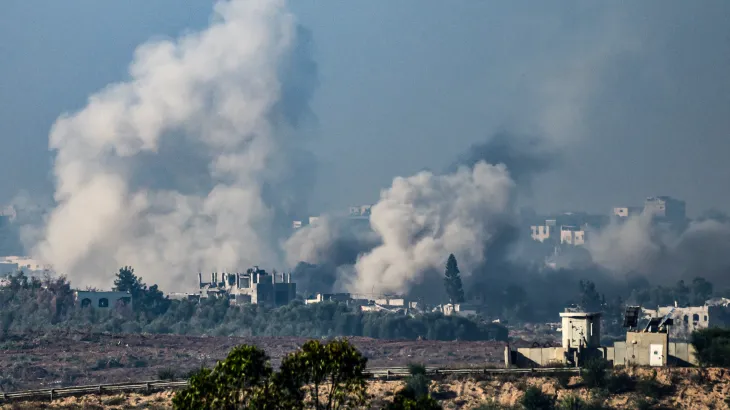

Gaza City, March 18, 2025 — In a dramatic escalation of violence, Israel has ended the ceasefire that had been in place for several days, renewing heavy bombardment across the Gaza Strip. The airstrikes, which began early Tuesday morning, have resulted in the deaths of more than 300 people, including a significant number of children, according to local health authorities.
The attack marks a sharp intensification of the ongoing conflict between Israel and Gaza-based militant groups, which has already caused significant civilian casualties and destruction. Gaza’s health ministry reported that among the dead are scores of women and children, with hospitals overwhelmed by the influx of injured survivors.
Deadliest Strike in Days of Escalation
The airstrikes, which targeted multiple sites across Gaza, including residential buildings, schools, and medical facilities, have left entire neighborhoods in ruins. The intense bombing campaign has created a dire humanitarian crisis, with civilians trapped under rubble and many left without access to basic necessities, including food and medical supplies.
The Israeli military confirmed the strikes, stating that they were targeting “terrorist infrastructure” in response to continued rocket fire from Gaza. However, the widespread destruction has led to international condemnation, with human rights organizations accusing Israel of disproportionate force and disregarding the safety of civilians.
Children Among the Victims
Among the more than 300 confirmed dead, at least 50 are reported to be children, with many more injured. Gaza’s health ministry has expressed alarm at the high number of child casualties, calling the attack a “massacre” and demanding international intervention to protect innocent lives.
“We are seeing children, families, and the elderly being killed in their homes,” said Dr. Yasser al-Ahmed, a spokesperson for Gaza’s health ministry. “The bombardment has left a trail of destruction, and hospitals are struggling to keep up with the number of casualties.”
International Calls for Immediate Ceasefire
The renewed violence has sparked widespread international outrage, with calls for an immediate ceasefire and renewed efforts toward a long-term peace agreement. The United Nations, as well as various governments, have urged both Israel and Palestinian factions to return to the negotiating table and halt the violence before more lives are lost.
“An immediate ceasefire is essential to prevent further escalation and to address the dire humanitarian situation in Gaza,” said UN Secretary-General António Guterres. “The international community must take action to protect civilians and ensure that all parties adhere to international law.”
Gaza’s Desperate Situation
The situation in Gaza has become increasingly desperate as power and water supplies have been severely disrupted by the ongoing airstrikes. Many areas are now without electricity, and hospitals are operating at full capacity with limited resources. The United Nations has warned that the humanitarian crisis could worsen in the coming days unless urgent assistance is delivered to the region.
Humanitarian organizations have also expressed concern over the lack of safe passage for aid convoys into Gaza, with the crossing points between Gaza and Israel often closed due to the fighting. As civilian casualties continue to mount, the need for international aid and intervention has never been more urgent.
Israel’s Justification for the Attack
In a statement, the Israeli military said the airstrikes were a necessary response to ongoing rocket attacks launched from Gaza into southern Israel. The military claimed that it had targeted Hamas’ military infrastructure and weapon storage sites, which it says are located within civilian areas.
The latest escalation follows weeks of rising tensions between Israel and Gaza-based militant groups. Although a ceasefire was briefly observed, it has now been shattered, plunging the region back into intense fighting and violence.
The Road to Peace Remains Unclear
As the death toll continues to rise, the prospects for peace appear increasingly uncertain. Despite multiple ceasefires and peace initiatives over the years, the conflict between Israel and Gaza remains deeply entrenched, with no clear resolution in sight. The international community’s calls for dialogue have so far failed to bring about lasting peace.
As airstrikes continue to devastate Gaza, the plight of the civilian population grows more dire by the hour. The loss of life, especially among vulnerable children, has brought the horrors of the conflict into sharp focus, intensifying the global outcry for an immediate end to the violence.
