


Gaza Truce
Israel announced on Sunday that it had endorsed a proposal to temporarily extend the truce in Gaza as a bridging measure after the first phase of its ceasefire agreement with Hamas reached its conclusion.
The proposal was introduced by U.S. President Donald Trump’s Middle East envoy, Steve Witkoff. According to a statement from the Israeli prime minister’s office, the plan would extend the ceasefire through the Islamic holy month of Ramazan, which ends in late March, and the Jewish holiday of Passover, lasting through mid-April. The statement was released just after midnight, emphasizing Israel’s support for maintaining the ceasefire under specific conditions.
The first phase of the truce between Israel and the Palestinian militant group Hamas was set to expire over the weekend, with uncertainty looming over the second phase, which is expected to determine whether a more permanent cessation of hostilities can be achieved. However, negotiations have yet to yield conclusive results, leaving both the fate of hostages still held in Gaza and the well-being of more than two million Palestinian residents hanging in the balance.
Under the proposed extension, half of the remaining hostages in Gaza would be released on the day the deal takes effect, with the rest freed if an agreement is reached on a permanent ceasefire. Hamas has yet to respond to the proposal officially, though the group previously rejected the idea of an extension, emphasizing its preference for a more comprehensive resolution.
Israel’s endorsement of what it described as a U.S.-led initiative comes amid increasing global pressure to avoid restarting hostilities. The war, which has lasted for 15 months, has left Gaza devastated, displaced almost its entire population, and triggered a worsening hunger crisis.
United Nations Secretary-General António Guterres warned of the catastrophic consequences of resuming the war, stressing that a permanent ceasefire and the release of all hostages were essential steps to prevent further escalation and protect civilian lives.
Meanwhile, the United States announced on Saturday that it was increasing military aid to Israel. Secretary of State Marco Rubio invoked emergency powers to expedite the delivery of approximately $4 billion in military assistance. The move follows the reversal of a partial arms embargo that had been imposed under former President Joe Biden’s administration.
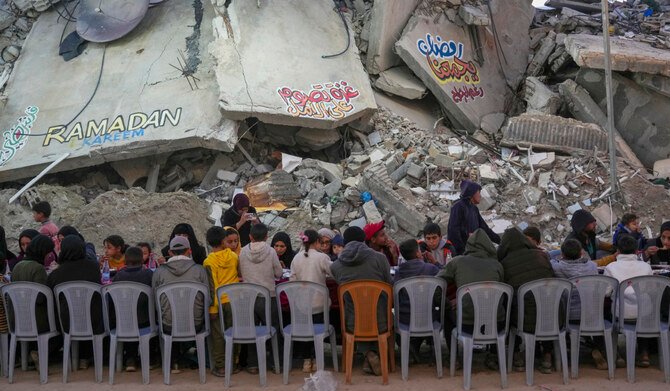
Israeli officials had engaged in ceasefire negotiations in Cairo last week, working with mediators from Egypt, Qatar, and the United States. However, by early Saturday, no consensus had been reached, even as Muslims in Gaza marked the first day of Ramazan amid the ruins of war-damaged neighborhoods.
A senior Hamas official told AFP that the group was prepared to release all remaining hostages in a single exchange as part of the second phase of the deal. However, analysts suggested that Hamas might struggle to force Israel into committing to this phase.
The six-week ceasefire, which began on January 19, resulted in Gaza militants releasing 25 hostages and returning the bodies of eight others to Israel in exchange for the release of hundreds of Palestinian prisoners. The agreement had largely paused the conflict, which erupted following Hamas’s October 7, 2023, attack on Israel.
Despite Hamas reiterating its willingness to negotiate for a second phase, Israel has remained focused on securing additional hostage releases under an extended first phase. A Palestinian source close to the negotiations revealed that Israel had suggested prolonging the first phase through successive one-week extensions, conducting hostage-prisoner swaps each week. However, Hamas rejected the proposal.
According to Israeli military figures, of the 251 hostages taken during Hamas’s attack, 58 remain in Gaza, including 34 who are believed to be dead.
Hamas recently released a video showing what appeared to be a group of Israeli hostages still in captivity. The footage included a message stating, “Only a ceasefire agreement brings them back alive.” While AFP could not immediately verify the video, Israeli Prime Minister Benjamin Netanyahu’s office condemned it as “cruel propaganda.”
However, the Hostages and Missing Families Forum, an Israeli campaign group, confirmed that the family of two hostages appearing in the video had given permission for the footage to be shared publicly. The family of Israeli-Argentine hostage Yair Horn, who was freed on February 15 while his brother Eitan remains in captivity, urged decision-makers not to halt the ongoing negotiations.
Political factors within Israel’s government have further complicated the ceasefire talks. Israeli Finance Minister Bezalel Smotrich, a key figure in the far-right faction of Netanyahu’s governing coalition, has threatened to resign if Israel does not resume the war. Analysts warn that Netanyahu’s government could collapse if it moves toward a second phase of the ceasefire.
Israel has also maintained its position that retaining troops along Gaza’s border with Egypt is necessary to prevent Hamas from smuggling weapons into the enclave.
Since the start of the war, Israel’s military campaign in Gaza has resulted in the deaths of over 48,388 Palestinians, mostly civilians, according to figures provided by Gaza’s health ministry. Meanwhile, Hamas’s initial attack on October 7 led to the deaths of 1,218 people in Israel, primarily civilians.
As diplomatic efforts continue, the world watches closely to see whether Israel and Hamas can reach a long-term resolution or whether violence will once again escalate in the war-ravaged region.
