
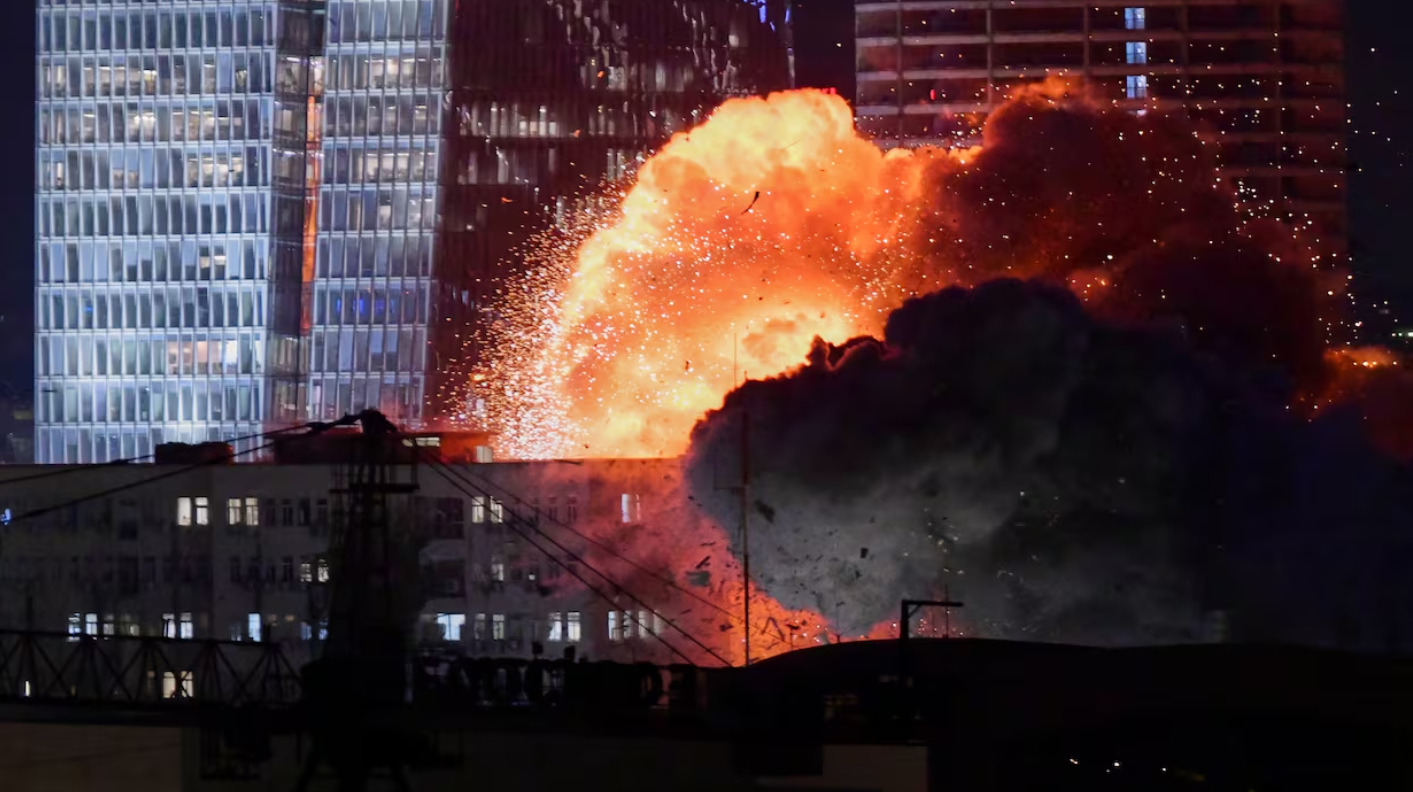

The Middle East conflict entered its second month with renewed missile and drone exchanges between Israel and Iran.
Both sides launched fresh attacks on Sunday, signalling continued escalation across multiple regional fronts.
The latest developments highlight growing risks for neighbouring countries and critical infrastructure.
As tensions rise, military activity has expanded beyond traditional battlegrounds.
Gulf Aluminium Facilities Targeted in Strikes
Major aluminium production facilities in the United Arab Emirates and Bahrain were struck during coordinated attacks.
Several workers were injured, raising concerns about the safety of industrial zones in the Gulf region.
In Abu Dhabi, six workers sustained injuries following an attack on a key industrial site.
Meanwhile, two individuals suffered minor injuries after a strike targeted a major aluminium plant in Bahrain.
Iran’s Islamic Revolutionary Guard Corps claimed responsibility for the attacks.
The group stated that the targeted facilities maintained links to US military and space-related activities.
Consequently, analysts fear that economic infrastructure may increasingly become part of the conflict landscape.
Intensified Strikes Reported Across Iran
At the same time, Israel and the United States intensified military operations across several locations in Iran.
Multiple strikes reportedly focused on alleged weapons depots and air defence systems.
In Iran’s Hormozgan province, an attack on a port killed at least five people and injured four others.
The strike also damaged two vessels and a nearby vehicle, increasing concerns over maritime security.
Separately, a residential area near the city of Shaft was hit during another strike.
One person died, while five others were wounded in that incident.
Explosions were heard in Tehran and the nearby city of Karaj early Sunday morning.
Smoke was seen rising from mountainous areas, although full operational details remain unclear.
Hezbollah Opens Northern Front With Rocket and Drone Fire
Meanwhile, tensions expanded along Israel’s northern border as sirens sounded due to incoming rocket fire from Lebanon.
Hezbollah claimed responsibility for several coordinated attacks.
The group said it launched rockets toward the town of Metula early in the morning.
Another rocket salvo reportedly targeted the village of Shtul shortly afterward.
In addition, Hezbollah announced a drone strike against the Rawiya base in the occupied Golan Heights.
Rockets were also fired toward a site near the village of Ghajar.
These developments indicate growing regional involvement beyond the primary Israel-Iran confrontation.
Saudi Arabia Intercepts Multiple Drones
Saudi Arabia also reported heightened aerial threats during the same period.
The Saudi Defence Ministry announced that air defence systems intercepted and destroyed ten drones within hours.
Officials did not disclose interception locations or confirm any damage or casualties.
However, the announcement underscores the widening geographic scope of the conflict.
Regional Stability Faces Increasing Pressure
The expanding pattern of missile and drone attacks reflects rising instability across the Middle East.
Industrial sites, ports, and military positions have increasingly become targets.
As the war continues into its second month, regional actors remain on high alert.
Furthermore, continued escalation risks disrupting trade routes and economic activity.
Diplomatic solutions remain uncertain, while military exchanges continue shaping developments on multiple fronts.
For now, civilians and infrastructure across the region remain vulnerable to rapidly changing security conditions.

