

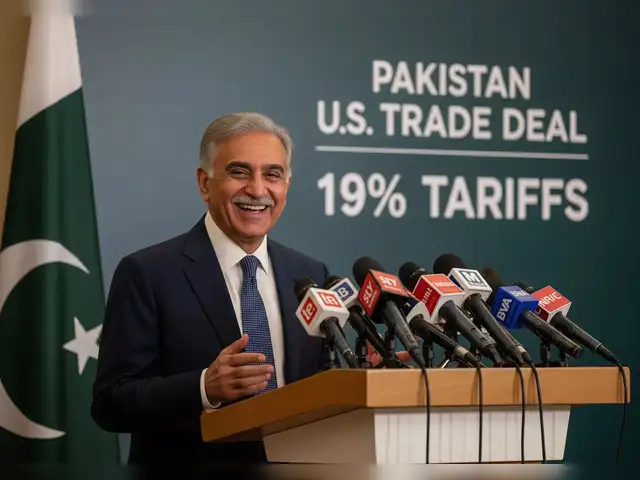

Pakistan and the United States are currently engaged in negotiations to finalise the specifics of a new trade deal that also includes potential investment projects, according to a report by Bloomberg on Monday.
This follows Pakistan’s introduction of the lowest tariff rate among major South Asian economies, positioning itself as a competitive player in the regional market.
Under the revised policy, Pakistan’s tariff rate now stands at 19%, lower than that of several regional competitors—India at 25%, Bangladesh at 20%, Vietnam at 20%, and Sri Lanka at 20%. The move, officials say, is aimed at boosting trade competitiveness and attracting foreign investment.
Speaking to Bloomberg TV, Bilal Azhar Kayani revealed that Prime Minister Shehbaz Sharif’s administration intends to push for better tariff arrangements on select exports in the ongoing talks with Washington. “The agreement with more details will be negotiated and discussed in the months ahead,” Kayani said, adding that further refinements would be made in future discussions.
The 19% tariff agreement marks a significant reduction from the initially proposed 29%, achieved through a new executive order signed last month by US President Donald Trump.
This development comes amid improving bilateral ties, underscored by Trump’s invitation to Pakistan’s Chief of Army Staff, General Asim Munir, for a meeting at the White House—his second visit to the US within a few months.
During the announcement, Trump disclosed that the US would partner with Pakistan to develop its vast oil reserves, with an American oil company soon to be selected for the venture. He even suggested that, in the future, Pakistan might be in a position to sell oil to India.
The trade deal was announced the same day Trump unveiled a major tariff offensive against India, threatening duties of up to 50% unless New Delhi halts purchases of Russian oil and weapons. He also warned of heightened tariffs on Russia and secondary sanctions on its allies should Moscow refuse to end the war in Ukraine.
Trump further criticised India’s engagement with the BRICS bloc, noting reports of Prime Minister Narendra Modi’s planned visit to China—the first in over seven years.
