


By S. Zeeshan A Shah
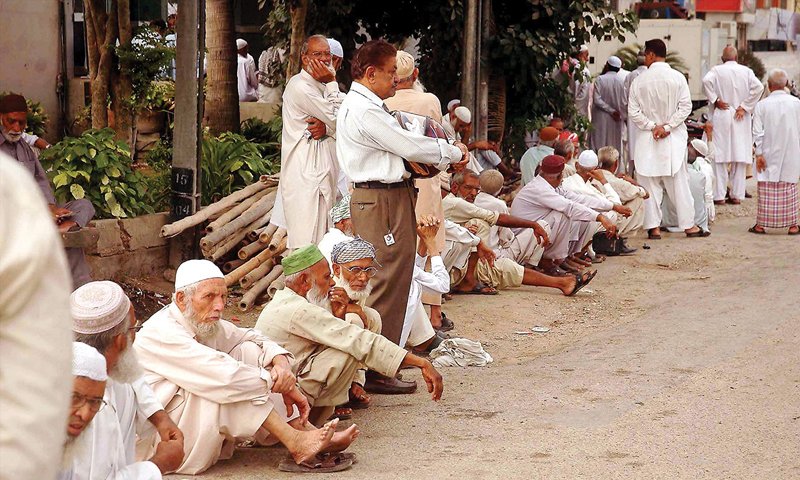
On Human Rights Day today every year, the world pledges to uphold basic human rights and protect its vulnerable populations including children and the elderly. Unfortunately, Pakistan has been in a flux when it comes to ensuring sanctity of human rights in a country facing extreme human rights challenges for last many years. We have usually seen lack of adherence to laws with a complete lack of apathy towards senior citizens of our nation, with elitism and corruption preventing progress and good governance reforms for the masses, which includes senior citizen rights.
Are Senior Citizen Rights considered Human Rights in Pakistan? Maybe not. When we dig deep, we realize that Pakistan is blessed with over 15 million senior citizens who are the real treasure for our country-the undeniable and history hub of knowledge for our future generations. Yet less than 3% of their population receives old age benefits under the government policy. Do we give that respect to our senior citizens by ensuring them such as basic healthcare, safe housing, decent savings and mental healthcare? Not really.
In the twilight years of their lives, senior citizens do not have the basic human rights, living a life of discomfort, loneliness, lack of empathy, unease and discontent. I see people leaving their parents in the comfort of maids and servants, leading ordinary lives with extraordinary mental health challenges without comfort and care. Respect for them must also come with privileges, like mental and psychological support and safe housing spaces for them with medical care.
We are a morally and ethically intolerant nation and we must change that fast. Pakistan has an average life expectancy falls between 60-77 years where only 2% of senior citizens are pensioners while the rest are at the mercy of their family and environment. If we review global rankings, Pakistan ranks low on its health domain.
Senior Citizens are not cared for properly with our civic freedom index at 46% and public transport at 55% compared to regional averages of 67% and 65% respectively. We used to have one of the lowest age to poverty ratio at 1.8% but that was decades back. On the income security domain, Pakistan has maintained one of the lowest pension-coverage in Asia (at less than 2.5%). But what about the elderly who do not get any pensions? Do we leave them stranded?
In 2014, Pakistan took notice of the situation at the provincial levels as KPK province became the first province in the country to pass the Senior Citizens Welfare Act 2014, to legitimatize the cause and support the welfare of the elderly, both living within the family nucleus as well as the homeless.
Next was the initiative launched by the Sindh government through ‘Azadi Cards” for its senior residents by effectively registering senior citizens which ensured timely release and dispensation of pension funds more effectively. But for senior citizens at large, nothing sound was implemented.
For example, there is no comprehensive medical health coverage for the retired and the elderly in the entire province of Sindh, which is remarkably shocking. In the age of information technology, research today indicates that nuclear families who live with senior citizens are more positive, caring and happy where age and longevity go hand in hand building a positive home environment as compared to a culture of isolation and depravity. Where children are loved and cared for by their grandparents as compared to the broken home culture due to family alienation and the absence of senior citizens. It is far more enriching to foster healthy senior citizens and ensure good provisions for them to sustain the overall root of the family tree.
Every responsible nation must endorse such policies that raise the moral and ethical aptitude of its citizens. The Senior Citizens Welfare Bill passed in 2014 was then formulated as an ACT (under law) in 2016. According to the law, the government shall prescribe a comprehensive action plan for the protection of life and property of senior citizens and the social welfare department will be responsible to implement the law. We really cannot be certain today on the practical implementation of that action plan today as law as majority of senior citizens stand deprived of their rights to live and prosper with financial and social stability.
Moreover, a senior citizen council was proposed to be legislated that will work towards policy-making for the wellbeing of senior citizens as per Act and law. This will include members of the provincial assembly, local government, members of NGOs, human rights associations, social welfare departments, retired government officers and healthcare practitioners. For example, free funeral and burial services will be ensured to all senior citizens upon death as per clause 2.5 (J) of the Welfare Act.
There is a lot that we can do for our elderly. Issuing them lifetime discounts cards where they have a discount on essential purchases, like food, water and medicines. We can also give them transportational benefits, through low fares and travel discounts and free upgrades. In Pakistan, our elders are more vulnerable due to social and economic challenges and the government must move towards becoming a welfare state. Real issues are not resolved by simply drafting laws alone.
The Senior Citizens Act must be revisited effective immediately and urgent reforms must also be implemented to safe guard our senior citizens, so that policies may benefit our most valuable yet under privileged segments of society. This may finally make us become a great country with vision, hope and dignity, re-setting our paths towards true progress and peace.
