
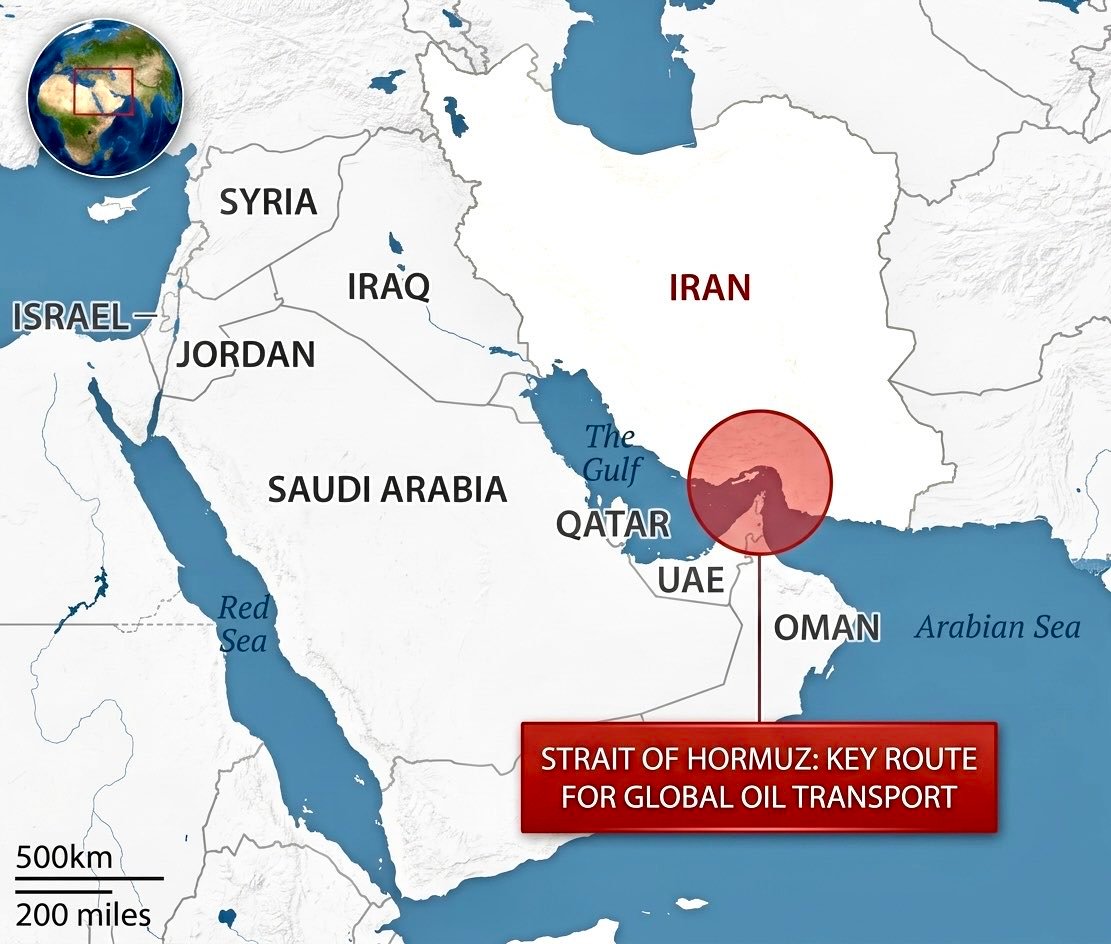

Strait of Hormuz: The Strait of Hormuz has been classified as neither closed justifying a military strike, nor it is open in the proper sense of the word. Prominent Sri Lankan Geo Strategic Expert Shanaka Anselm Parera in his latest Twitter News feed has claimed and argued that the Strait current status can be classified as unique; as it is changing the rules of games, not just for the strait but for the future of US Dollar as preferred currency of Exchange.
Abridged Twitter Feed: Shipping through the Strait of Hormuz has slowed dramatically as Iran enforces a restricted, permission-based transit system controlled by the Islamic Revolutionary Guard Corps. Instead of a full closure, authorities now allow limited vessel movement through a tightly managed 5-nautical-mile corridor between Larak and Qeshm islands.
According to maritime sources, only three ships passed through the strait in the last 24 hours, compared to a pre-conflict daily average of around 60. Consequently, total throughput has dropped to roughly three percent of normal levels, leaving nearly 400 vessels stranded outside the waterway. These include tankers, bulk carriers, and other cargo ships awaiting clearance.
To gain access, operators must submit detailed documentation through intermediaries linked to the IRGC. After security, cargo, and geopolitical screening, approved vessels receive clearance codes, routing instructions, and escort services. However, authorities process ships one at a time, further slowing traffic.
Meanwhile, Iranian crude exports continue with relative stability, with shipments largely directed toward China. In contrast, non-oil cargo, particularly fertilizer shipments, remains largely blocked. This disruption has raised concerns about global supply chains, especially as Gulf countries supply nearly half of the world’s exported urea.
Additionally, the corridor imposes a transit fee of about $2 million per tanker, typically payable in Chinese yuan. Therefore, analysts view this system not only as a security measure but also as a strategic economic shift.
As a result, the situation has begun to affect global markets, fuel supplies, and currency dynamics, with experts warning of long-term implications for international trade and energy pricing.

