

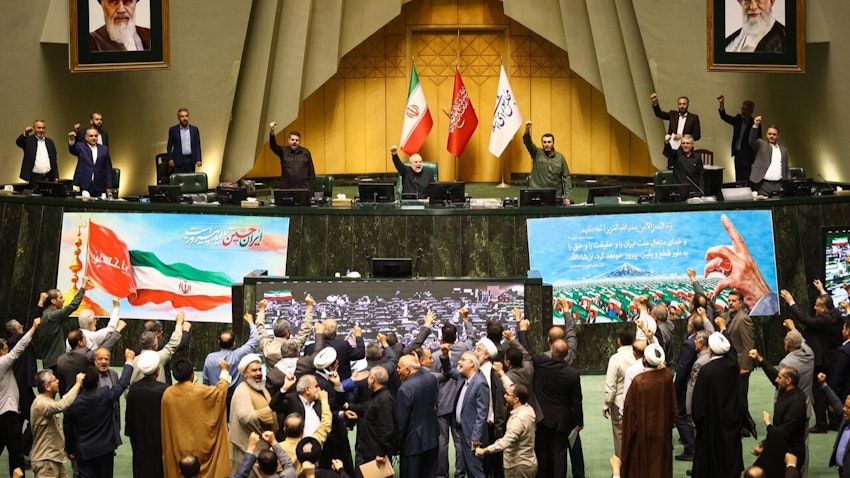

TEHRAN: Iran’s Guardian Council has approved a bill passed by parliament to suspend the country’s cooperation with the International Atomic Energy Agency (IAEA), state media reported, marking a significant escalation in tensions with international nuclear oversight bodies.
The legislation, passed on Wednesday with 222 votes in favor, none against, and one abstention, prohibits IAEA inspectors from accessing Iranian nuclear facilities unless Tehran receives firm security guarantees. The bill also restricts activities such as the installation of surveillance cameras, submission of reports, and site inspections.
The move is widely viewed as a response to what Iranian officials describe as increasing threats to the country’s nuclear infrastructure, particularly following recent U.S. and Israeli military actions targeting nuclear facilities in Natanz, Fordow, and Isfahan. Tehran has condemned the attacks as violations of international law and the UN Charter.
The Guardian Council, a powerful 12-member constitutional body that oversees legislation and elections in Iran, gave its final approval to the bill, enabling it to become law. The council has veto power over parliamentary decisions and plays a key role in shaping Iran’s political and legal landscape.
Ebrahim Rezaei, spokesperson for the parliament’s National Security and Foreign Policy Committee, said the bill was reviewed and approved earlier this week, adding that Iran will withhold cooperation with the IAEA unless it receives “tangible guarantees” of the agency’s impartial conduct.
“The bill mandates that Iran suspend all cooperation with the IAEA until the security of our nuclear facilities is assured,” Rezaei said, emphasizing that the law covers inspections, monitoring equipment, and reporting obligations.
The decision comes in the wake of rising regional tensions, with Tehran accusing both Israel and the United States of acts of aggression on Iranian territory. Iran’s Atomic Energy Organization (AEOI) denounced the attacks as breaches of the Nuclear Non-Proliferation Treaty (NPT), but reaffirmed that they would not deter Iran from continuing its peaceful nuclear activities.
Iran has repeatedly stated that its nuclear program is intended for civilian purposes, though Western powers remain concerned about potential weaponization.
Suspension of cooperation with the IAEA is likely to further strain Iran’s relations with the international community and complicate diplomatic efforts to revive stalled nuclear talks.
