
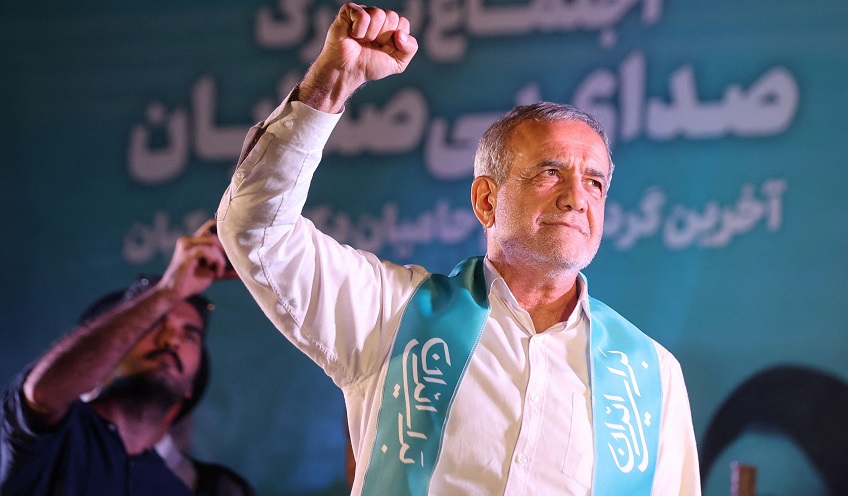

Tehran demands guarantees and reparations to stop the conflict
Iranian President Masoud Pezeshkian said the only path to ending the ongoing war with the United States and Israel lies in recognising Tehran’s legitimate rights and providing firm international guarantees against future attacks.
In a message posted on X on Wednesday, Pezeshkian said he had spoken with leaders from Russia and Pakistan about the escalating regional crisis.
“I reaffirmed Iran’s commitment to peace in the region,” he said. However, he added that the war—triggered by what he described as aggression by Israel and the United States—would only end if Iran’s rights were acknowledged, reparations were paid, and credible guarantees prevented further attacks.
Regional tensions have intensified since joint US-Israeli strikes began on February 28. According to Iranian authorities, more than 1,300 people have been killed and over 10,000 injured, including former supreme leader Ali Khamenei.
Meanwhile, Tehran has launched retaliatory drone and missile attacks targeting Israel and locations across Jordan, Iraq, and Gulf states hosting US military assets. Iran has also effectively shut down the strategically vital Strait of Hormuz, through which roughly one-fifth of global oil supplies normally pass.
US bases damaged as war risks turning into a prolonged conflict
The New York Times analysis reported that Iranian strikes have damaged at least 17 American military, diplomatic and air-defence sites across the Middle East.
Among the targets were components of the Terminal High Altitude Area Defense system and an early-warning radar facility near Umm Dahal in Qatar.
In addition, the US Navy’s Fifth Fleet headquarters in Bahrain reportedly suffered damage estimated at about $200 million. Iranian attacks also forced temporary closures of US diplomatic missions in Dubai, Kuwait City and Riyadh.
As the conflict entered its 12th day, Iran’s Revolutionary Guard warned that economic targets linked to US and Israeli interests could be struck. Officials cautioned that the confrontation could evolve into a prolonged war of attrition with far-reaching global economic consequences.

