

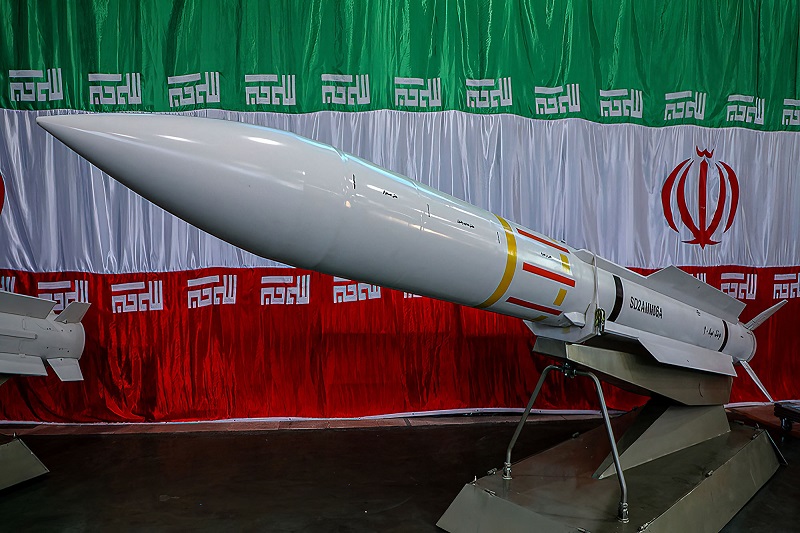

Iranian officials are weighing options to target airbases of the United States in retaliation to the US attack on nuclear sites in Iran.
On Sunday, Iran vowed to defend itself following the largest Western military assault on its soil since the 1979 Islamic Revolution. The joint U.S.-Israeli operation has been widely condemned by international actors urging restraint and a return to diplomacy.
Meanwhile, Iran and Israel exchanged missiles and airstrikes on Monday, escalating tensions across the region as the world anxiously awaited Tehran’s full response to the U.S. strikes on its nuclear facilities. Meanwhile, U.S. President Donald Trump intensified rhetoric by suggesting regime change in Iran, drawing further global concern.
Commercial satellite imagery showed that Saturday’s U.S. airstrike caused significant damage to Iran’s heavily fortified Fordow nuclear facility, reportedly destroying underground centrifuge arrays used for uranium enrichment. While analysts believe the site sustained major structural harm, the exact status remains unconfirmed.
In a statement on his Truth Social platform, Trump declared, “Monumental Damage was done to all Nuclear sites in Iran,” adding that the “biggest damage took place far below ground level. Bullseye!!!”
Trump warned Iran against retaliating, stating that future strikes would be “far greater and a lot easier” if Tehran chose escalation over peace.
General Dan Caine, chairman of the Joint Chiefs of Staff, said the U.S. deployed 75 precision-guided weapons, including bunker-buster bombs and over two dozen Tomahawk missiles, targeting three major Iranian nuclear sites.
The International Atomic Energy Agency (IAEA) reported no spike in off-site radiation levels following the strikes. Director General Rafael Grossi told CNN it was still too early to evaluate the full extent of the damage underground.
A senior Iranian source claimed most of the highly enriched uranium had been relocated from Fordow prior to the strike, though Reuters was unable to verify the assertion.
In retaliation, Tehran launched a barrage of missiles at Israel, striking Tel Aviv and injuring scores while damaging buildings. However, Iran has so far held off on carrying out its most serious threats—striking U.S. bases or closing the Strait of Hormuz.
Blocking the strait, a critical conduit for global oil shipments, could trigger an economic shock and provoke a direct military confrontation with the U.S. Navy’s Fifth Fleet, stationed in the region.
Oil markets responded swiftly to the rising tensions. Brent crude rose by $1.88 (2.44%) to $78.89 per barrel, while U.S. West Texas Intermediate climbed $1.87 (2.53%) to $75.71 as of 1122 GMT Monday—reaching the highest levels seen since January.
Meanwhile, Iran’s parliament passed a motion to close the Strait of Hormuz. However, such a move would require approval from the Supreme National Security Council, led by an appointee of Supreme Leader Ayatollah Ali Khamenei. Iranian state broadcaster Press TV confirmed the decision now rests with the council.
