
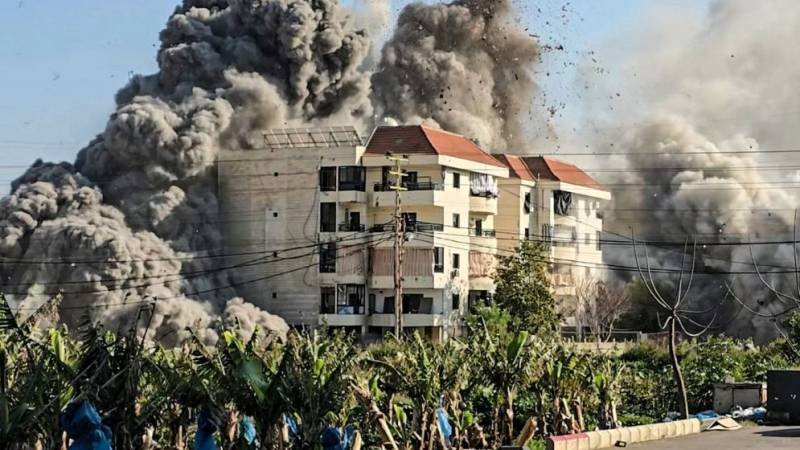

The fragile ceasefire between Iran and the United States showed signs of breaking down on Thursday, as escalating violence in Lebanon deepened regional tensions.
Although Washington and Tehran had both declared success after agreeing to a two-week truce and planned negotiations, the situation deteriorated rapidly. Israel launched its most intense strikes on Lebanon in weeks, targeting densely populated areas of Beirut. According to Lebanon’s Civil Defence, at least 254 people were killed and over 1,100 wounded in Wednesday’s attacks.
The escalation came despite the ceasefire, with Israel maintaining that its operations against Hezbollah fall outside the scope of the Iran-US agreement. This position was echoed by US Vice President JD Vance, who stated that Lebanon was not included in the truce terms.
In response, Hezbollah announced it had launched rockets toward Israel, accusing it of violating the ceasefire framework. Meanwhile, Iran signaled growing dissatisfaction. Parliament Speaker Mohammad Bagher Ghalibaf warned that the basis for negotiations had already been undermined, calling further talks “unreasonable.”
Ghalibaf cited multiple alleged breaches, including continued Israeli attacks in Lebanon, a reported drone incursion into Iranian airspace, and disputes over Tehran’s nuclear enrichment rights.
Further complicating matters, a senior US official indicated discrepancies between Iran’s proposed conditions and those accepted by the White House, raising doubts about the coherence of the agreement.
On the ground in Beirut, residents described scenes of panic and destruction following strikes on commercial and residential districts. The United Nations rights chief Volker Türk described the scale of casualties as “horrific.”
Since Israel expanded its military campaign last month, more than 1,700 people have been killed in Lebanon, according to local authorities, underscoring the mounting human cost and the precarious state of the ceasefire.

