


Trump letter
Iran has confirmed that a letter from U.S. President Donald Trump was delivered to its clerical leadership by Anwar Gargash, the diplomatic adviser to the President of the United Arab Emirates (UAE), according to a statement from Iran’s foreign ministry and reports from state media on Wednesday.
The letter follows Trump’s recent remarks in which he stated that he had proposed negotiations on a nuclear deal to Iran’s Supreme Leader, Ayatollah Ali Khamenei. The U.S. president also issued a warning, saying, “There are two ways Iran can be handled: militarily, or you make a deal” that prevents Tehran from acquiring nuclear weapons.
Ayatollah Khamenei, who has the final authority on all major state affairs in Iran, swiftly rejected any pressure tactics, asserting that Tehran would not succumb to talks under threats or excessive demands.
His stance was echoed by Iranian President Masoud Pezeshkian, who dismissed the possibility of negotiations under duress. In a fiery statement reported by state media on Tuesday, Pezeshkian told Trump to “do whatever the hell you want.”
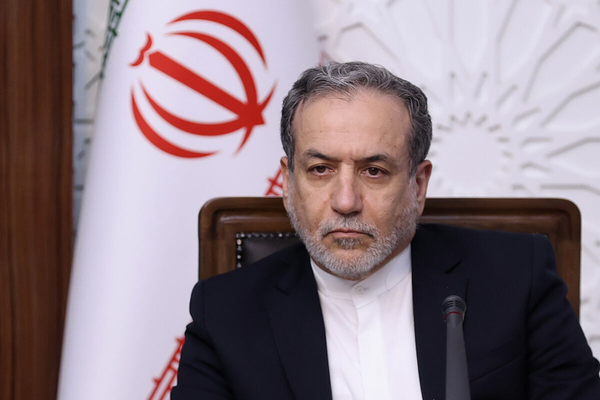
On Wednesday, Anwar Gargash held a meeting with Iranian Foreign Minister Abbas Araqchi, though Iran’s foreign ministry spokesperson, Esmaeil Baghaei, did not disclose the details of their discussions.
The UAE, a close security ally of Washington that also hosts U.S. troops, has maintained a complex yet functional relationship with Iran. Despite political tensions in the past, the two nations have preserved strong economic and trade ties, with Dubai serving as a key commercial hub for Iranian businesses for more than a century.
While Trump has expressed willingness to negotiate a new nuclear agreement with Iran, his administration has simultaneously reimposed the “maximum pressure” strategy that characterized his first term. This campaign aims to isolate Iran economically, primarily by reducing its oil exports to near zero.
In 2018, Trump withdrew the United States from the 2015 Iran nuclear deal, also known as the Joint Comprehensive Plan of Action (JCPOA), and reinstated crippling sanctions. Iran responded a year later by scaling back its commitments under the deal, exceeding the nuclear enrichment limits set by the agreement.
Iran has long denied pursuing nuclear weapons, insisting that its nuclear program is for peaceful purposes. However, the International Atomic Energy Agency (IAEA) recently reported that Iran’s stockpile of uranium enriched to 60% purity—just short of the 90% weapons-grade level—has increased significantly.
In a related development, Araqchi criticized a closed-door United Nations Security Council meeting on Wednesday, convened by six of its 15 members—France, Greece, Panama, South Korea, Britain, and the United States—to discuss Iran’s nuclear activities. He described the meeting as an unusual and questionable move, suggesting it cast doubt on the intentions of those who requested it.
Despite the ongoing tensions, Iran is set to continue diplomatic engagements with key global players. Araqchi confirmed that Tehran will soon hold a fifth round of discussions with France, Britain, and Germany—three of the original signatories of the 2015 nuclear deal.
Meanwhile, China’s foreign ministry announced that China and Russia would meet with Iranian officials in Beijing on Friday to discuss the future of Iran’s nuclear program.
Araqchi warned that any attempt by the UN Security Council or the IAEA’s board of governors to exert pressure on Iran could jeopardize the legitimacy of ongoing negotiations.
As diplomatic maneuvering continues, the future of Iran’s nuclear program remains a point of contention between Tehran and the international community.
