

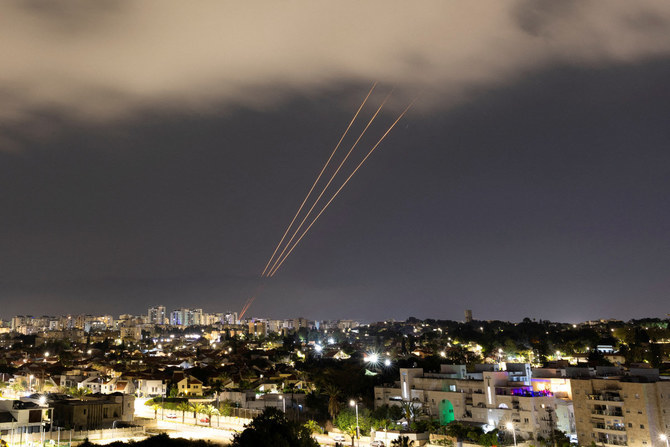

Iran has initiated a series of airstrikes and missile launches against Israel, marking a long-expected retaliatory strike. This marks the first direct confrontation between the two adversaries, who have been engaged in a covert conflict for years, primarily through the use of proxy forces.
The Israeli military reported that Israel, along with other nations, successfully intercepted the majority of the hundreds of cruise missiles and drones launched, most of which were aimed outside Israeli airspace.
US President Joe Biden stated that the US aided Israel in intercepting the majority of the attacks. He strongly condemned the assault, which he described as an unprecedented air attack on Israeli military facilities by Iran and its proxies from Yemen, Syria, and Iraq.
The attack comes after Iran accused Israel of carrying out a strike on its consulate in Syria on April 1, resulting in the deaths of seven IRGC officers, including a high-ranking commander. Israel neither confirmed nor denied its involvement in the incident.
Israeli Prime Minister Benjamin Netanyahu convened a war cabinet meeting in response to the Iranian attack and later discussed the situation with President Biden, who reiterated the US’s unwavering commitment to Israel’s security.
According to the Israel Defense Forces (IDF) spokesman Rear Admiral Daniel Hagari, while some Iranian missiles caused minor damage to a military base inside Israel, there were no reported casualties except for a young Bedouin girl injured by falling debris.
Hagari described the attack as a significant escalation and emphasized Israel’s determination to defend itself with the support of allies and partners. He noted that Iran had launched over 300 projectiles, with 99% being intercepted, and some originating from Iraq and Yemen.
Reports indicated that US forces intercepted several drones, though specifics were not provided. The UK Ministry of Defence deployed RAF jets in Iraq and Syria to intercept potential airborne threats within the range of existing missions.
Sirens blared across Israel, and explosions were heard in Jerusalem as air defense systems engaged incoming objects. Israel, Lebanon, and Iraq closed their airspace, while Syria and Jordan heightened their air defense readiness.
The IRGC claimed responsibility for the attack, citing retaliation for alleged Israeli actions, including the consulate incident in Damascus.
Before news of the Iranian launches, Prime Minister Netanyahu affirmed Israel’s readiness for any scenario and appreciated US and international support.
President Biden, having returned to the White House amid escalating tensions, pledged to coordinate a diplomatic response with G7 leaders.
UK Prime Minister Rishi Sunak condemned Iran’s actions, reaffirming support for Israel’s security and regional stability.
UN Secretary-General António Guterres strongly denounced the escalation, urging an immediate cessation of hostilities and restraint from all parties to avoid further conflict.
The UN Security Council scheduled an emergency meeting to address the situation. Earlier, Israeli officials warned of potential retaliatory strikes inside Iran if Israel was attacked.
