
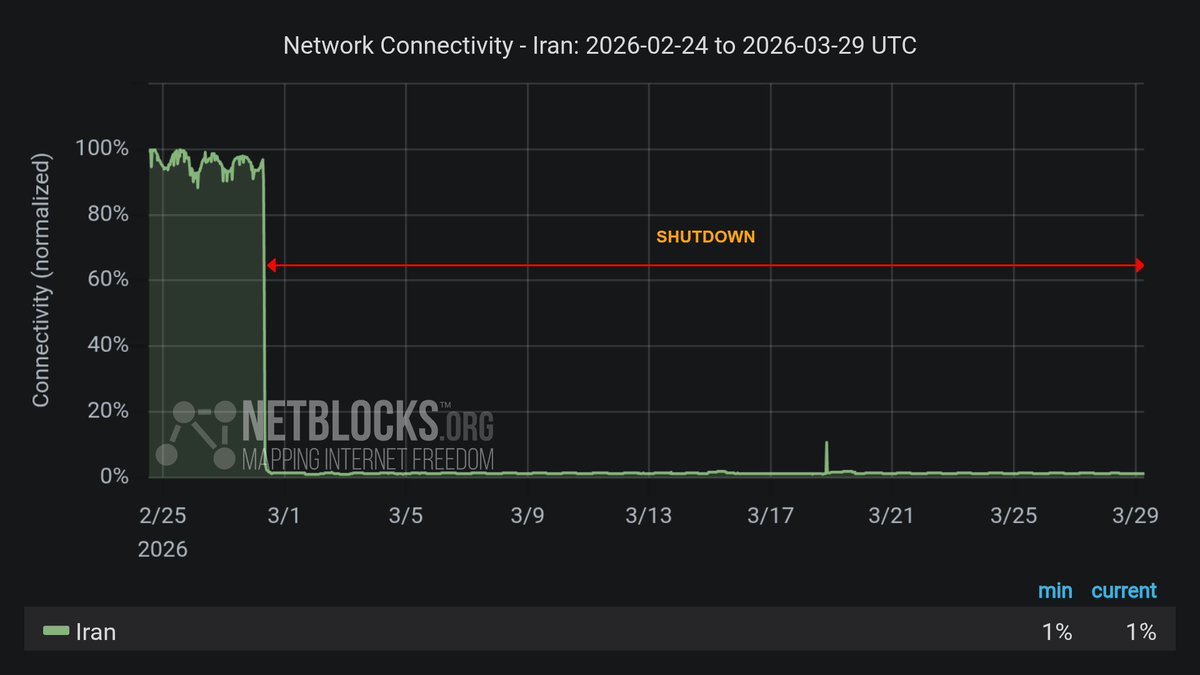

Millions Face Isolation as Connectivity Remains Severely Restricted
Paris: Iran’s nationwide internet blackout entered its 30th consecutive day on Sunday, leaving millions disconnected from global communication networks amid the ongoing conflict involving the United States and Israel. According to NetBlocks, the disruption has surpassed 696 hours, marking one of the longest sustained shutdowns in recent years.
While Iran’s domestic intranet continues to function, enabling access to local messaging platforms, banking systems, and essential services, authorities have sharply restricted global internet connectivity. As a result, citizens increasingly rely on state-controlled applications or costly alternatives to communicate.
Moreover, many Iranians report significant challenges in maintaining contact with family and accessing independent information. A private sector employee described the early weeks as particularly difficult, noting that she could only communicate with relatives in another city through expensive phone calls. Although local apps now allow limited video communication, users say the quality remains poor.
Limited Access, Rising Costs, and Workarounds Define Daily Life
Meanwhile, intermittent connectivity through virtual private networks has provided only brief access to global platforms such as WhatsApp and Telegram. However, such access remains unstable and unreliable. Journalists and residents confirm that these temporary connections offer limited relief.
For individuals with family abroad, communication has become increasingly expensive. A clothing salesman explained that he now depends on international phone calls to reach relatives in Turkiye, significantly reducing contact frequency due to high costs.
In addition, restricted access to international media has confined many users to domestic news sources, limiting their understanding of unfolding events. Although some users have found technical workarounds, connectivity issues persist.
Overall, the blackout reflects a broader pattern, as Iran has previously imposed similar restrictions during unrest and conflict, further tightening control during crises.

