

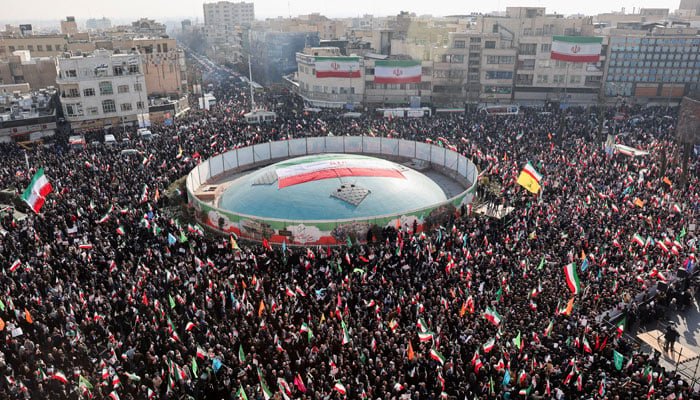

Iranian authorities on Monday moved to reassert control of the streets by staging mass pro-government rallies across the country, following protests that have erupted on an unprecedented scale in recent years.
The demonstrations, which began over economic grievances more than two weeks ago, have since evolved into one of the most serious challenges to Iran’s theocratic system since the 1979 Islamic Revolution.
Thousands of people gathered in Tehran’s Enghelab (Revolution) Square, waving national flags and chanting slogans in support of the state. State television showed crowds offering prayers for victims of what officials described as “riots”. Similar rallies were reported in other major cities as the government sought to project unity and strength amid the unrest.
Addressing the crowd, Parliament Speaker Mohammad Bagher Ghalibaf said Iran was facing a “four-front war”, citing economic pressure, psychological warfare, military threats from the United States and Israel, and what he described as a fight against “terrorists” at home. Standing before banners reading “Death to America” and “Death to Israel”, he warned that any attack on Iran would be met with a decisive military response.
The rallies come as Iran grapples with intense international pressure. US President Donald Trump has repeatedly threatened military action if Iranian authorities continue their crackdown on protesters. Activists claim that the unrest and security response have left at least hundreds dead, a toll the government has not confirmed.
Iran has also imposed an internet blackout lasting more than three-and-a-half days, a move critics say is intended to obscure the scale of the crackdown and limit coordination among protesters.
Foreign Minister Abbas Araghchi said Iran was prepared for both confrontation and dialogue. “The Islamic Republic of Iran is not seeking war but is fully prepared for war,” he said, adding that Tehran remains open to negotiations based on “mutual respect”.
Despite the absence of formal diplomatic ties, officials confirmed that indirect communication channels remain open between Tehran and Washington, with regional actors such as Oman again stepping in as potential mediators.
