
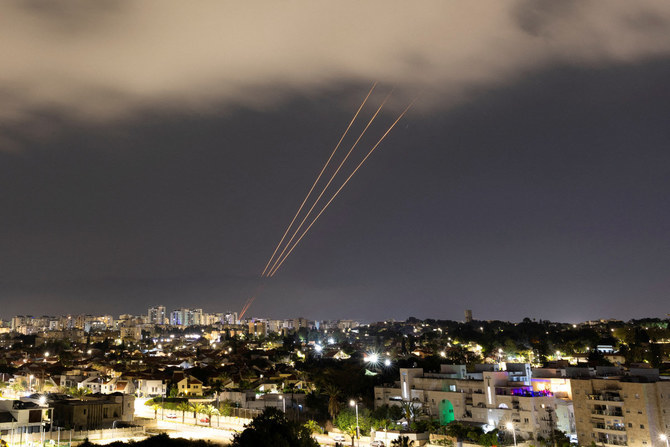

Iran appears to have directed the majority of its military retaliation toward Gulf countries rather than Israel during the ongoing regional conflict. Recent data suggests that Tehran has launched significantly more drones and missiles at Gulf states since hostilities escalated earlier this year.
According to figures compiled by the Critical Threats Project, a research initiative of the American Enterprise Institute, Iran has fired far more projectiles toward Gulf countries than toward Israel.
The report indicates that Iran launched 255 drones and missiles at Israel since February 28. In contrast, a total of 2,171 drones and missiles were reportedly directed at Gulf nations during the same period.
Analysts say the data suggests Tehran’s retaliation strategy is focused heavily on regional allies of the United States rather than Israel itself.
Gulf States Face Majority of Iranian Attacks
Among Gulf countries, the United Arab Emirates appears to have been the most heavily targeted. According to the Critical Threats Project, Iran directed 1,138 drone and missile attacks toward the UAE alone.
Other Gulf states have also experienced strikes or threats linked to the conflict. These countries include Saudi Arabia, Qatar, Bahrain, Kuwait, and Oman.
Most of these nations host American military bases and maintain strong security ties with United States. As a result, analysts say Tehran may be targeting these states to increase pressure on Washington.
Iran has also accused Israel of conducting strikes on energy facilities and civilian infrastructure in the Gulf region. Iranian officials claim those attacks were intended to provoke Arab governments and expand the war.
The conflict between Iran, Israel, and the United States has quickly spread beyond its original battlefield. Regional countries are now increasingly involved due to security alliances and geographic proximity.
Gulf Cooperation Council Warns of Collective Response
Growing attacks have triggered strong warnings from Gulf governments. Members of the Gulf Cooperation Council held an emergency ministerial meeting to address the escalating security situation.
The meeting included officials from Saudi Arabia, United Arab Emirates, Qatar, Bahrain, Kuwait, and Oman.
The bloc invoked Article 51 of the United Nations Charter, which allows countries to exercise the right of self-defence in response to armed attacks.
Officials warned that continued strikes could transform the Gulf region from a defensive security zone into an “active theatre of response.”
Regional governments have already activated joint air-defence systems and increased reconnaissance flights to monitor potential threats.
According to reports, officials in the United Arab Emirates are also considering military action to stop Iranian missile and drone attacks.
Conflict Spreads Beyond the Gulf
The widening conflict has already reached areas beyond the Gulf region. Defence officials in Türkiye reported intercepting an Iranian ballistic missile that crossed airspace over Iraq and Syria before being destroyed outside Turkish territory.
Meanwhile, drones launched from Iran reportedly struck infrastructure in the Nakhchivan exclave of Azerbaijan, near the Iranian border. Officials said the attack damaged facilities near the region’s airport and injured two civilians.
Despite the growing regional impact, American officials say the intensity of Iranian attacks has decreased slightly in recent days.
Pete Hegseth, the US Secretary of War, said the number of missile and drone launches from Iran has declined compared with the early days of the conflict.
However, security experts warn that the scale of Iranian attacks across the Gulf highlights the increasing risk of a wider regional war.
Analysts say continued strikes could push Gulf nations to join the conflict more openly, potentially transforming the crisis into a large-scale regional confrontation.

