


Ammunition Shortage
A senior Iranian military official has claimed that Israel is grappling with a critical shortage of ammunition amid escalating regional tensions, while also warning that any state or entity providing military assistance to the Israeli government will be considered a legitimate target for retaliation.
According to the spokesman for Iran’s Khatam al-Anbiya Central Headquarters (KACH)—a key command center within the Iranian Armed Forces—Israel has not only exhausted large quantities of its ammunition stockpile but has also suffered significant degradation in its radar and air defence systems. “The Zionist regime is under immense pressure,” the spokesman stated. “Their defensive infrastructure has been seriously compromised, and their ammunition reserves are running low.”
The statement comes in the wake of major military developments over the weekend, when the United States launched airstrikes on three major Iranian nuclear facilities—Fordow, Isfahan, and Natanz.
The attacks were carried out using B-2 stealth bombers and were personally confirmed by President Donald Trump on his social media accounts. Iranian officials have acknowledged the strikes but have not disclosed the extent of the damage sustained.
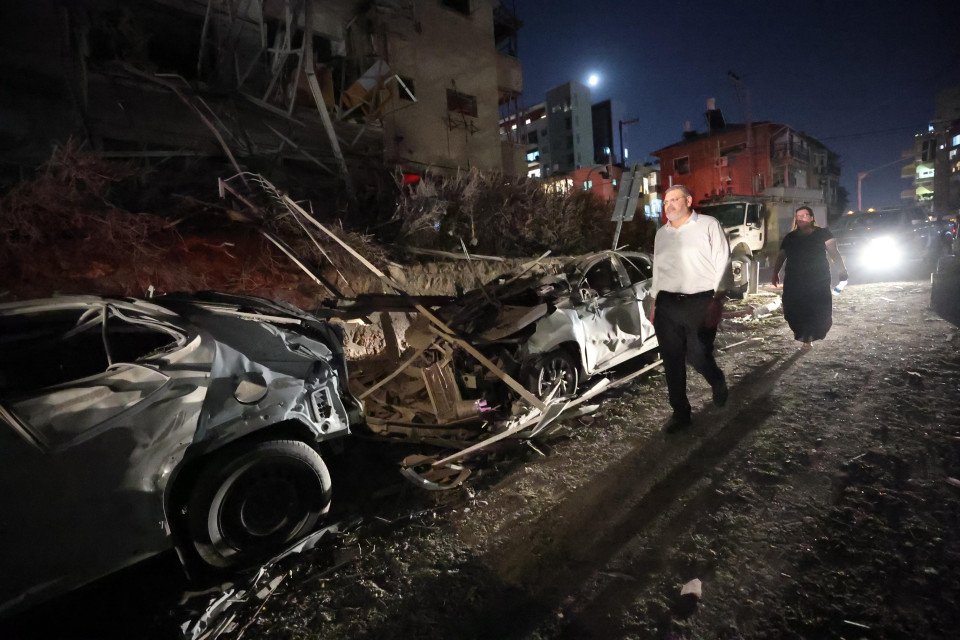
In swift retaliation, Iran launched a volley of ballistic missiles targeting several cities across Israel. Iranian state media reported that between 30 and 40 Khaibar Shekan missiles were fired, causing widespread destruction in Tel Aviv, Haifa, and other key urban centers. Preliminary reports suggest that more than 80 individuals were injured in the strikes, many of them civilians.
The KACH spokesman emphasized that Iran’s retaliatory response was both measured and strategic, aimed at sending a clear signal to Tel Aviv and its Western allies.
He warned that further aggression would be met with an even more forceful military response. “Those who arm and support Israel must understand that they are not immune. If you supply weapons to the aggressor, you become a part of the aggression—and therefore a target,” he said.
The remarks reflect the increasingly confrontational tone adopted by Iranian officials following the US-led strikes. Tehran has framed the attacks as a flagrant violation of international law and an assault on its sovereignty, while portraying its missile response as a legitimate act of self-defense under Article 51 of the UN Charter.
The unfolding situation has heightened concerns of a broader regional conflict, as Israel, Iran, and the United States continue to exchange threats amid an already volatile geopolitical landscape.
The international community, including the United Nations and several European states, has called for restraint, warning that further escalation could destabilize the entire Middle East.
