

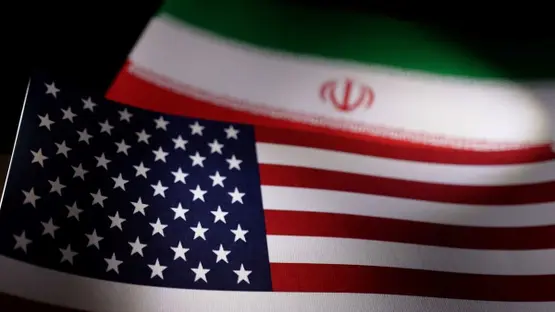

Iran’s foreign minister stated on Sunday that Washington’s current approach shows no indication that the United States is ready for what Tehran considers “equal and fair negotiations.” His comments followed remarks by U.S. President Donald Trump, who recently hinted at the possibility of renewed discussions.
Despite these signals, Iranian officials maintain that the U.S. posture following recent military confrontations undermines any prospect for balanced dialogue.
Efforts to re-establish talks have faltered since the June attack on Iran by Israel, which was accompanied by U.S. strikes targeting Iranian nuclear facilities. These events have further strained already tense relations, making diplomatic progress difficult.
The United States, its European partners, and Israel continue to accuse Iran of concealing weapons development efforts under the guise of a civilian nuclear programme. Iran firmly rejects those accusations, insisting that its nuclear activities are solely for peaceful purposes.
Before the 12-days-war, Tehran and Washington engaged in five rounds of indirect talks aimed at addressing nuclear concerns. However, negotiations stalled over critical issues, including Iran’s domestic uranium enrichment—a capability the United States wants Iran to give up. Iranian officials argue that such demands infringe on their national sovereignty and peaceful nuclear rights.
Foreign Minister Abbas Araqchi emphasized that the United States “cannot expect to gain what it couldn’t in war through negotiations.” Speaking at a conference in Tehran titled “international law under assault,” he reiterated that Iran remains open to diplomacy but will not participate in talks designed merely to impose American preferences. Diplomacy, he said, must be based on mutual respect, not pressure.
At the same event, Deputy Foreign Minister Saeed Khatibzadeh accused Washington of using negotiations as a “show,” claiming that the U.S. seeks to achieve through diplomatic theatrics the same objectives it pursued on the battlefield. He warned that Iran will resist any attempt to use dialogue as a tool for coercion rather than cooperation.
