

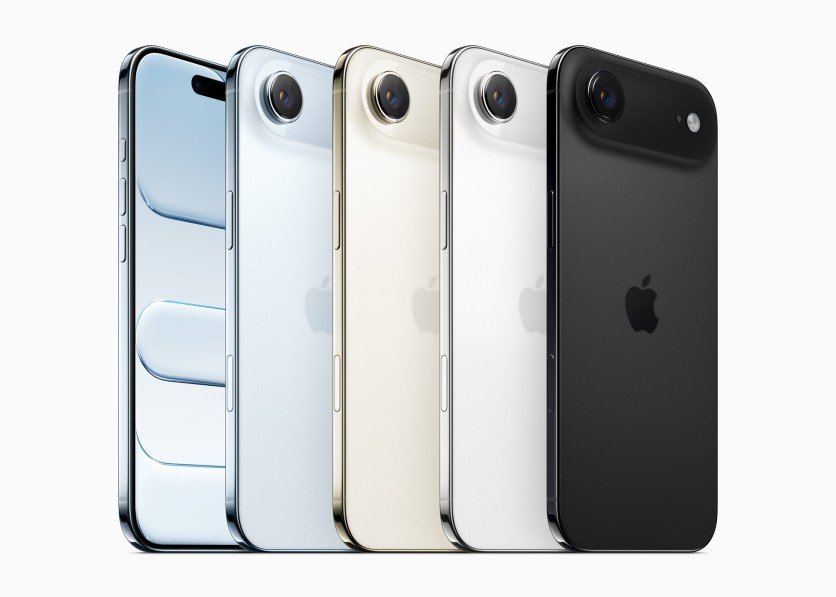

Apple’s iPhone Air has become a cautionary tale for the smartphone industry, with disappointing sales prompting major manufacturers across Asia to abandon or freeze their own ultra-thin device projects.
Production Shutdown Signals Market Rejection
Since its September launch, the iPhone Air has experienced significant market challenges, forcing Apple’s supply chain to implement drastic production cuts.
Manufacturing Lines Dismantled
Apple supplier Foxconn has completely dismantled all iPhone Air production lines, while Luxshare, another key manufacturer, ceased production at the end of October. These actions represent an unusually rapid response to poor market performance, signaling serious concerns about continued demand.
Supply chain reports indicate scaled-back shipments across Apple’s manufacturing network, confirming that the device failed to resonate with consumers despite being marketed as a revolutionary design statement.
Ripple Effect Across Smartphone Industry
The iPhone Air’s commercial failure has sent shockwaves through the mobile industry, prompting Chinese manufacturers to reassess their thin phone strategies.
Chinese Manufacturers Cancel Projects
Major smartphone makers including Xiaomi, Oppo, and Vivo have either cancelled or significantly adjusted their development plans for Air-style ultra-thin devices:
Xiaomi: Reportedly planned a “true Air model” designed to directly compete with Apple’s offering, but has now halted the project entirely.
Vivo: Targeted ultra-thin designs within its mid-range S series lineup but has suspended related development work.
Both companies have redirected resources originally allocated to these projects, including eSIM solutions, to other production lines. Neither has issued official statements regarding the cancellations.
Samsung Faces Similar Challenges
The ultra-thin phone struggle extends beyond Apple. Samsung’s Galaxy S25 Edge, the Korean giant’s equivalent offering in the ultra-thin segment, has experienced comparable difficulties.
Reports indicate Samsung has cancelled the Galaxy S26 Edge successor and halted Galaxy S25 Edge production due to weak sales performance, mirroring the challenges faced by Apple.
Understanding the iPhone Air’s Market Failure
Design Compromises Prove Unpopular
Apple positioned the iPhone Air as its first major redesign since the iPhone X introduced Face ID and an edge-to-edge display in 2017. However, achieving the ultra-slim 5.6mm profile required significant sacrifices:
Battery Capacity: Reduced battery size to accommodate the thin chassis, resulting in shorter battery life compared to standard iPhone models.
Camera System: Limited to a single rear camera instead of the multi-lens systems consumers have come to expect from premium devices.
Pricing Strategy Backfires
The iPhone Air’s $999 starting price positioned it awkwardly within Apple’s lineup. At just $100 below the $1,099 iPhone 17 Pro, consumers questioned the value proposition:
- iPhone 17 Pro: Triple-lens camera system, superior battery life, premium features
- iPhone Air: Single camera, compromised battery, ultra-thin design
For many buyers, the comparison revealed the Air as prioritizing aesthetics over functionality at a premium price point—a combination that failed to attract sufficient demand.
Apple’s Response: Redesign and Delay
The tepid market response has forced Apple to reconsider its approach entirely.
Second Generation Delayed
According to reports from The Information, Apple has delayed the second-generation iPhone Air while engineering teams work on a comprehensive redesign. The revised model is expected to address the primary consumer complaints:
Enhanced Camera System: Potential addition of a second rear camera to match competitor offerings and consumer expectations.
Improved Battery Life: Redesigned internal architecture to accommodate larger battery capacity without significantly increasing thickness.
This delay represents a rare admission from Apple that a product missed the mark, requiring substantial revision before a follow-up release.
Function Over Form
The iPhone Air’s market failure delivers clear signals about contemporary smartphone consumer preferences:
While ultra-thin designs generate initial interest and media attention, consumers ultimately prioritize:
- All-day battery life
- Versatile camera systems
- Practical everyday usability
Premium Pricing Requires Premium Features
Charging flagship prices for devices with compromised functionality proves unsuccessful, regardless of brand prestige. Consumers expect premium devices to excel across all categories, not sacrifice core features for design statements.
