

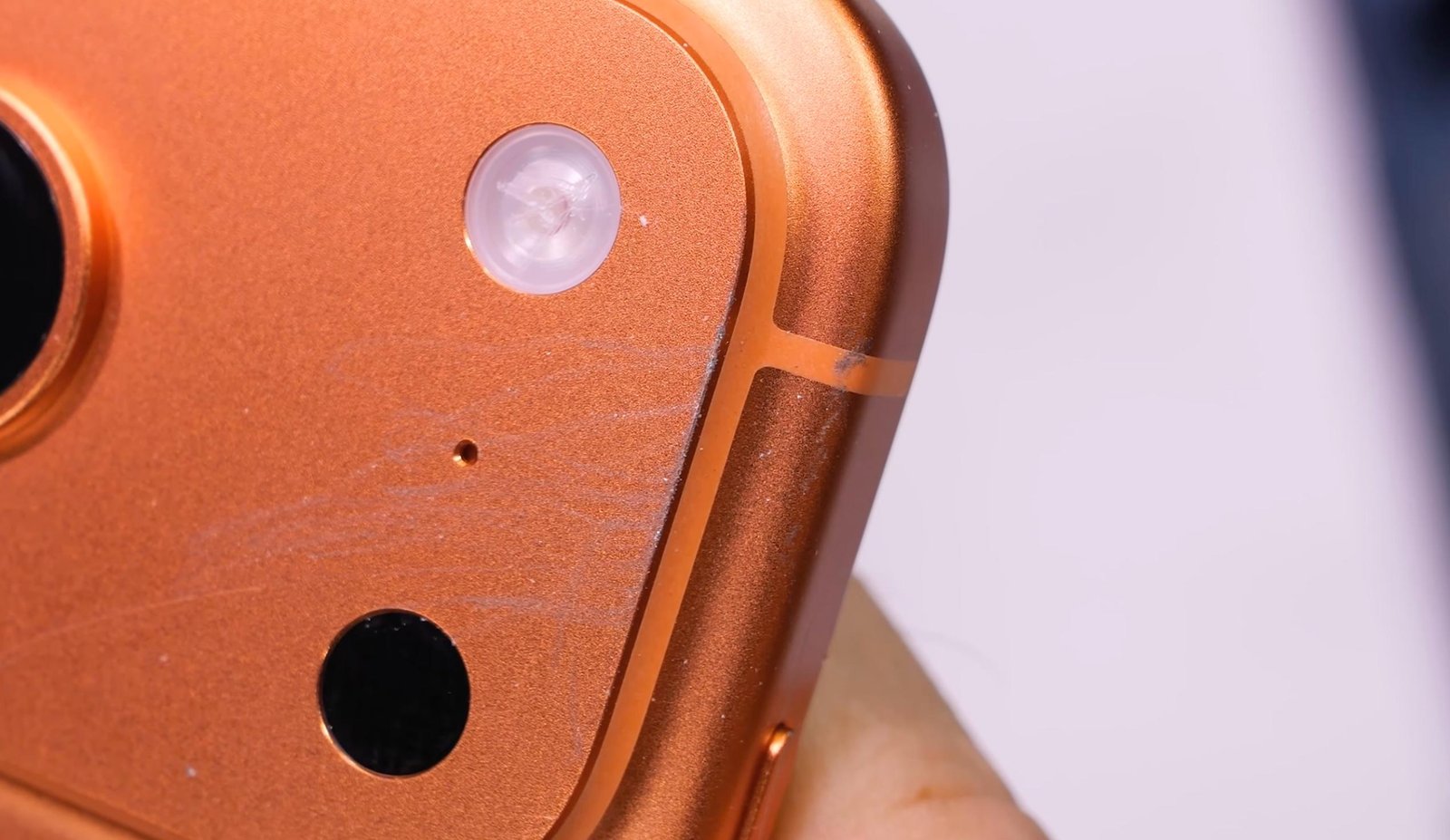

The newly launched iPhone 17 Pro and Pro Max are facing unprecedented durability criticism within days of release, with users worldwide reporting scratch susceptibility that has sparked the “scratchgate” controversy and raised questions about Apple’s design decisions.
Core Durability Concerns Identified
Camera Plateau Vulnerability: Independent durability tester JerryRigEverything identified the raised edges around the camera system as particularly prone to scratching. The lack of protective chamfering or curved edges makes these areas more vulnerable than the rest of the device.
MagSafe Area Issues: Initial Bloomberg reports highlighted visible marks on iPhone 17 Pro demo units at Apple Stores, particularly around the MagSafe charging area, though Apple attributes this to residue from worn display stands rather than actual scratches.
Material Transition Impact: Apple’s shift from titanium back to aerospace-grade 7000-series aluminum with enhanced anodization represents a design philosophy change prioritizing thermal performance and battery life over pure scratch resistance.
Apple’s Official Response
Technical Clarification: Apple maintains that reported scratches on demo units are primarily residue from overused MagSafe stands, which can be cleaned off. The company is replacing worn display stands to address the issue.
Material Justification: The aluminum construction uses the same anodized finish across Apple’s product line, designed to withstand normal usage while acknowledging that minor abrasions may occur over time with extended use.
Performance Trade-offs: Apple emphasizes that the aluminum choice improves thermal management, energy efficiency, and reduces overall device weight compared to titanium alternatives.
Pakistan Market Implications
Premium Pricing Reality: In Pakistan’s grey market, the iPhone 17 Pro Max dual e-SIM variant reaches Rs760,000 including PTA approval charges, making durability concerns particularly significant for consumers making substantial investments.
Market Accessibility: With no official Apple presence in Pakistan, devices arrive through independent traders who set prices based on demand, creating uncertainty about warranty coverage for durability issues.
Consumer Sentiment: Pakistani buyers are divided between criticizing minimal design upgrades and questioning the value proposition at premium price points, especially given durability concerns.
Technical Analysis: Strengths vs Weaknesses
Proven Improvements:
- Ceramic Shield 2 front display shows significantly enhanced scratch resistance
- iPhone Air demonstrates impressive bend resistance
- Overall structural integrity remains strong in independent testing
Identified Vulnerabilities:
- Camera plateau edges lack protective design elements
- Aluminum surface more susceptible to visible marks than titanium
- MagSafe area shows residue accumulation potential
Industry Context and Market Response
Historical Pattern: Every iPhone launch cycle generates durability debates, often based on early demo unit conditions rather than real-world usage patterns. Tech reviewers caution against premature judgments based on store display models handled by thousands daily.
Sales Performance: Despite criticism, demand remains strong both globally and in Pakistan’s premium smartphone segment, suggesting consumer confidence in overall Apple build quality.
Competitive Positioning: The durability discussion occurs as competitors emphasize ruggedized designs, creating market pressure for Apple to address perceived vulnerabilities.
Consumer Protection Strategies
Case Usage Recommendation: Given identified scratch points, protective cases become more critical for iPhone 17 Pro users, particularly around camera areas and MagSafe zones.
Realistic Expectations: Understanding that minor cosmetic wear is normal for aluminum devices helps set appropriate durability expectations for premium smartphone investments.
Design Implications
The durability feedback may influence Apple’s approach to future iPhone designs, potentially leading to enhanced edge protection or material refinements that balance performance optimization with scratch resistance.
Long-term Assessment: True durability evaluation requires extended real-world usage data rather than initial impressions from heavily handled demo units or accelerated testing conditions.
The iPhone 17 Pro durability debate highlights the ongoing tension between premium pricing expectations and real-world device resilience, particularly relevant for Pakistani consumers making significant technology investments in an unofficial market environment.
