

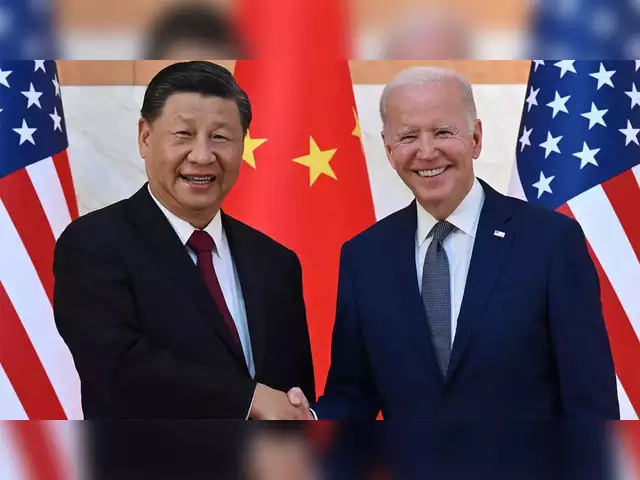

China’s Foreign Minister, Wang Yi, has remarked that the path leading to the San Francisco summit, alluding to an anticipated meeting between President Xi Jinping and US President Joe Biden, will not be without challenges, according to a statement from the foreign ministry on Sunday.
Wang recently met with President Biden and his top advisors in Washington, and they reached an agreement to collaborate toward the expected bilateral meeting, which is set to occur on the sidelines of an Asia-Pacific Economic Cooperation forum summit.
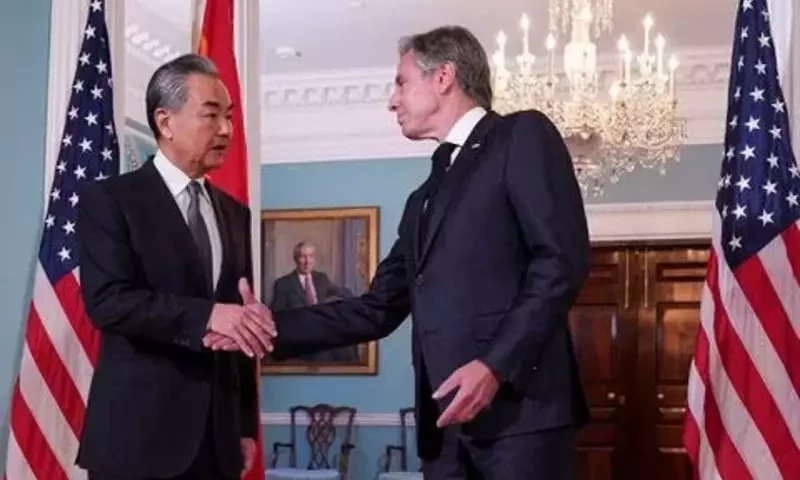
Over the past few months, there has been a flurry of bilateral diplomatic engagements, largely at the request of the United States, aimed at improving relations that were deteriorating earlier in the year, particularly following the incident in which the US downed an alleged Chinese spy balloon.
However, in his remarks on Saturday, Wang cautioned that the journey to the summit would not be straightforward, and it would not be on “autopilot.”
This statement followed a discussion with members of the US strategic community in Washington.
In the prior month, China’s top security agency had suggested that a Xi-Biden meeting in San Francisco depended on the US “showing sufficient sincerity.”
Wang emphasized the need for both China and the US to “return to Bali,” referring to their last meeting on the sidelines of a Group of 20 summit on the Indonesian resort island in November. During that meeting, they discussed topics like Taiwan, competition, and communication. Wang stressed that they must now put into practice the consensus reached then by “removing interference, overcoming obstacles, enhancing consensus, and achieving results.”
He acknowledged that both sides have sent out positive signals to stabilize and improve relations, underlining the importance of maintaining dialogue even in the presence of various differences, contradictions, and outstanding issues.
Saturday’s discussions also involved in-depth exchanges on the interaction between the Chinese and US militaries, financial matters, science and technology, China’s investment environment, market access, as well as crises in the Middle East and Ukraine.
