


Stark Warning
US Treasury Secretary Scott Bessent has expressed confidence that the Trump administration can successfully reach tariff agreements with US allies, even as he prepares to lead negotiations with more than 70 countries in the coming weeks.
Speaking at an American Bankers Association conference in Washington DC on Wednesday, Bessent warned that countries aligning more closely with China could face negative consequences.
Bessent, who is set to take a leading role in the ongoing tariff discussions, acknowledged the financial market instability caused by President Donald Trump’s aggressive trade policies. Despite the turmoil, Bessent mentioned that many CEOs he had spoken to were optimistic about the overall stability of the US economy.
However, the president’s punitive tariffs, aimed at reducing the US trade deficit with several nations, have significantly impacted the global trading system. The tariffs have led to market fears of a potential recession, with major corporations suffering losses worth trillions of dollars in market value.
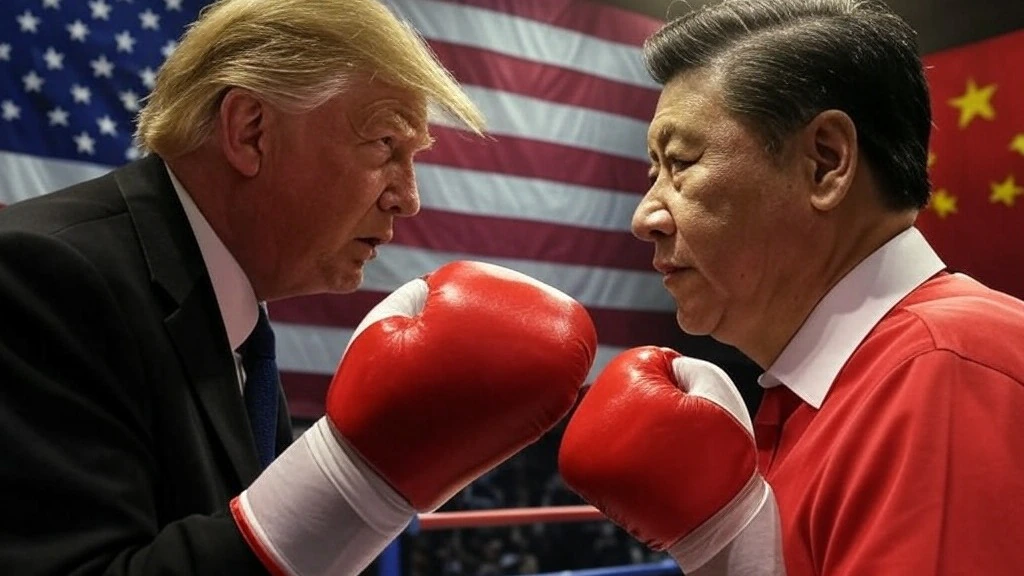
The situation worsened on Wednesday as Trump’s 104 percent tariffs on Chinese goods took effect, leading to a further decline in global markets and sparking concerns about foreign investors pulling funds from US assets.
In light of these developments, Bessent emphasized the US’s intention to negotiate with allies to reduce tariffs, highlighting the importance of reaching deals with countries that have been strong military partners of the US, despite not always aligning economically. He also indicated that such negotiations could eventually pave the way for a coordinated approach to China.
While discussing the escalating trade tensions, Bessent pointed out that the United States has been proactive in its negotiations with countries like Japan, South Korea, and Vietnam. He also reiterated that Trump’s recently announced tariffs would serve as a “ceiling” for future tariffs, with the expectation that countries would not retaliate. However, he criticized China for being the only nation to escalate tensions by implementing its own retaliatory measures.
China, on Wednesday, responded sharply by increasing tariffs on US goods to a staggering 84 percent, up from the previous 34 percent. The new tariffs, which will take effect on April 10, 2025, were accompanied by other retaliatory measures, including the addition of twelve US entities to China’s export control list.
In addition, six US entities were placed on China’s “unreliable entity” list, paving the way for potential punitive actions against them. The Chinese government’s actions had an immediate and dramatic impact on US financial markets.
At the same time, a Chinese envoy at a World Trade Organization (WTO) council meeting argued that the US tariffs violated the right of countries to develop, pointing out that even countries such as Myanmar, still recovering from a major earthquake, were facing extraordinarily high tariffs.
The envoy also highlighted the absurdity of a US tariff applied to an uninhabited island, which was targeted by a 10 percent tariff despite being home only to penguins and seals.
As tensions continue to rise, Bessent warned European nations, specifically referencing comments from a senior Spanish official suggesting closer alignment with China. He stated that such a move would be a grave mistake, likening it to “cutting your own throat.”
According to Bessent, China’s overproduction of goods and its practice of dumping them into international markets would continue, even as US tariffs attempt to shield the American market from these goods. The ongoing trade war remains a volatile issue, with no resolution in sight, and the global economic landscape continues to feel the strain of these escalating tensions.
