

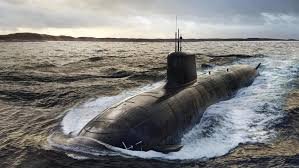

GLASGOW: The UK government has unveiled plans to build 12 new nuclear-powered attack submarines as part of a sweeping defense review aimed at preparing the country for a new era of global threats, driven by rising Russian aggression and shifting patterns of warfare.
Speaking in Glasgow on Monday, Prime Minister Keir Starmer said Britain must move toward “war-fighting readiness,” warning that the threats facing the country are “more serious, more immediate, and more unpredictable” than at any point since the Cold War.
“We are facing war in Europe, new nuclear risks, daily cyberattacks, and increasing Russian aggression in our skies and waters,” Starmer stated as he launched the Strategic Defence Review, a comprehensive assessment of national security risks and military capabilities.
Key Shifts in UK Defence Strategy
The review outlines three core changes in UK defence posture:
- A shift to war-fighting readiness as the primary purpose of the armed forces.
- A reaffirmation that NATO remains the cornerstone of UK defence.
- A commitment to accelerate military innovation, particularly in AI, cyber capabilities, and drone technology.
“Every citizen has a role to play,” Starmer added. “The front line, in many ways, is here at home.”
Submarine Fleet Expansion Under AUKUS Pact
The UK will construct up to 12 next-generation attack submarines under the trilateral AUKUS alliance with the United States and Australia. These submarines will eventually replace the current seven Astute-class vessels, with the transition expected to begin in the late 2030s.
The move is part of broader efforts to modernize British naval power, as well as ensure interoperability with allied forces in the Indo-Pacific.
Arsenal Expansion and AI Integration
Defence Secretary John Healey, addressing Parliament, described the UK’s shift in strategy as a response to a “new era of threat,” promising to make the British military “10 times more lethal” by integrating drone systems and artificial intelligence with conventional firepower such as tanks and artillery.
To support this transformation, the government will invest:
- £6 billion in munitions through the current parliamentary term.
- £2 billion in building at least six new weapons and energetics factories.
- £15 billion in its nuclear warhead programme.
- £1 billion in establishing a new Cyber Command to bolster digital battlefield capabilities.
The government has also pledged to procure 7,000 domestically produced long-range precision weapons.
Rising Defence Spending
Despite tight fiscal conditions, Starmer’s administration reaffirmed its goal to raise defence spending to 2.5% of GDP by 2027, with ambitions to reach 3% in the following parliamentary term. To fund these increases, the government has proposed redirecting funds from foreign aid.
“This review is a blueprint for national strength and security for decades ahead,” Starmer said, adding that it reflects the new realities of warfare driven by technology and great power rivalry.
The Global Threat Landscape
The review, led by former NATO Secretary General George Robertson, identifies Russia as the most immediate and pressing threat to the UK and its allies. It also cites Iran, North Korea, and China as significant concerns, dubbing them a “deadly quartet.”
However, the government took a more cautious tone regarding China. While the review describes Beijing as a “sophisticated and persistent challenge,” Starmer avoided naming China in public comments, signalling Labour’s intention to improve strained relations with the Asian power—a departure from the more confrontational stance of the previous Conservative government.
NATO Expectations and U.S. Concerns
Amid growing fears in Europe that a second Trump presidency could weaken NATO commitments, the UK’s bolstered defence review comes as reassurance to allies and a response to calls from Washington for European partners to take greater responsibility for regional security.
As part of enhancing its deterrence capabilities, the UK is also exploring the purchase of nuclear-capable aircraft from the United States.
The last Strategic Defence Review was conducted in 2021 and revised in 2023 in response to Russia’s full-scale invasion of Ukraine. This latest review marks a dramatic recalibration of Britain’s military strategy in an increasingly unstable world.
