

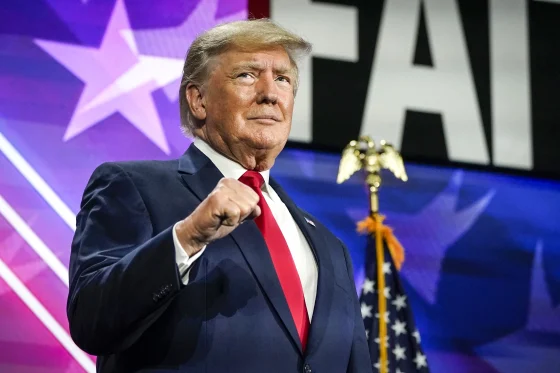

President-elect Donald Trump is gearing up for an aggressive first day in office, with plans to issue over 100 executive orders, launching a sweeping wave of actions on key policy issues. According to reports from a private Capitol Hill meeting, Trump alerted Republican senators to expect a political onslaught as soon as he takes office on January 20. His executive agenda is poised to make an immediate and dramatic impact on border security, immigration enforcement, and other campaign promises.
Trump’s strategy includes a series of bold executive orders that will target a range of policies, with particular emphasis on border security and deportations. These actions, many expected to be rolled out on Inauguration Day, mark the start of a shock-and-awe approach to governance that could reshape the direction of the country right from the outset.
A Shocking First Day in Office
In his private briefing with Republican senators, Trump’s top adviser, Stephen Miller, outlined a range of border and immigration measures that will take effect almost immediately. Senator John Hoeven, who attended the meeting, hinted at the scale of the incoming actions, calling them “substantial” and setting the tone for a fast-paced, decisive agenda.
What is being prepared is a flurry of executive orders, with some targeting major issues like the U.S.-Mexico border, energy policy, federal workforce reforms, gender policies in schools, and vaccine mandates. While it’s common for new presidents to issue executive orders on their first day, Trump’s approach is expected to be unprecedented in its scope and ambition. The incoming administration is set to bypass Congress in many cases, leveraging executive power to implement its agenda with little delay.
While some of the proposed actions may be symbolic, sending a strong message about the new president’s direction, others could have long-lasting and profound impacts. Trump’s team is working diligently to prepare a series of executive orders that reflect his campaign promises and the Republican Party’s priorities.
A Focus on Border Security and Immigration
One of Trump’s key policy priorities is immigration, and his first actions are expected to be heavily focused on securing the southern border and addressing illegal immigration. The construction of the U.S.-Mexico border wall, a cornerstone of Trump’s campaign, remains high on his agenda, along with setting up immigration detention facilities where migrants can be housed until they are expelled.
Senators briefed by Trump and his team have indicated that the incoming administration plans to reverse many of the Biden administration’s executive actions and replace them with Trump’s own policy proposals. These could include measures to speed up deportations and tighten immigration enforcement.
Senator James Lankford, who was heavily involved in border security and immigration negotiations in the previous Congress, shared expectations that the new administration will first focus on the most pressing cases—namely, those who have recently entered the U.S. illegally or those who have been convicted of crimes. According to Lankford, there are over a million such individuals who could be targeted for deportation under the Trump administration’s plans.
“That’s the low-hanging fruit,” Lankford said. “People that recently crossed, people that were legally present and committed other crimes, people that the court has ordered them removed—that’s well over a million people. Start working through that process.”
Legislative Backdrop: Budget Reconciliation and GOP Support
Trump’s executive orders will be part of a broader legislative strategy supported by a Republican-controlled Congress. Senators indicated that the GOP is preparing to work with the new administration to pass significant budget reconciliation legislation that could include funding for the border wall and other Trump-backed priorities, totaling around $100 billion in proposals.
The reconciliation process allows the administration to bypass certain Senate rules and fast-track legislation, including spending bills related to the border wall and immigration enforcement.
With the Republican Party united behind these efforts, Trump’s administration will likely face little resistance in advancing its key policy goals. However, some of the more contentious actions may face legal challenges, which could delay their full implementation.
The Inauguration Day Rush
Trump’s first day in office is set to be a whirlwind of activity. The President-elect has previously mentioned his intention to quickly get to work on January 20, even joking about having a “tiny desk” at the Capitol to sign executive orders in rapid succession. While there’s no indication that he plans to literally carry out that image, Trump’s team is preparing for an immediate flurry of actions, signaling a new era of governance that will prioritize swift, decisive action.
Traditionally, after taking the oath of office, a new president signs paperwork to formally nominate Cabinet members and other administrative officials. Trump’s team is already working to ensure that many of his Cabinet nominees go through Senate confirmation hearings before Inauguration Day, with the possibility of some being confirmed on Day One.
Senate Majority Leader John Thune expressed hope that Trump’s nominees would be ready for confirmation quickly, although he acknowledged that background checks and paperwork were still pending for many of Trump’s picks. “That would be nice,” Thune said, adding that senators were preparing to move quickly on confirmations once the necessary steps had been completed.
A Swift Shift in Policy Priorities
Trump’s first days in office are likely to set the tone for his administration. In addition to border security and immigration, he is expected to make significant changes to a variety of policy areas, including energy development, workforce regulations, and education.
One of the issues that could dominate the early days of Trump’s presidency is the rollback of many of the Biden administration’s executive actions. Senators who were briefed on Trump’s plans have indicated that a major focus will be reversing key Biden-era policies and replacing them with Trump’s preferred approaches. Whether it’s energy policy, labor regulations, or health mandates, the incoming administration is likely to move quickly to implement changes.
Some of the most contentious policies are expected to revolve around vaccine mandates, federal worker rules, and issues of gender in schools. Trump’s team has been working on detailed plans to address these areas, fulfilling promises made during the campaign to limit government intervention in certain sectors.
Anticipating Challenges and Legal Pushback
While Trump’s executive orders are poised to have a significant immediate impact, they may face challenges in the courts, particularly if they push the limits of executive power. Many of the proposed policies, especially those related to immigration and border security, are likely to face legal scrutiny, which could delay their implementation.
Despite these potential hurdles, the Trump team appears committed to using executive action to bypass the usual legislative process and enact sweeping changes as quickly as possible. Whether this strategy will lead to lasting success or legal complications remains to be seen, but one thing is clear: the Trump administration’s first days will be marked by bold and aggressive policy shifts.
The Road Ahead: A New Era of Governance
As Trump prepares to take office, his focus on swift executive action and bold policy proposals signals a new approach to governance. With Republicans controlling both the White House and Congress, the new administration is set to implement its agenda with remarkable speed and urgency. The focus on border security, immigration enforcement, and other core issues from Trump’s campaign will dominate the early days of his presidency, with significant implications for U.S. policy in the years to come.
While Trump’s executive orders may not immediately address every issue facing the country, they will send a clear message about the new administration’s priorities. From the very first moments of his presidency, Trump is set to redefine the approach to governance and set the stage for the political battles that will shape the coming years.
