

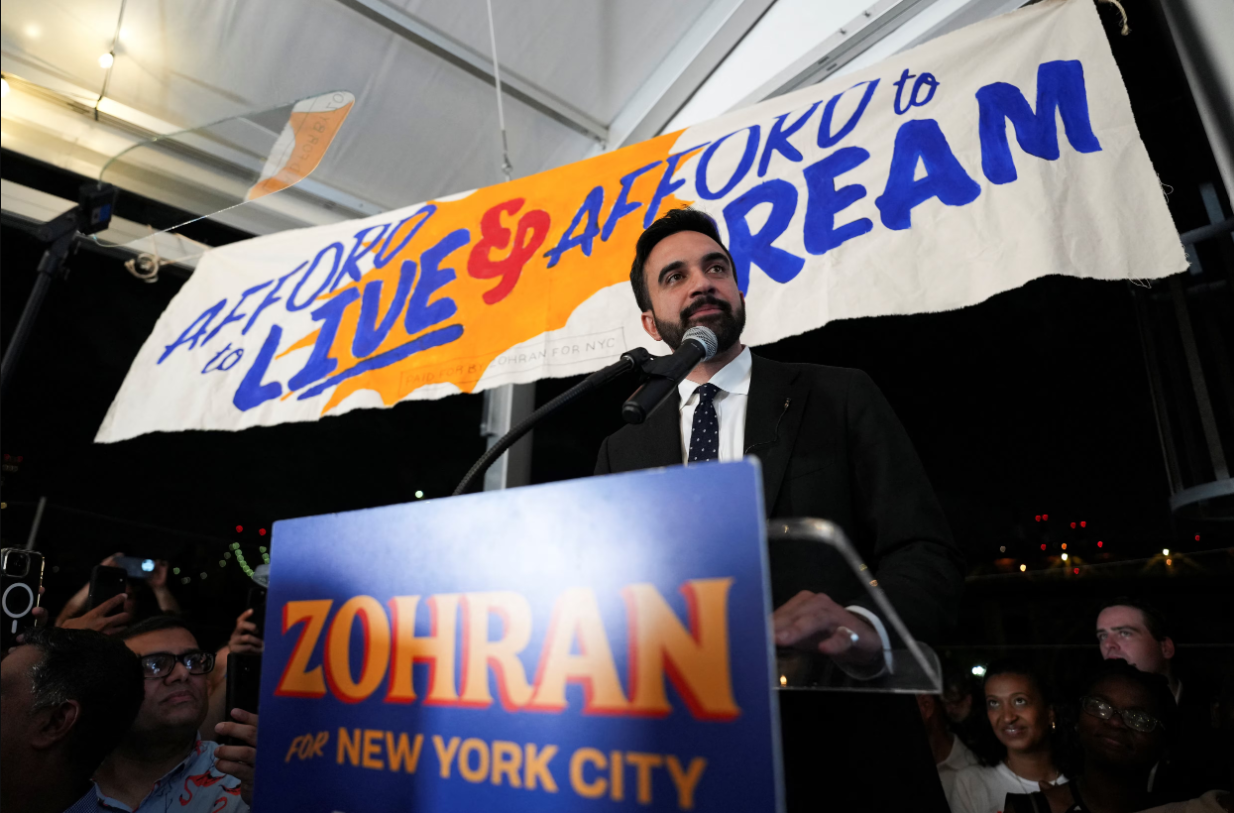

NEW YORK – Former U.S. President Donald Trump launched a fiery attack on Zohran Mamdani, the surprise winner of New York City’s Democratic mayoral primary, branding him a “pure communist” and “radical leftist” during a Fox News interview aired Sunday. The progressive candidate, however, dismissed Trump’s remarks as political distraction and fear-mongering.
Trump’s comments come in response to Mamdani’s unexpected primary victory last week over a high-profile establishment rival, sending shockwaves through the Democratic Party and drawing national attention to the 33-year-old Ugandan-born state assemblyman.
“He’s a pure communist … a lunatic,” Trump said during Sunday Morning Futures with Maria Bartiromo, warning that if Mamdani becomes mayor, “he is going to have to do the right thing [or] they’re not getting any money” from the federal government. Trump, a native New Yorker, reiterated past threats to withhold federal funding from cities that defy his administration’s policies — particularly so-called “sanctuary cities” that limit cooperation with federal immigration authorities.
Mamdani, speaking on NBC’s Meet the Press, pushed back: “No, I am not a communist,” he said, adding that Trump’s criticism was an attempt to stoke division. “He will talk about how I look, how I sound, where I’m from — because he wants to distract from what I’m fighting for.”
The progressive candidate vowed to uphold New York City’s sanctuary status, asserting that “New Yorkers can get out of the shadows and into the full life of the city that they belong to.”
Mamdani’s campaign — focused on affordable housing, free daycare, and public transit access — resonated deeply in a city struggling with high costs and inequality. While Democrats outnumber Republicans three-to-one in New York, the general election remains unpredictable, with current mayor Eric Adams running as an independent and former governor Andrew Cuomo also considering a non-affiliated bid.
If elected, Mamdani would become New York City’s first Muslim mayor, marking a historic shift in the city’s political landscape — and potentially redefining the national conversation on progressive leadership.
