

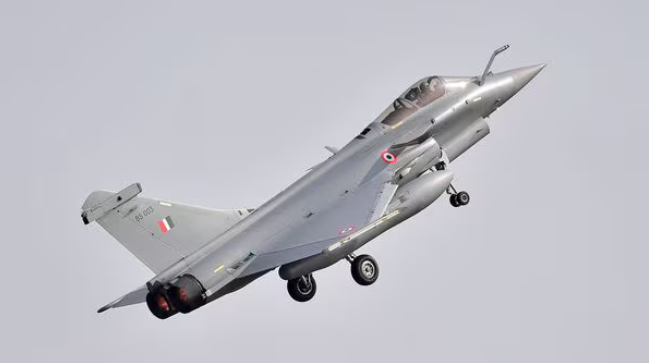

Rafale Jet
Shares of Dassault Aviation, the French aerospace company behind the Rafale fighter jets, have experienced a sharp and continued decline amid intensifying military tensions in South Asia.
According to foreign media reports, Dassault’s stock plummeted by another 4.70%, compounding an overall loss of more than 8% within just one week. This decline follows reports that three Rafale jets were allegedly downed by the Pakistan Air Force (PAF) during a recent skirmish with India.
The drop in share value has raised concerns among investors, as uncertainty clouds Dassault Aviation’s outlook. Earlier last week, Dassault’s shares fell by 6% in a single day, sending shockwaves through European financial markets.
Analysts link this steep fall directly to battlefield reports and ongoing questions surrounding the operational performance of the Rafale aircraft in real combat conditions.
The controversy erupted after Pakistan’s armed forces claimed they had shot down five Indian fighter jets, including three Rafales, during an escalation along the Line of Control (LoC) and the eastern border. While Indian officials have not confirmed these losses, the silence from New Delhi has only deepened global speculation.
During a press conference on Operation Sindoor, Indian Air Force Air Marshal A.K. Bharti refused to confirm or deny the reports. Similarly, India’s Director General of Military Operations, Lieutenant General Rajiv Ghai, stated, “Losses are a part of combat,” but withheld specifics, citing operational security.
Meanwhile, Pakistani officials have publicly celebrated what they described as a significant military achievement. Pakistan Army spokesperson Lieutenant General Ahmed Sharif and Pakistan Air Force (PAF) officer Air Vice Marshal Aurangzeb asserted that the PAF had achieved a “decisive 6-0 victory” over the Indian Air Force.
Speaking at a joint press briefing, Air Vice Marshal Aurangzeb praised the PAF’s readiness and tactical response, noting that their defensive systems effectively neutralized multiple incoming threats, including drones and missiles.
Aurangzeb credited the successful defense to a combination of advanced air surveillance, electronic warfare, and strategic restraint. He emphasized that the PAF followed strict orders to avoid civilian casualties, opting for non-lethal “soft kill” techniques when possible, and deploying “hard kill” countermeasures only in populated areas where threats persisted.
The situation has not only sparked regional tensions but also dealt a potential reputational blow to Dassault Aviation. The Rafale, once considered a cornerstone of India’s air superiority strategy, is now under scrutiny following the recent turn of events. As global investors continue to monitor the unfolding situation, questions remain about the Rafale’s battlefield efficacy and Dassault’s future in high-stakes international defense markets.
