



Afghan refugees
ISLAMABAD: The Caretaker government has made the decision to repatriate over 1.1 million undocumented Afghan refugees back to Afghanistan.
This move comes in the wake of increased efforts to combat terrorism, currency smuggling, and the illicit trade of sugar and fertilizer.
The decision to expel the illegal Afghan refugees has received approval from the federal cabinet via a circulation summary from the Interior Ministry.
The repatriation process will be carried out in three phases:
- In the initial phase, Afghan refugees who are residing in Pakistan illegally and have not renewed their visas will be repatriated.
- The second phase will involve the eviction of Afghan citizens.
- The third phase will focus on repatriating those holding proof of residence cards.
It’s worth noting that the Ministry of Interior has worked in collaboration with various stakeholders, including the Afghan government, to formulate this comprehensive plan.
It’s important to highlight that approximately 400,000 refugees arrived in Pakistan following the withdrawal of US forces from Afghanistan.
In a related development, Karachi police conducted a citywide crackdown on illegal immigrants, resulting in the arrest of at least 293 Afghan nationals who were found to be residing in the city without valid travel documents.
The arrests were made during various raids carried out between September 9 and 12.
The police reported that multiple arrests were made in different districts of Karachi, emphasizing the enforcement of immigration regulations.
About 3.7 million Afghan refugees are living in Pakistan
Meanwhile, as of June this year, the population of Afghan nationals in Pakistan has surged to 3.7 million. Only 1.3 million of them are officially registered, the United Nations High Commissioner for Refugees (UNHCR) said.
The data shows that around 775,000 unregistered Afghans currently reside in the country.
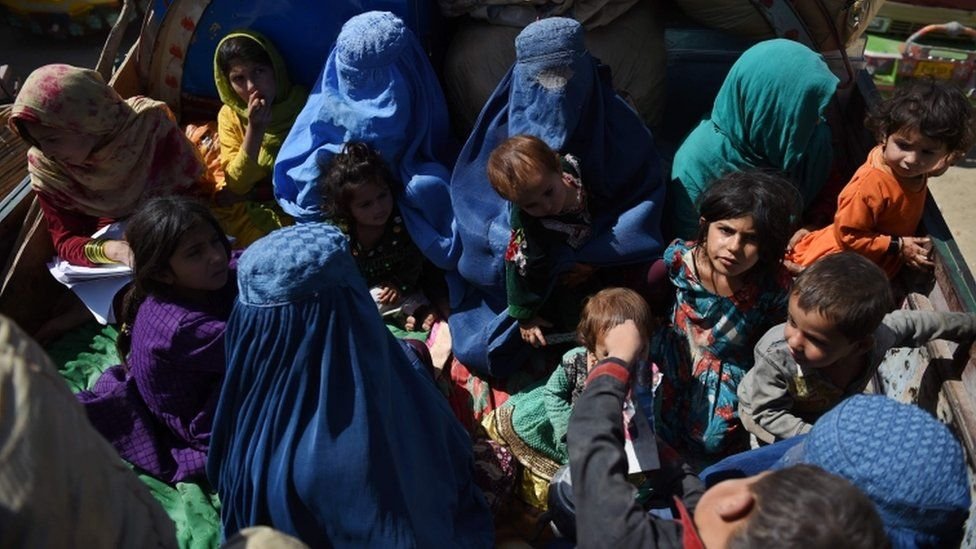
A significant 68.8% of Afghan citizens in Pakistan have settled in urban or semi-urban areas, while the remaining 31.2% are spread across 54 different regions, including villages.
Breaking down the figures, as of June 2023, Khyber-Pakhtunkhwa hosts 52.6% (735,800) of Pakistan’s undocumented Afghan population, Balochistan accounts for 24.1% (321,677), Punjab has 14.3% (191,053), Sindh houses 5.5% (73,789), Islamabad accommodates 3.1% (41,520), and Azad Jammu and Kashmir hosts 0.3% (4,352).
The influx of Afghan refugees and migrants into Pakistan has sharply increased since August 2021 when the Taliban took control of Afghanistan after the withdrawal of US and NATO forces. During this period, over 600,000 new Afghan refugees and migrants entered Pakistan.
In addition to the newcomers, Pakistan currently hosts 1.3 million Afghan refugees who possess Proof of Registration (PoR) Cards issued by the government.
