


Iran’s Supreme National Security Council will have the final say on whether to close the Strait of Hormuz, Iranian state television reported Sunday, following a parliamentary vote in favor of the move in response to U.S. airstrikes on Tehran’s nuclear facilities.
While Iran has repeatedly threatened to shut down the vital waterway during periods of heightened tension, it has never actually done so — likely due to the massive implications such a move would have on global trade and energy markets.
What Is the Strait of Hormuz?
The Strait of Hormuz is a strategic chokepoint located between Oman and Iran, linking the Persian Gulf to the Gulf of Oman and the Arabian Sea. At its narrowest, the strait is just 33 kilometers wide, with shipping lanes only 3 kilometers wide in each direction, making it highly vulnerable to disruption.
Why Is It So Important?
Roughly 20% of the world’s oil consumption flows through the Strait of Hormuz. Between early 2022 and May 2025, between 17.8 and 20.8 million barrels of crude oil, condensate, and petroleum products passed through the strait each day, according to energy analytics firm Vortexa.
OPEC members including Saudi Arabia, Iran, the UAE, Kuwait, and Iraq rely heavily on the strait to export their oil, mostly to Asian markets. While Saudi Arabia and the UAE have developed alternative pipeline routes to bypass the strait, their combined spare capacity is limited to approximately 2.6 million barrels per day, according to the U.S. Energy Information Administration (EIA).
Qatar, a top global exporter of liquefied natural gas (LNG), also sends almost all of its LNG through the strait, making its closure a potential blow to global energy supplies.
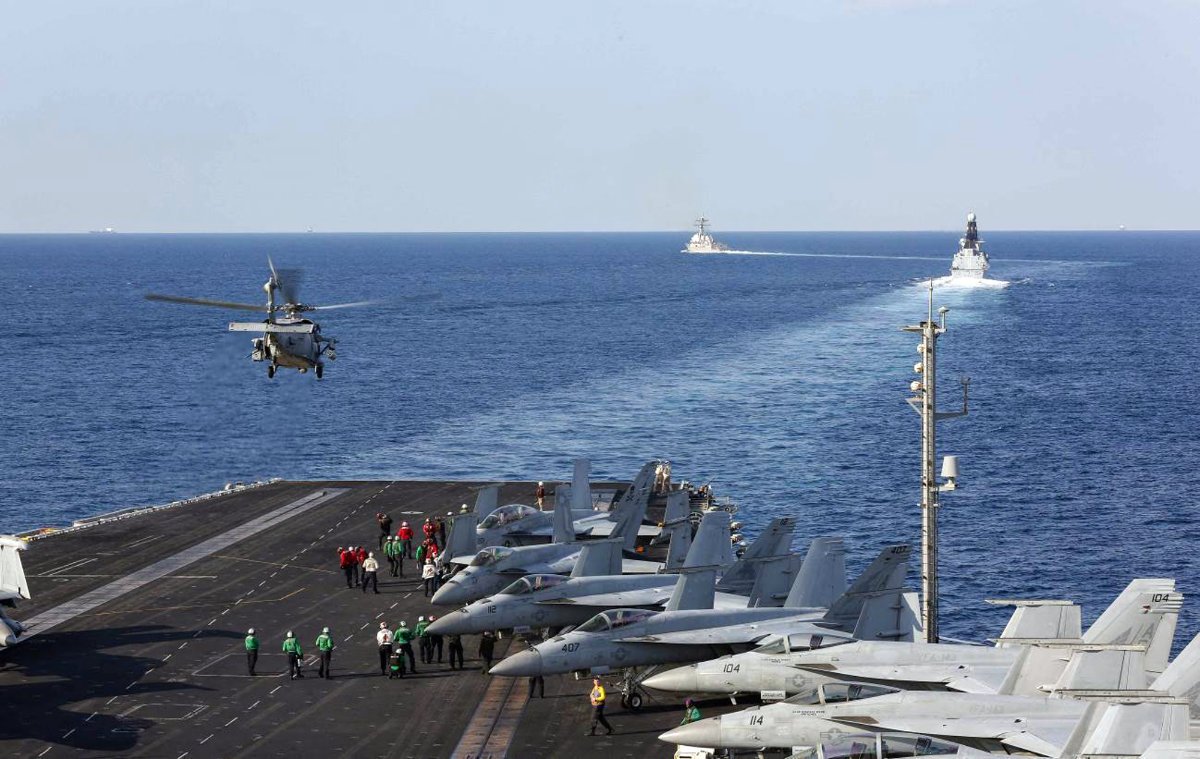
The U.S. Navy’s Fifth Fleet, based in Bahrain, is tasked with ensuring maritime security in the region, particularly the safe passage of commercial vessels through the strait.
A History of Tensions
The Strait of Hormuz has been at the center of several geopolitical flashpoints:
- 1973: Arab oil producers imposed an embargo on Western nations supporting Israel during the Yom Kippur War, highlighting the West’s energy vulnerability.
- 1980s: During the Iran-Iraq War, both countries targeted oil shipments in what became known as the “Tanker War.” In 1988, a U.S. Navy ship mistakenly shot down an Iranian airliner, killing 290 civilians — a tragedy that further escalated tensions.
- 2012: Iran threatened to block the strait in retaliation for Western sanctions over its nuclear program.
- 2019: Four vessels, including two Saudi oil tankers, were attacked near the strait.
- 2023-2024: Iran seized three commercial vessels in or near the Strait of Hormuz, in some cases following U.S. actions against Iranian-linked oil tankers.
As tensions rise again following recent U.S. and Israeli military actions, the possibility of Iran acting on its long-standing threat to close the strait is being taken more seriously than ever — with potentially far-reaching consequences for the global economy and regional security.
