

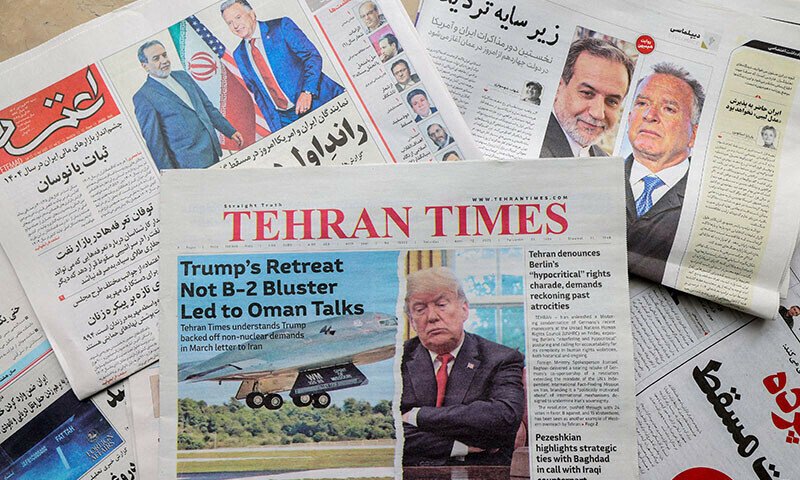

The latest round of indirect talks between Iran and the United States concluded in Oman on Saturday, with both sides agreeing to resume discussions next week, according to Iranian officials. The talks come amid escalating tensions over Iran’s nuclear program, as U.S. President Donald Trump has renewed threats of military action if no diplomatic resolution is reached.
Productive Atmosphere, Indirect Dialogue
Iranian Foreign Minister Abbas Araqchi stated on his official Telegram channel that the negotiations were held in a “productive and positive atmosphere.” He noted that while the talks were conducted through Omani mediation, there was a brief direct interaction at the conclusion.
“After more than two-and-a-half hours of indirect talks, the heads of the Iranian and American delegations exchanged a few words in the presence of the Omani foreign minister,” Araqchi wrote.
The U.S. delegation was led by Steve Witkoff, Trump’s Middle East envoy. The American side has yet to publicly comment on the outcome of the talks.
Key Focus Areas: Nuclear Programme, Sanctions Relief, Regional De-escalation
An Omani source told Reuters that the dialogue aimed to address several critical issues, including:
- Reducing regional tensions
- Prisoner exchanges
- Limited sanctions relief in exchange for nuclear restrictions
However, Iranian Foreign Ministry spokesperson Esmail Baghaei dismissed parts of the Omani account without providing further clarification.
Baghaei confirmed that both delegations remained in separate rooms throughout the meeting, exchanging messages through Oman’s foreign minister, reflecting the fragile trust between the two sides.
Longstanding Dispute, High Stakes
These talks mark the first interaction between Iran and a Trump-led U.S. administration since his return to office. Trump famously withdrew from the 2015 Iran nuclear deal during his first term and reinstated sweeping sanctions, prompting Tehran to accelerate its uranium enrichment program—now reaching 60% purity, a step away from weapons-grade levels.
Iran continues to insist that its nuclear ambitions are peaceful, while Western nations and Israel argue that Tehran is edging toward the capability to build a nuclear bomb.
With tensions flaring across the region—from the conflict in Gaza and southern Lebanon to Houthi attacks in the Red Sea and instability in Syria—diplomatic engagement between Washington and Tehran is seen as critical to avoiding wider conflict.
Tehran Warns Against U.S. Aggression
Iran has warned neighboring countries hosting U.S. military bases of “severe consequences” should they support any attack against Iranian territory. Araqchi told Iranian TV that progress was possible if the U.S. approached talks with mutual respect.
“There is a chance for an initial understanding if the other party enters with an equal and fair approach,” he said.
An Iranian official told Reuters that Supreme Leader Ayatollah Ali Khamenei had given Araqchi full authority to lead the negotiations.
No Talks on Missile Programme
While Iran has shown willingness to discuss nuclear restrictions, it has categorically ruled out any negotiation over its defensive capabilities, including its ballistic missile programme.
The talks are expected to resume next week, though the date and location have not been disclosed.
