

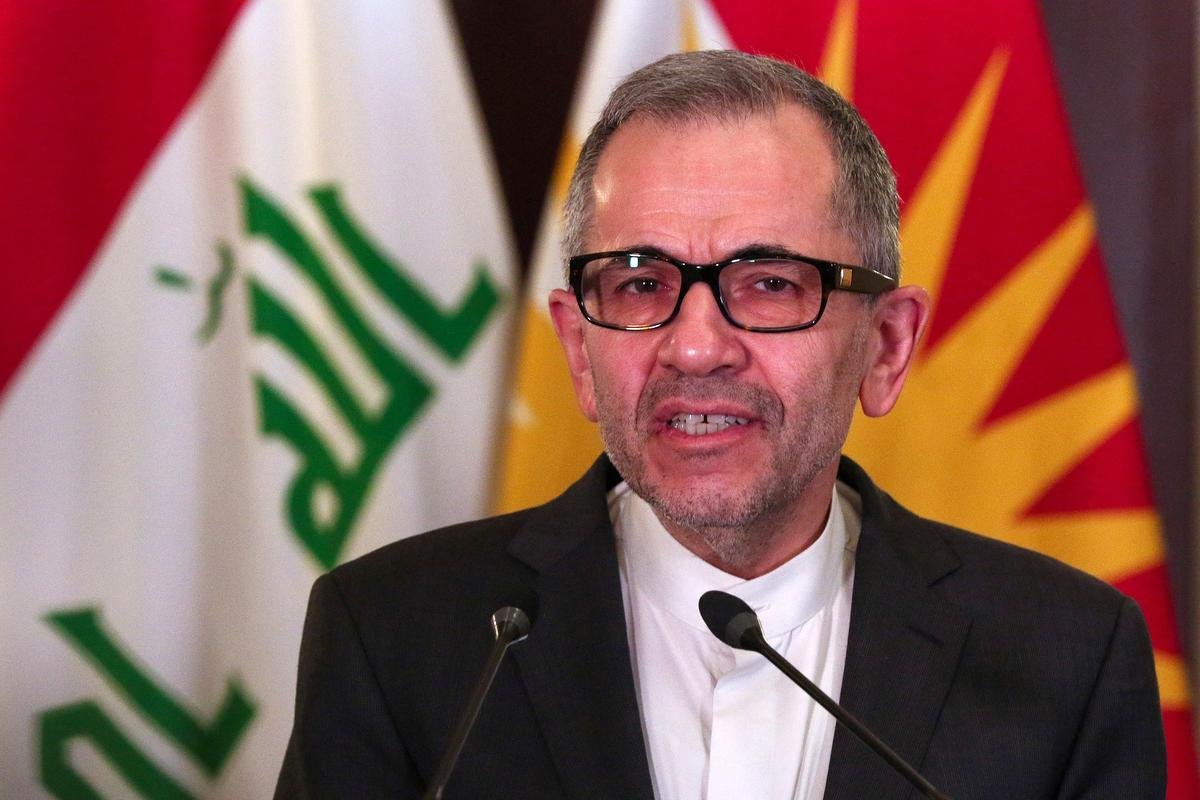

Diplomatic dialogue between Tehran and Washington cannot resume unless the United States pledges not to carry out further attacks on Iranian territory, Iran’s deputy foreign minister said late Sunday.
Speaking in an interview, Majid Takht-Ravanchi revealed that the US had indicated its willingness to return to negotiations, following American airstrikes last week on three Iranian nuclear facilities.
“We haven’t agreed on a date or the format yet,” Takht-Ravanchi noted. “Our priority is to clarify whether there will be any repeat of such acts of aggression while dialogue is ongoing.”
He insisted that Washington must provide a clear answer to this critical issue.
Earlier this month, talks over Iran’s nuclear programme were already underway when Israel launched strikes on Iranian military and nuclear sites. The US then carried out its own bombing campaign targeting the Fordo, Natanz, and Isfahan nuclear facilities on June 21.
The deputy minister further disclosed that the US had communicated it was not aiming for regime change by attacking Iran’s supreme leader, Ayatollah Ali Khamenei.
Takht-Ravanchi argued that Iran must retain the right to enrich uranium: “The level and capacity can be negotiated, but to demand complete cessation of enrichment, and threaten bombing if we don’t comply — that’s nothing but the law of the jungle.”
Israel maintains that Iran’s nuclear ambitions are geared toward producing a bomb, while Tehran continues to insist its programme serves only peaceful, civilian purposes.
The extent of the damage from the strikes remains unclear, despite former US President Donald Trump’s claim that the sites were “totally obliterated.”
Meanwhile, Rafael Grossi, head of the UN’s nuclear watchdog, estimated that Iran could resume uranium enrichment “within a matter of months.” Takht-Ravanchi said he did not have a timeline.
Under the 2015 nuclear agreement, Iran was permitted to enrich uranium up to 3.67 per cent for civilian nuclear energy production. However, after Trump withdrew the US from the deal in 2018, Iran began enriching uranium up to 60 percent — well beyond civilian levels, though still short of weapons grade.
If further refined, that stockpile could potentially yield material for over nine nuclear weapons.
