

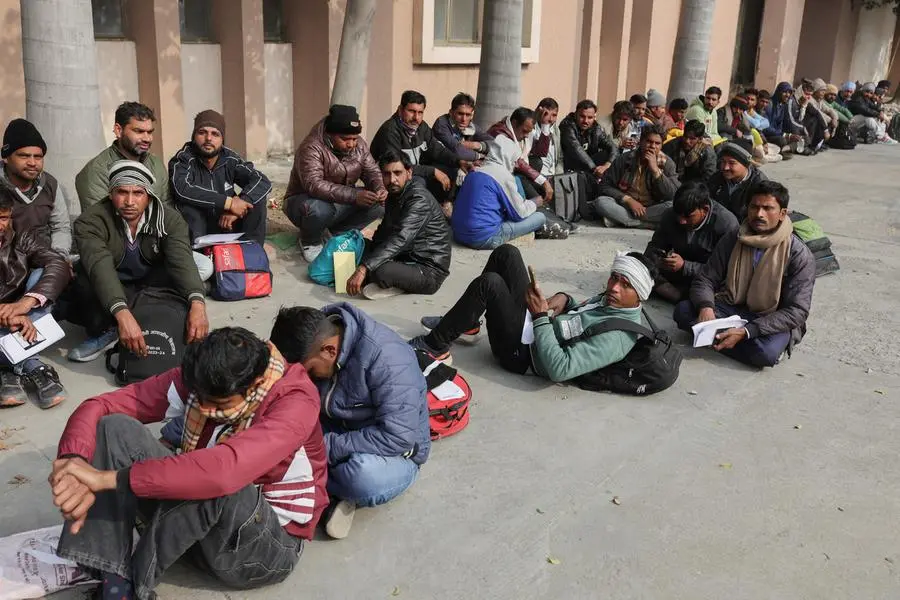

In the chilly dawn of a January morning, Pramod Sharma, along with hundreds of others, queued up outside Maharshi Dayanand University (MDU) in Rohtak, Haryana, for a skill test to become a shuttering carpenter in Israel. This marks the first time that the Israeli construction sector has opened its doors to Indian workers, a response to the labor crisis following the suspension of work licenses for over 100,000 Palestinians after the Gaza war.
Desperate to fill the void, Israeli construction companies requested permission to hire up to 100,000 Indian workers, prompting the Haryana and Uttar Pradesh governments to advertise 10,000 positions each for various construction roles in Israel. The advertised monthly salary of 6,100 shekels (approximately $1,625) stands in stark contrast to the per capita income of around $300 in the region.
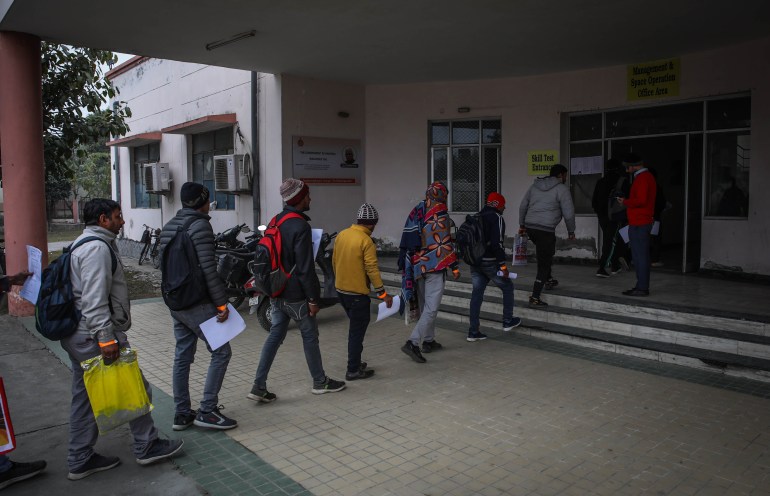
Recruiters from Israel recently arrived in India to interview potential candidates. During a weeklong recruitment drive in Rohtak, an average of 500-600 applicants were interviewed daily. The opportunity has drawn a diverse pool, including individuals from India’s poorest states, like Bihar, as well as educated youth seeking stable income.
Criticism has arisen from trade unions and the opposition, cautioning against sending Indian workers to a nation involved in the Palestinian conflict. The Construction Workers Federation of India opposes the move, emphasizing solidarity with Palestinian workers. The government defends its decision, asserting the robust labor laws in Israel that protect workers’ rights.
This development sheds light on the evolving dynamics of India’s foreign policy, traditionally aligned with the Palestinian cause, but undergoing a shift in recent years. The potential deployment of Indian workers to Israel sparks ethical debates amid ongoing geopolitical tensions. As India grapples with economic challenges and a high unemployment rate of 8 percent, the decision to send workers abroad becomes a complex interplay of economic necessity and ethical considerations.
