

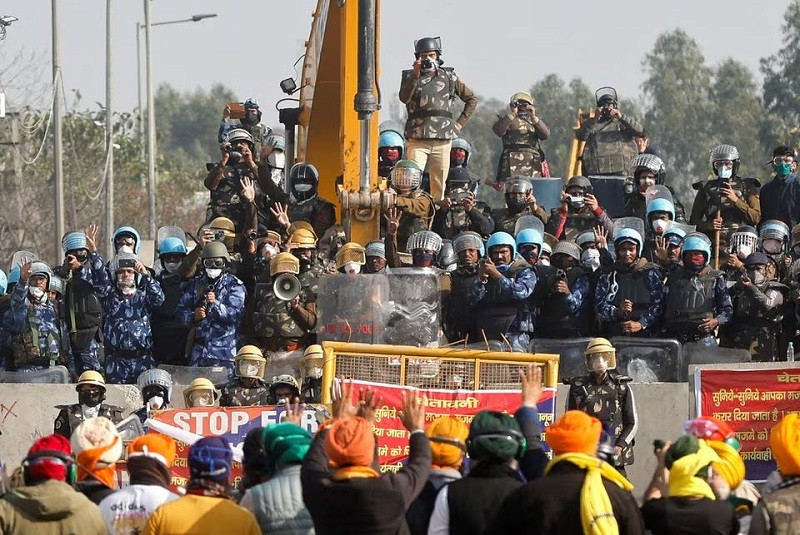

Indian farmers have persevered in their protests, advancing towards the capital, Delhi, on the 25th day of their movement. Despite encountering resistance from Haryana police, the farmers stand resolute in their opposition to the government’s proposed new agricultural laws.
The Delhi Police’s denial of permission failed to deter the farmers from marching towards Jantar Mantar, where they initiated their demonstration. In response, authorities swiftly arrested protesting farmers, escalating tensions in the ongoing standoff.
Leaders of the farmers have called for a massive demonstration in Delhi on March 14th, escalating pressure on the government with a planned “Maha Panchayat,” anticipated to draw even larger crowds to the protest site.
Amidst the arrests, protesters expressed frustration over delays in addressing their demands, particularly concerning the escalating prices of crops. They accused the Delhi Police of orchestrating arrests as mere theatrics, deflecting from the imperative need for genuine dialogue.
To tighten control, the Modi government has heightened security along Delhi’s borders and deployed additional police forces. Critics caution that such measures may exacerbate tensions further.
Analysts propose that Prime Minister Narendra Modi refrain from confrontations with the protesting farmers, especially with federal elections looming. However, the farmers have declared plans for a nationwide rail blockade on March 10th, underscoring their determination to sustain the struggle.
While the Indian Supreme Court refrains from intervening in the farmers’ demands, the crisis deepens in Punjab, with shortages of diesel and cooking gas affecting the populace.
This prolonged standoff underscores the widening gap between the Indian government and its agrarian community. Critics accuse the Modi administration of neglecting farmers’ rights and suppressing dissent, while perceived judicial inaction only adds to the farmers’ grievances.
