

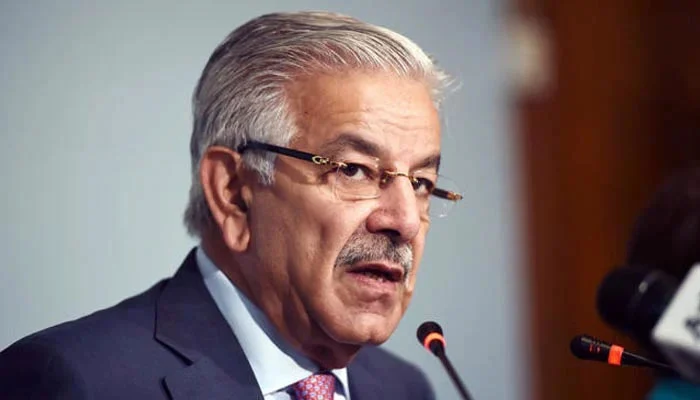

In a dramatic turn at the Shanghai Cooperation Organisation (SCO) defence ministers’ meeting in China, Indian Defence Minister Rajnath Singh refused to sign the joint declaration after being denied a second opportunity to speak, revealed Pakistan’s Defence Minister Khawaja Asif on Thursday.
Speaking on Geo News’ show “Aaj Shahzeb Khanzada Kay Sath,” Asif shared that Singh, who had spoken early in the session as per alphabetical order, sought an additional turn to address the summit. However, the request was declined by the host, China, in accordance with protocol. Frustrated by the denial, India refused to endorse the consensus document — becoming the only member state to abstain from signing.
Asif noted that the move further isolated India diplomatically and reflected the consequences of what he called Prime Minister Narendra Modi’s extremist and aggressive foreign policy. “India is promoting terrorism globally,” he said, pointing to New Delhi’s alleged involvement in the killing of a Sikh leader in Canada, plots uncovered in the US, and sustained terror activities in Pakistan.
Presenting Pakistan’s position at the SCO summit, Asif highlighted Indian involvement in the Jaffar Express bombing and mentioned Indian spy Kulbhushan Jadhav. He also cited terrorism in Balochistan and the situation in Indian Illegally Occupied Jammu and Kashmir (IIOJK) as unresolved issues needing global attention.
The minister emphasized that Pakistan had consistently condemned terrorism in all forms and called on states to refrain from politicizing anti-terrorism efforts. “Terrorism is a shared threat and must be addressed collectively,” Asif asserted. “We must not let states use global counterterrorism platforms to mask their domestic failures.”
On the sidelines of the summit, Khawaja Asif met with his counterparts from China, Iran, Kazakhstan, and Tajikistan to discuss mutual security interests and strengthen bilateral cooperation.
Meanwhile, Indian Defence Minister Rajnath Singh used his address to raise concerns over regional security and called for a “reformed multilateralism” to resolve disputes and build trust. “Peace, security, and trust deficit remain the biggest challenges in our region,” Singh said, as reported by NDTV.
Earlier in the week, Pakistan’s National Security Adviser Lt Gen Asim Malik participated in the 20th SCO Security Council Secretaries meeting, reiterating Islamabad’s commitment to peace, regional cooperation, and security in Afghanistan and beyond.
Khawaja Asif concluded his address by stressing the importance of dialogue, mediation, and preventive diplomacy for resolving long-standing disputes like Kashmir, underscoring that unresolved conflicts pose a persistent threat to global peace.
