

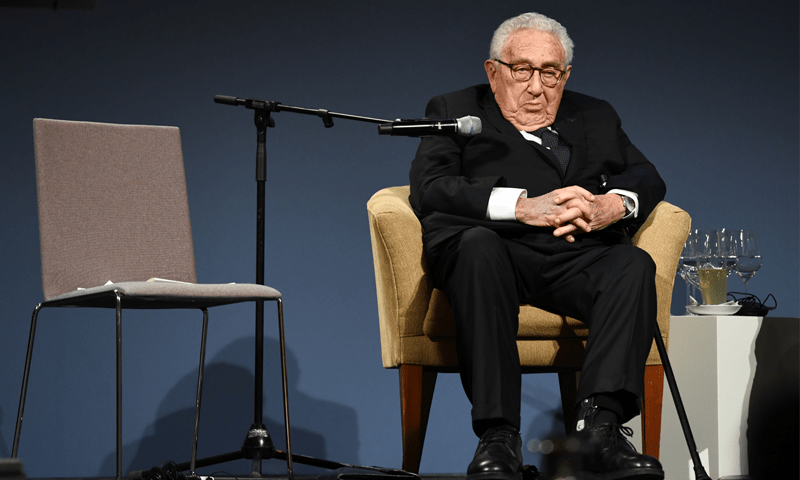

Renowned diplomatic figure Henry Kissinger, a key player in U.S. foreign policy as the national security adviser and secretary of state under Presidents Nixon and Ford, passed away at the age of 100 at his Connecticut home, as announced by his geopolitical consulting firm, Kissinger Associates Inc.
Although the statement did not disclose the circumstances of his death, it outlined plans for a private family service and a subsequent public memorial service in New York City.
Henry Kissinger remained active well beyond his centenary, participating in White House meetings, publishing a leadership book, and addressing the Senate on North Korea’s nuclear threat. In a surprising move in July 2023, he visited Beijing to meet with Chinese President Xi Jinping.
During the 1970s, amid the Cold War, Kissinger played a pivotal role in significant global events, fostering the U.S. diplomatic relationship with China, engaging in landmark U.S.-Soviet arms control talks, facilitating expanded ties between Israel and Arab nations, and contributing to the Paris Peace Accords with North Vietnam.
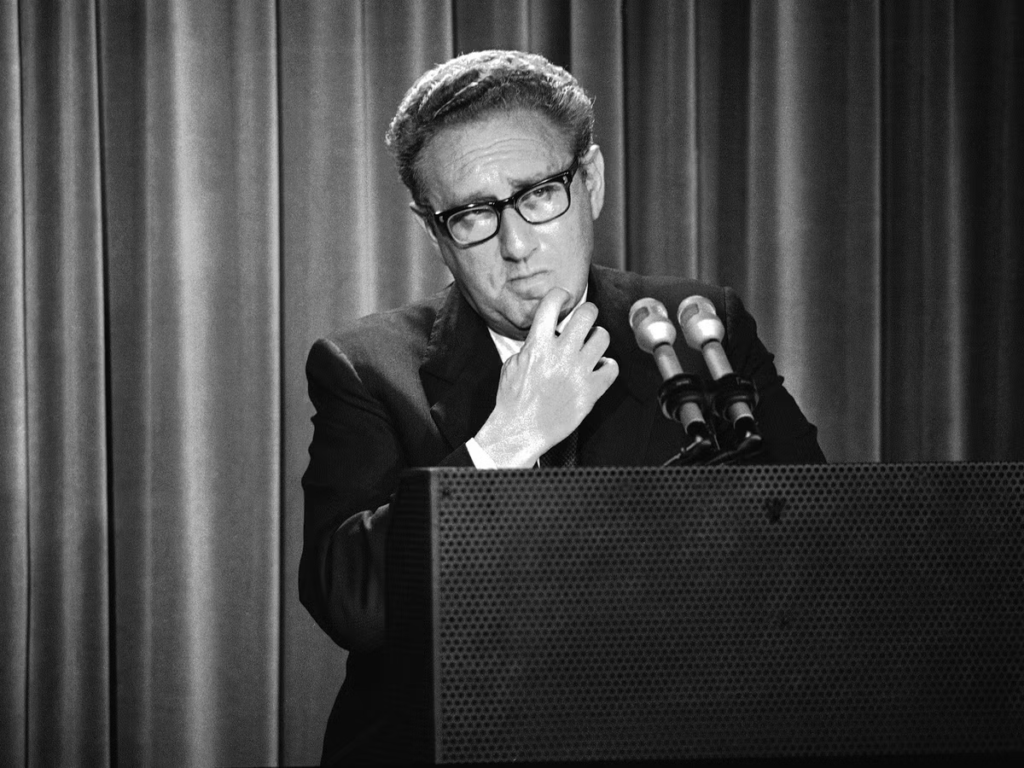
While praised for his brilliance by some, Kissinger faced criticism as well, particularly for supporting anti-communist dictatorships in Latin America. The controversy extended to his 1973 Nobel Peace Prize, shared with North Vietnam’s Le Duc Tho, who declined the honor. Questions arose about the U.S.’s secret bombing of Cambodia, leading to resignations from two Nobel committee members.
Following Nixon’s resignation in 1974, Kissinger continued his diplomatic influence as secretary of state under President Ford. However, his legacy is marked by both acclaim and criticism, with some highlighting his achievements and others branding him a war criminal.
Harvard Faculty
Born as Heinz Alfred Kissinger in Germany in 1923, he immigrated to the U.S. in 1938 to escape Nazi persecution. Following his service in the Army during World War II, he pursued education at Harvard, eventually becoming a faculty member for 17 years.
Kissinger’s involvement in politics grew, including serving as an intermediary for peace negotiations in Vietnam. Nixon brought him to the White House as national security adviser, and later, as secretary of state, he engaged in shuttle diplomacy to broker agreements between Israel and its neighbors.
Despite Nixon’s resignation, Kissinger continued to contribute to foreign affairs under President Ford, playing a role in the detente with the Soviet Union. However, his diplomatic efforts faced challenges, including criticism for his handling of conflicts in the Middle East and Latin America.
After leaving government service, Kissinger established a prominent consulting firm, served on boards, wrote books, and remained a media commentator on international affairs. His later years were not without controversy, as demonstrated by his resignation from heading an investigative committee post-9/11 due to concerns over conflicts of interest.
Married twice, Kissinger’s personal life was less publicized, and he maintained a reserved demeanor despite his influential role. His legacy is one of both admiration and critique, reflecting the complexities of his impact on U.S. foreign policy.
