

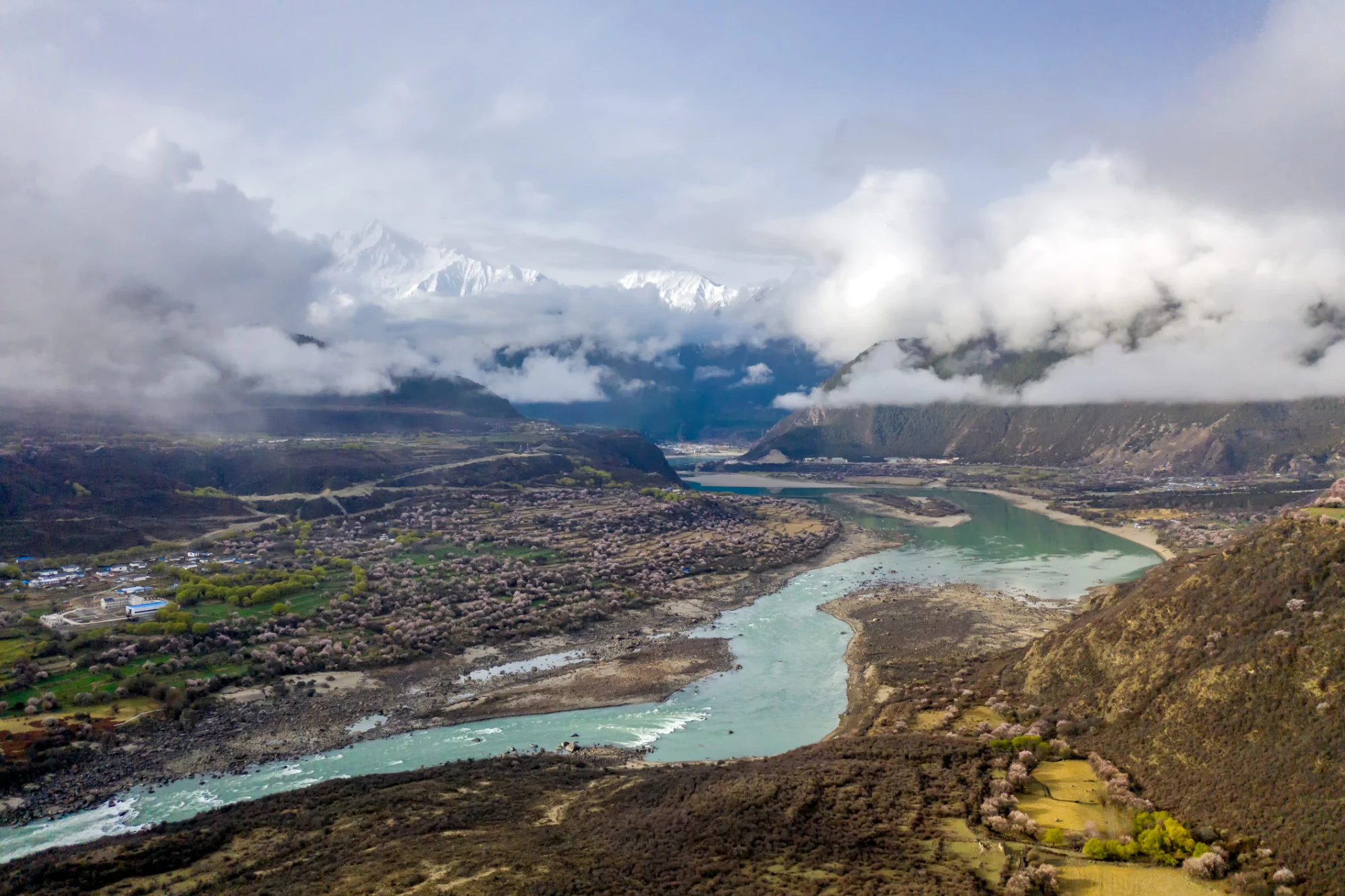

In an ambitious ecological initiative, China has removed 300 dams and shut down over 90% of small hydropower stations along the Chishui River, also known as the Red River, a vital tributary of the upper Yangtze. The large-scale effort, described as the world’s most extensive river revival project, aims to restore natural water flow, reconnect fragmented habitats, and reopen migratory routes essential for fish reproduction.
The Chishui River stretches over 400 kilometers through the provinces of Yunnan, Guizhou, and Sichuan. Once blocked by a dense network of dams and power stations, the river is now running more freely following demolition efforts that began in 2020. By the end of 2024, authorities had dismantled 300 out of 357 dams and decommissioned 342 of 373 small hydropower stations, according to state reports.
This move marks one of the largest state-led campaigns to rebuild aquatic biodiversity in Asia’s longest river, which for decades saw its native species pushed to the brink of extinction. The Yangtze sturgeon, which was declared extinct in the wild by the International Union for Conservation of Nature (IUCN) in 2022, has shown promising signs of recovery thanks to these restoration efforts.
Researchers from the Chinese Academy of Sciences’ Institute of Hydrobiology released hatchery-bred sturgeon into the Red River in 2023 and 2024. In April 2025, they introduced 20 adult fish into Guizhou’s section of the river to see if they could breed naturally. Just weeks later, scientists recorded spawning behavior and the successful hatching of fry — a breakthrough not witnessed since 2000.
For decades, extensive human engineering projects devastated fish populations across the 4,000-mile Yangtze River basin. Hydropower stations altered natural currents, reduced oxygen levels, and disrupted critical links between spawning and feeding areas. Professor Zhou Jianjun from Tsinghua University noted that while demolition is important, sometimes halting power generation and modifying water control methods can meet ecological goals without full removal.
China’s broader strategy for river restoration includes a decade-long fishing ban launched in 2020, tighter regulations on sand mining, and stricter controls on new development. These combined measures have led to measurable improvements in biodiversity and water quality. In Sichuan province alone, by the end of 2021, authorities had addressed compliance issues at over 5,000 hydropower stations, shutting down more than 1,200 of them.
Government biodiversity updates from 2023 indicate steady recovery in populations of fish, amphibians, and invertebrates across the Yangtze and its tributaries. Many sections of the river now receive “excellent” ratings for water quality, and sand mining activities have dropped significantly.
While the Yangtze sturgeon’s survival remains uncertain, the sweeping changes along the Chishui River offer renewed hope. Scientists believe these measures could allow the sturgeon — often called the Yangtze’s last giant — and other rare species to return to their ancestral breeding grounds after decades of decline.
