

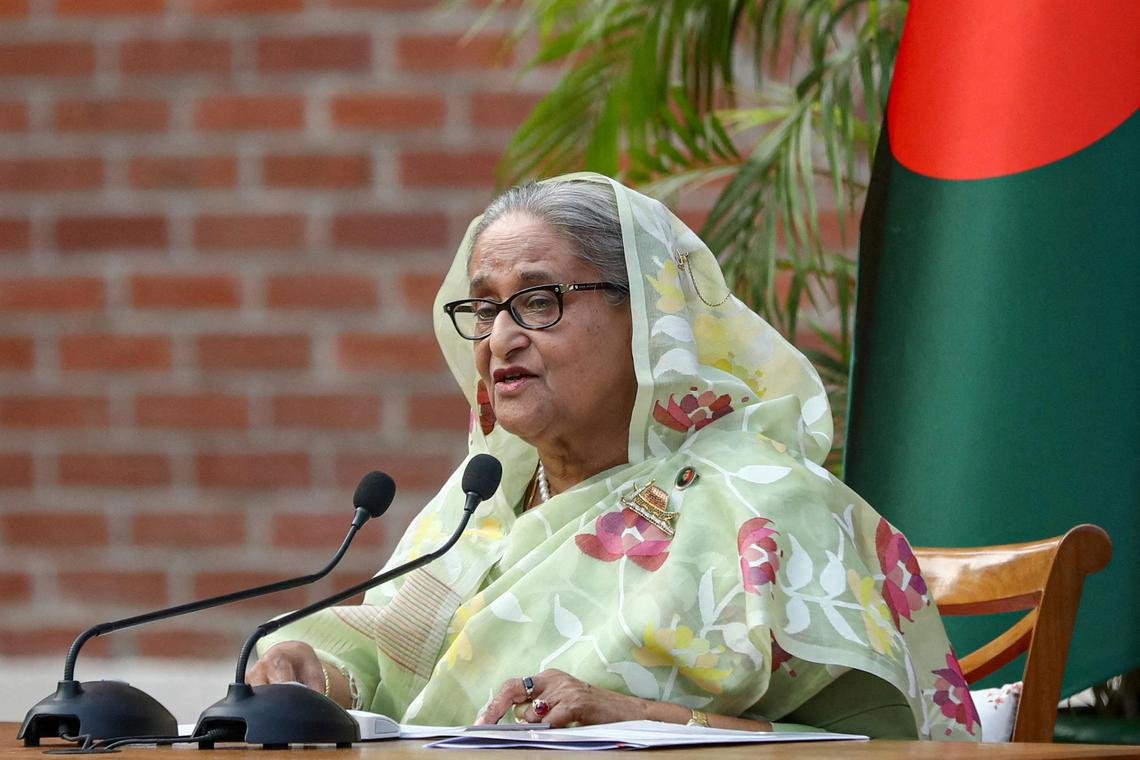

Ex-PM Hasina
Bangladesh’s war crimes tribunal on Monday ordered fugitive former Prime Minister Sheikh Hasina to return and face trial over a series of grave charges that include crimes against humanity.
The 77-year-old ex-leader has been in hiding since August 2024, when she fled Dhaka via helicopter to India amid a mass student-led uprising that ultimately led to the collapse of her government.
The order comes in connection with a deadly crackdown carried out by Hasina’s administration in July and August 2024. According to the United Nations, the violence claimed the lives of as many as 1,400 people as the then-government attempted to suppress growing unrest in an increasingly desperate effort to retain power. The unrest marked one of the most turbulent periods in Bangladesh’s modern political history.
Hasina and several senior members of her now-defunct Awami League party are currently being tried by Bangladesh’s International Crimes Tribunal (ICT), a court established to investigate and prosecute serious violations of international humanitarian law and domestic war crimes.
Prosecutors have formally charged the former prime minister with five counts, including abetment, incitement, complicity, facilitation, conspiracy, and failure to prevent mass killings—offences that, under Bangladeshi law, are categorized as crimes against humanity.
Chief prosecutor Muhammad Tajul Islam stated that the tribunal has instructed the prosecution to issue a formal summons to Hasina and her co-accused to appear in court. The trial is scheduled to resume on June 24, and proceedings will move forward in her absence if she fails to comply with the court’s directive.
Hasina is not alone in her fugitive status. Also on trial are former interior minister Asaduzzaman Khan Kamal—currently evading arrest—and ex-police chief Chowdhury Abdullah Al Mamun, who has been taken into custody and appeared before the court on Monday.
The prosecution maintains that Hasina orchestrated the crackdown by instructing security forces, through orders passed via the interior ministry and police leadership, to violently suppress mass protests. This allegation forms the backbone of the charges against her.
The ongoing prosecution of Hasina and her senior officials has emerged as a central issue for Bangladesh’s transitional government and the political factions vying for power. Several parties are demanding justice for the violence that unfolded during Hasina’s final days in office, making the trials a pivotal part of the nation’s political reckoning.
Bangladesh’s interim administration has announced that general elections are tentatively planned for April 2026. However, pressure is mounting from various quarters to expedite the electoral process and hold a vote sooner. The outcome of Hasina’s trial and the broader judicial process is expected to significantly shape the country’s political future.
