

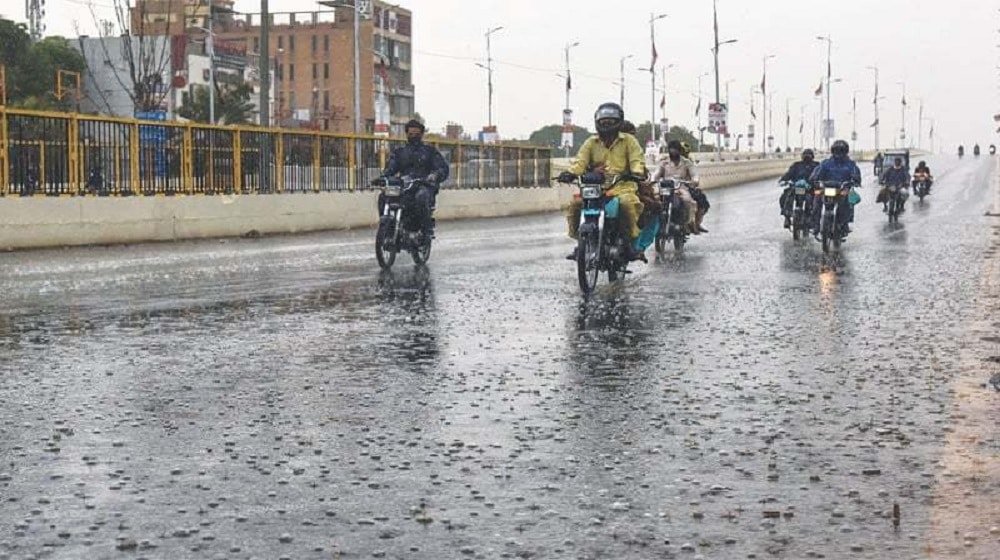

RAWALPINDI/LAHORE: Authorities have been placed on high alert as a fresh and intense spell of monsoon rains is set to begin today and continue until August 21. The Pakistan Meteorological Department (PMD) has warned that this spell will bring widespread torrential downpours accompanied by strong winds and thunderstorms, significantly increasing the risk of floods, landslides, and urban inundation in several regions of the country.
This monsoon activity coincides with a warning of heavy flooding in Punjab’s rivers due to rising water levels, fueled both by persistent rains and glacial melt in the northern parts of the country, particularly in Khyber Pakhtunkhwa. The province has already suffered devastating consequences from earlier flash floods, where more than 200 lives were lost in a single day.
According to PMD forecasts, widespread rain, wind, and thunderstorms with scattered heavy to very heavy falls are expected in multiple areas. In Kashmir, districts such as Neelum Valley, Muzaffarabad, Rawalakot, and Kotli are likely to be hit between August 17 and 19. Gilgit-Baltistan regions, including Diamer, Astore, Skardu, and Hunza, are also expected to experience the same weather conditions. Khyber Pakhtunkhwa is bracing for similar widespread activity, with heavy rains forecast in areas such as Swat, Kohistan, Abbottabad, Peshawar, Mardan, and Waziristan during the same period.
Punjab is also likely to receive heavy rainfall in districts including Islamabad, Rawalpindi, Lahore, Gujranwala, Faisalabad, and Sahiwal from August 17 to 19, while southern Punjab districts such as Multan, Bahawalpur, and Rajanpur will see scattered rains from August 18 to 20.
Sindh is expected to face longer and more persistent rains between August 17 and 22, particularly in Karachi, Hyderabad, Thatta, and Sukkur. In Balochistan, scattered heavy falls are predicted in districts such as Khuzdar, Lasbela, Gwadar, and Panjgur from August 17 to 21.
The PMD has cautioned that these heavy rains may trigger flash floods in local streams and nullahs of Punjab, Kashmir, and KP from August 17 to 19. Flash flooding in hill torrents of Dera Ghazi Khan and parts of eastern Balochistan is likely from August 18 to 21.
Urban centres including Islamabad, Lahore, Peshawar, Karachi, and Hyderabad remain highly vulnerable to urban flooding during this period. In addition, landslides and mudslides are expected in hilly areas of KP, Gilgit-Baltistan, and Kashmir, potentially causing road blockages.
Meanwhile, Punjab’s Provincial Disaster Management Authority (PDMA) has issued red alerts for multiple districts, warning of heavy flooding due to swelling rivers and reservoirs. The Indus River is already at medium flood levels at Kalabagh and Chashma Barrage, while low-level flooding continues at Tarbela and Taunsa.
The Sutlej River is facing increased pressure at Ganda Singh Wala, recording a water flow of 68,000 cusecs. Tarbela Dam has reached 98 per cent of its capacity, while Mangla Dam stands at 68 per cent, raising further concerns.
The PDMA has urged residents living near riverbanks to shift to safer areas immediately, avoid recreational activities near water bodies, and strictly follow evacuation instructions in case of emergencies. With India also releasing 50,000 cusecs of water, the situation requires heightened vigilance. The PDMA warned that this seventh spell of monsoon rains is one of the strongest so far, with northern Punjab districts particularly vulnerable to cloudbursts and torrential rains.
