

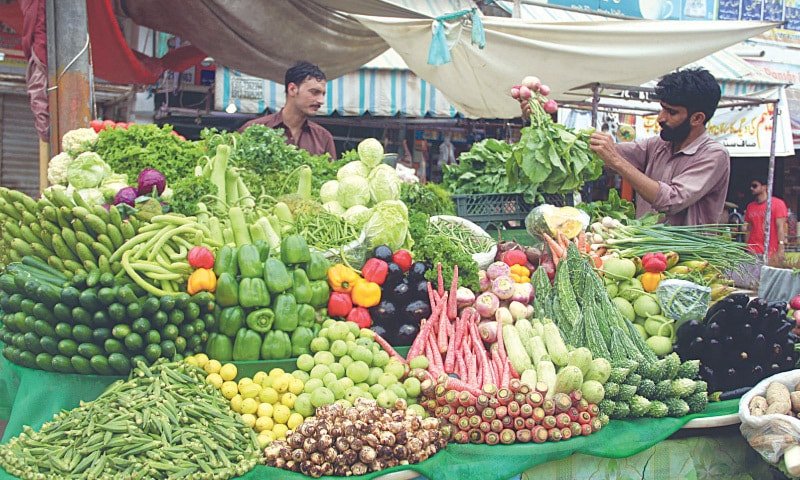

Inflation
Inflation in Pakistan has seen a consecutive rise over the past two weeks, surging from a mere 0.1% to a significant 23.33%, as reported by the Federal Bureau of Statistics. This uptick has had a notable impact on various essential commodities across the market.
One of the most pronounced increases has been in the price of live chicken, which escalated by Rs 53 per kilogram to reach Rs 369 per kg.
Similarly, the cost of 390 grams of dry milk rose by Rs 56, marking an increase from Rs 928 to Rs 984. Fresh milk also saw a rise of Rs 2 per kg, averaging at Rs 139.
Pulses, essential staples in Pakistani cuisine, also experienced price hikes. Chickpea dal, for instance, surged by Rs 11 per kg to Rs 330, while both moong dal and masoor dal increased by Rs 4 per kg.
Additionally, sugar prices climbed by about Rs 1 per kg, reaching an average of Rs 146.
The upward trend in prices extended beyond food items to include commodities like firewood, rice, LPG household cylinders, and meat, which also witnessed noticeable increases.
Amidst these rises, however, there were a few commodities that offered some relief to consumers. Prices of tomatoes dropped significantly by Rs 40 per kg, providing a respite from the overall inflationary pressures.
Bananas became more affordable as well, with a decrease of Rs 4 per dozen. Moreover, a 20 kg bag of flour saw a reduction of Rs 36, contributing to a slight easing of the cost burden for consumers.
The overall inflationary surge reflects broader economic challenges, impacting household budgets and consumer spending patterns across Pakistan.
Authorities and economists continue to monitor these developments closely, seeking to mitigate the impact on vulnerable populations and stabilize prices through targeted interventions and policy adjustments.
