

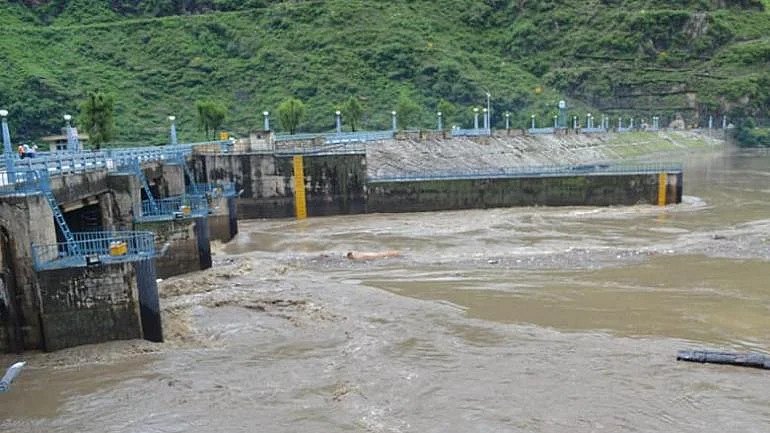

Flood Fears
In a renewed display of hostility, India has once again triggered tensions by suddenly releasing a large volume of water into the River Jhelum without issuing any prior notification to Pakistan.
The abrupt surge has caused a significant rise in water levels, sparking widespread panic across riverside villages and raising serious concerns about potential flooding.
This unprovoked action underscores India’s aggressive stance not just across borders, but even over essential shared resources like water — a basic human right. Pakistani officials have strongly condemned the move, labeling it a blatant violation of international river treaties and humanitarian norms.
By weaponizing water, India has put the lives, livelihoods, and properties of countless civilians at grave risk, further deteriorating the already strained relations between the two neighboring countries.
At Chakothi, where the River Jhelum crosses into Pakistani territory, the impact of the sudden water release was immediately felt. Authorities observed an abnormal and dangerous spike in the river’s flow, causing alarm in nearby communities.
Local administration and disaster management teams rushed to the scene to assess the situation and provide reassurance to residents.
Muzaffarabad’s Deputy Commissioner, Mudassar Farooq, addressed the public in a media briefing, urging calm and clarifying that the river is currently experiencing a low-level flood.
According to him, the flow stands at approximately 22,000 cusecs and is under control. He assured that emergency measures have been activated to safeguard vulnerable areas.
Further confirming the severity of the situation, the Director of Operations at the State Disaster Management Authority (SDMA) revealed that Pakistan had received no advance warning about India’s water discharge.
He stated that while the immediate threat is being managed, it will take time for the released water to reach Mangla Dam, where additional precautions are underway.
Public sentiment is running high, with many citizens voicing anger over what they term India’s “water terrorism.” They are calling upon international bodies to step in and hold New Delhi accountable for its repeated provocations.
Civic leaders, activists, and officials alike stress that weaponizing water — a vital natural resource — is both criminal and unacceptable, demanding urgent global intervention to prevent future escalations.
